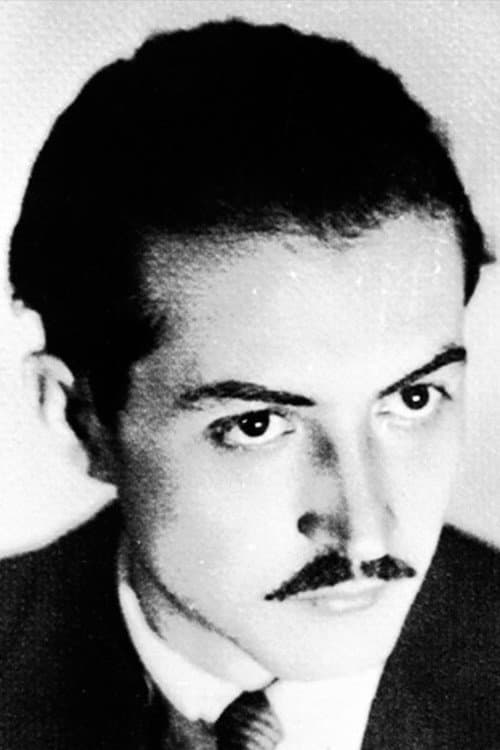
Fernando A. Rivero (Mexico City, February 9th 1902 – April 20th 1975) was a Mexican set designer, film director, painter, actor, and writer, regarded as a foundational figure—“the father” of Mexican film scenographers. He studied architecture but left the program for financial reasons, worked at the jewelry shop El Nuevo Mundo, emigrated to the United States in 1927 to work as a draftsman for advertising companies and newspapers, and returned to Mexico in 1931. After inheriting money upon his grandfather’s death, he founded the Compañía Anunciadora Mexicana; a later press note also states he was orphaned at age four and adopted by relatives, and that he began professionally in advertising, following the example of his father, Pedro Rivero Noriega.
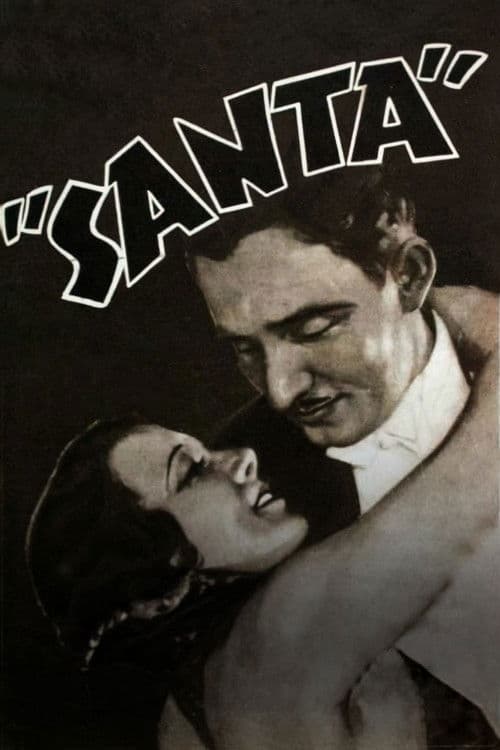
In 1931 he declared his company bankrupt and entered the film industry as a set designer on Santa (1931), continuing as a scenographer throughout his career on 34 films and occasionally appearing on screen (including roles as a “corpse” and a “suicide” in early-1930s productions). He worked for a period in Argentina and Spain, but the Spanish Civil War forced his return to Mexico in 1937, arriving aboard the ship “Durango” and rejoining the industry with La paloma (1937). Rivero also described and tested a movable-set system of his own invention—designed to free camera and actor movement by separating lighting rigging from set walls—and later announced a business renting these “sets movibles”; he was also among the technicians who co-founded the Unión de Trabajadores de los Estudios Cinematográficos de México (UTECM) in 1933.
He debuted as a director in 1938 with El beso mortal—a film adapted from Paul Gury’s play that drew controversy for its focus on venereal disease—and he went on to direct 20 films, closing that directing filmography in 1952 while continuing set-design work. His directing output included Cantinflas short films (1939–1940), documentaries, and features such as La posada sangrienta and Seda, sangre y sol (1941), Los miserables and Mi reino por un torero (1943), La casa embrujada and Nosotros (1944), Perdida (1949), and La extraña pasajera (1952). After leaving cinema, he returned to advertising work as a draftsman.