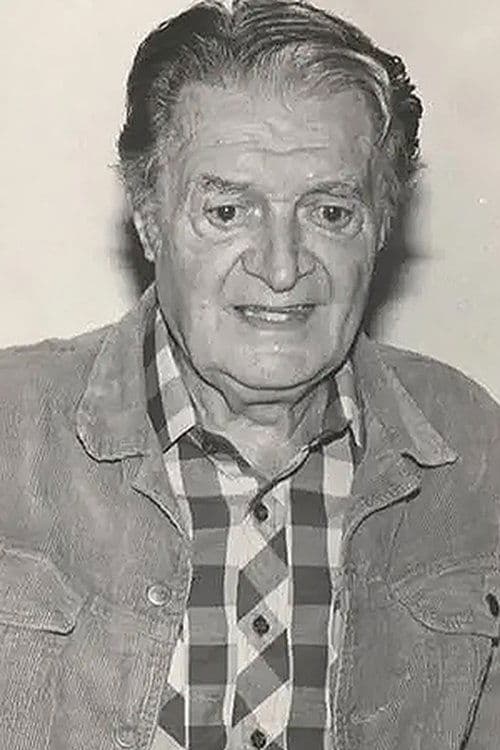
Josip Bogoslaw Tanko (April 21, 1906 – October 5, 1993) was a Croat filmmaker who directed O Trapalhão nas Minas do Rei Salomão, one of the biggest cinematic hits in Brazil of all time. He also founded JBTV - J. B. Tanko Filmes Ltda.
Josip Bogoslaw Tanko was born on April 21, 1906, in the Croatian city of Sisak. He was passionate about cinema from childhood.
In the 1930s, he started working at Sascha-Filmindustrie AG and Wlen-Film GmbH in Vienna, Austria creating Yugoslavian versions of German and Austrian films. He also worked at Tobis Filmkunst, Terra Filmkunst, and UFA in Berlin as an assistant director, participating as part of a team in the 1937 Wien-Film, created by Goebbels.
At the beginning of World War II, Tanko took over the Army Documentary Film Department in Belgrade.
Tanko filmed the bombing of Belgrade when Yugoslavia was invaded by Germany, fleeing to Berlin with the film.
In 1942, Tanko returned to Vienna.; however, having lost his entire family during the war, he decided to emigrate to Brazil.
In 1948, Tanko took up residence in the city of Rio de Janeiro, contributing to the professionalization of Brazilian cinema with his diverse experience. His first work was in Cinelândia Filmes, as assistant director and screenwriter of A Escrava Isaura, an adaptation of Bernardo Guimarães' novel.
Without leaving Cinelandia, he also began to work in the Cinematographic Atlântida, where he played several roles, ultimately becoming a director. Having made some dramas that were not successful with the audience, he turned to comedies (chanchadas).