From Wikipedia, the free encyclopedia.
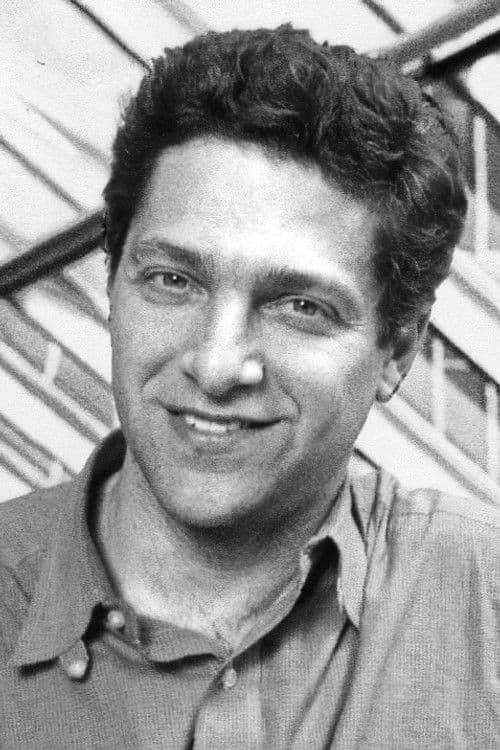
Peter Louis Galison (born 1955) is the Pellegrino University Professor in History of Science and Physics at Harvard University.
Galison received his Ph.D. from Harvard University in both Physics and the History of Science in 1983. His publications include Image and Logic: A Material Culture of Microphysics (1997) and Einstein's Clocks, Poincare's Maps: Empires of Time. His most recent book (2007), co-authored with Lorraine Daston, is titled Objectivity.
In Image and Logic, Galison explored the fundamental rift rising in the physical sciences: whether singular, visual accounts of scientific phenomenon would be accepted as the dominant language of proof, or whether statistically significant, frequently repeated results would dominate the field. This division, Galison claims, can be seen in the conflicts amongst high-energy physicists investigating new particles, some of whom offer up statistically significant and frequently replicated analysis of the new particle passing through electric fields, others of whom offer up a single picture of a particle behaving—in a single instance—in a way that cannot be explained by the characteristics of existing known particles.
His work with Lorraine Daston developed the concept of "mechanical objectivity" which is often used in scholarly literature, and he has done pioneering work on applying the anthropological notion of "trading zones" to scientific practice. He has developed a film for the History Channel on the development of the hydrogen bomb, and has done work on the intersection of science with other disciplines, in particular art (along with his wife, Caroline A. Jones) and architecture. He is on the editorial board of Critical Inquiry and was a MacArthur Fellow in 1996.
Galison has been involved in the production of two documentary films. The first, The Ultimate Weapon: The H-Bomb Dilemma, was about the political and scientific decisions behind the creation of the first hydrogen bomb in the United States, and premiered on the History Channel in 2000. The second, and most recent, Secrecy, Galison directed with Harvard filmmaker Robb Moss, is about the costs and benefits of government secrecy, and premiered at the 2008 Sundance Film Festival.
Before moving to Harvard, Galison taught for several years at Stanford University where he was professor of History, Philosophy, and Physics. He is considered part of the "Stanford School" of philosophy of science along with Ian Hacking, John Dupré, and Nancy Cartwright (philosopher).
Description above from the Wikipedia article Peter Galison, licensed under CC-BY-SA, full list of contributors on Wikipedia.