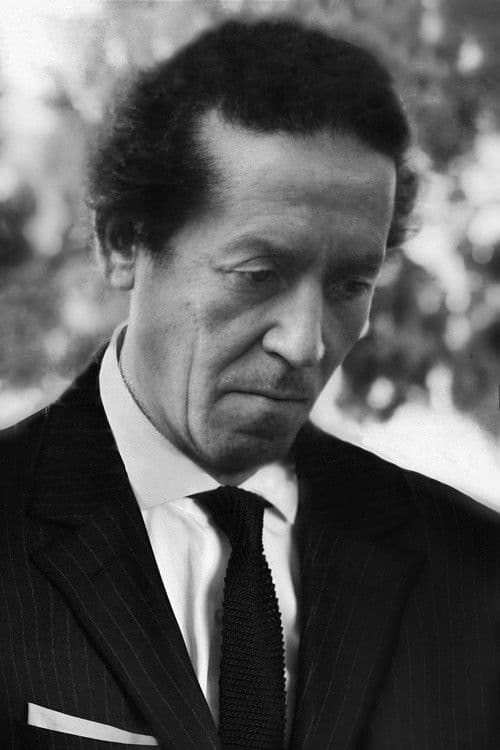
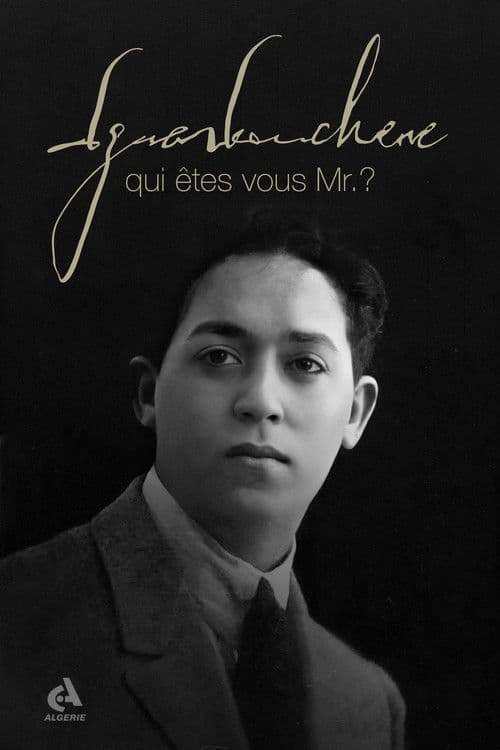
Mohamed Iguerbouchène (in Kabyle: Muḥend Igerbucen, in Arabic: محمد اقربوشن) is an Algerian composer born November 13, 1907 in Aït Ouchène (Wilaya of Tizi-Ouzou, Kabylia, Algeria).
Mohamed Iguerbouchène was the eldest of eleven children born to Saïd Ben Ali and Sik Fatma Bent Areski. He attended an English primary school in Algiers. It was there that he first studied music theory and where he was seen and heard by Bernard Fraser (later Bernard Fraser Ross), a wealthy Scottish bachelor, who spent his winters in Algiers and had served eight years from prison as a pimp for Cyril Flower, 1st Baron Battersea and other aristocrats. Ross convinced Iguerbouchène's parents to allow him to take the boy to England for his musical education. A musical prodigy, these early works included Kabylia Rapsodie n. 9 and Arab rhapsodie n.7. When Fraser Ross died in 1929, Iguerbouchène inherited all his property in Algeria. Fraser Ross also left him a further £1,500 on condition that he did not marry a girl of European origin. However, Iguerbouchène married a French citizen of Algeria, Louise Gomez. The marriage will fail, although they have not divorced.
In 1934, Iguerbouchène was presented to the SACEM as a songwriter, and that same year he was also presented as a member of the SACD. In Paris, he studied Berber dialects: Tamahaq, Tachawit and Tashelhit. In the early 1930s, Iguerbouchène composed music for Algerian documentaries and a short film "Dzaïr". Julien Duvivier asked him to collaborate with Vincent Scotto on the soundtrack of the 1937 film "Pépé Le Moko" with Jean Gabin. He was credited there as “Mohamed Ygerbuchen”. The remake of the film was made in 1938 in Hollywood under the name "Algiers", this time it was credited to "Mohammed Igarbouchen".
In the 1930s, Iguerbouchène became co-owner of the cabaret-restaurant "El Djazaïr", rue de la Huchette in the Latin Quarter of Paris. In 1938, he met the singer Salim Halali (originally from Annaba) in Paris, with whom he composed around fifty songs, mainly in a Spanish-Arabic style. The collaboration was crowned with success in Parisian clubs, Europe and North Africa. In 1937, he notably wrote the score for the film “Terre Ideale” in Tunisia. In 1939 the BBC broadcast one of his orchestral works, a "Moorish Rhapsody", conducted by Charles Brill.
During the Second World War, Iguerbouchène had to manage the musical direction of propaganda broadcasts of the occupying Paris Mondial regime for North Africa. He is in a relationship with a German-Belgian, Iwane 'Yvonne' Vom Dorp, with whom he had five illegitimate children. At the beginning of 1945, Iguerbouchène composed around a hundred songs based on poems by Rabindranath Tagore. In 1946, he composed the music for "Les Plongeurs Du Désert" by Tahar Hannache, then for the French short film "Le Songe De Chevaux Sauvages", directed by Albert Lamorisse in 1962.
In 1957, Iguerbouchène returned to Algeria, where he worked for Algerian radio, composed and directed the orchestra of the Algiers Opera. He died of diabetes in Algiers on August 21, 1966.