From Wikipedia, the free encyclopedia
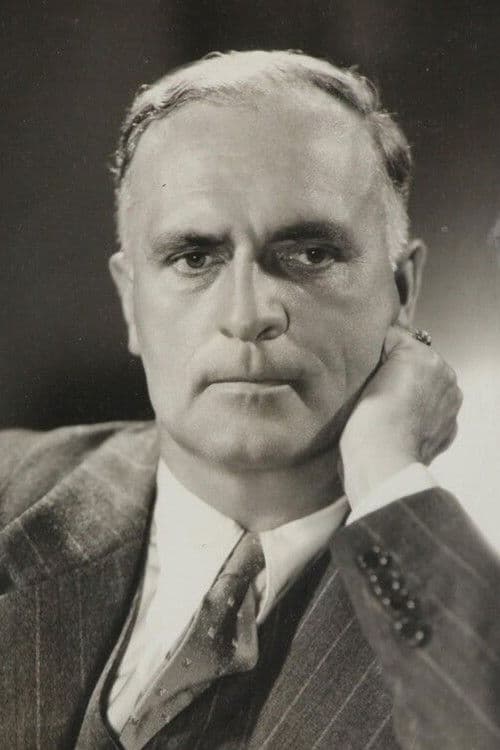
Herbert P. Stothart (September 11, 1885 – February 1, 1949) was an American songwriter, arranger, conductor, and composer. He was also nominated for twelve Academy Awards, winning Best Original Score for The Wizard of Oz. Stothart was widely acknowledged as a member of the top tier of Hollywood composers during the 1930s and 1940s.
Life and career
Herbert Stothart was born in Milwaukee, Wisconsin. He studied music in Europe and at the University of Wisconsin–Madison, where he later taught.
Stothart was first hired by producer Arthur Hammerstein to be a musical director for touring companies of Broadway shows, and was soon writing music for the producer's nephew Oscar Hammerstein II. He composed music for the famous operetta, Rose-Marie. Stothart soon joined with many famous composers including Vincent Youmans, George Gershwin and Franz Lehár. Stothart achieved pop-chart success with standards like “Cute Little Two by Four”, “Wildflower”, “Bambalina”, “The Mounties”, “Totem Tom-Tom”, “Why Shouldn’t We?”, “Fly Away”, “Song of the Flame”, “The Cossack Love Song”, “Dawn”, “I Wanna Be Loved by You”, “Cuban Love Song”, “The Rogue Song” and “The Donkey Serenade.”
The year 1929 marked the end of the era of silent films. Shortly after completing his latest musical “Golden Dawn” with Oscar Hammerstein, Stothart received an invitation from Louis B. Mayer to move to Hollywood, which he accepted. In 1929, Stothart was signed to a large MGM contract.
The next twenty years of his life were spent at MGM Studios, where he was part of elite group of Hollywood composers. Among the many films that he worked on was the famous 1936 version of Rose-Marie, starring Jeanette MacDonald and Nelson Eddy. He conducted and wrote songs and scores for the films The Cuban Love Song, The Good Earth, Romeo and Juliet, Mutiny on the Bounty, Mrs. Miniver, The Green Years and The Picture of Dorian Gray. His output included the Marx Brothers' Night at the Opera, the Leo Tolstoy romantic drama Anna Karenina, two Charles Dickens dramas (A Tale of Two Cities and David Copperfield), and Mutiny on the Bounty, which earned him his first Academy Award nomination. He won an Oscar for his musical score for the 1939 film The Wizard of Oz.
Herbert Stothart spent his entire Hollywood career at MGM. In 1947, he suffered a heart attack while visiting Scotland, and afterwards, composed an orchestral piece (Heart Attack: A Symphonic Poem), based on his tribulations. He worked on another (Voices of Liberation), commissioned by Roger Wagner Chorale, when he died two years later at the age of 63.