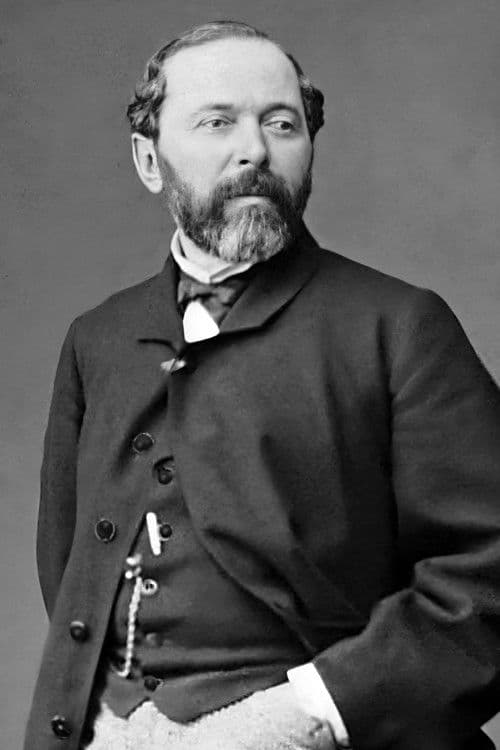
Charles de Tournemine, born Charles-Émile Vacher de Tournemine, October 25, 1812 in Toulon, where he died December 22, 1872, is a French orientalist painter.
Grandson of the archaeologist Jean-Charles Vacher de Tournemine (1755-1840), Charles de Tournemine is the son of Bernard Vacher de Tournemine, an officer in the French army, who does not recognize him and just agrees to pass as his uncle. Raised by his mother, Marie Anne Victoire Roubaud, alone in Toulon, he already showed drawing skills. He entered the foam school in 1825 and served on the schooner L'Amaranthe. He traveled the Mediterranean and discovered the cities of Constantinople, Beirut, Tyre, Alexandria, Cyprus, Syria and Tripolitania. He was injured in the left eye at the Battle of Navarino on October 27, 1827. He left the navy and, on March 18, 1831, he enlisted in the 11th artillery regiment, where his father was colonel.
In 1840, he became a draftsman at the Ministry of War in Paris. In 1843 and 1844, he made several trips to Normandy, Picardy, Brittany and the Loire region. Tournemine frequents the artistic world and buys the works of his contemporaries and friends. He was in charge, with his friend the painter Louis Français, of an annual publication of lithographs, Contemporary Artists, from 1846 to 1853. He exhibited at the Paris Salon for the first time in 1846. He showed seven paintings from Brittany at the Salon de 1848. He joined the Luxembourg Museum in 1852, as a conservation officer. He would have been named knight of the Legion of Honor on January 1, 1853.
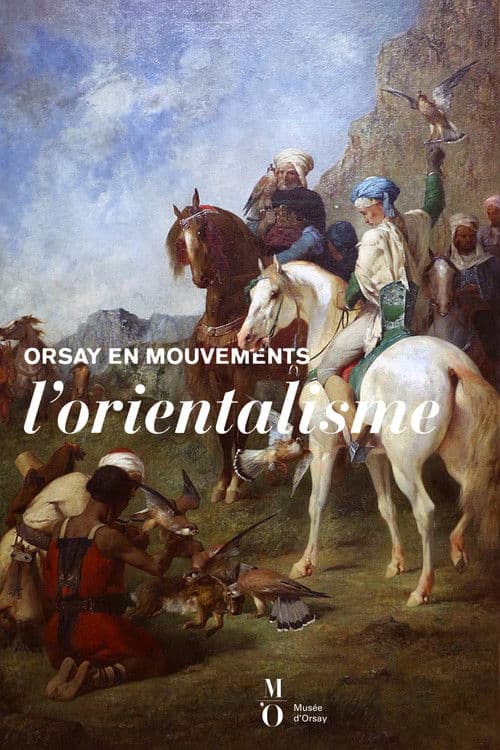
In 1852 his mother died in Toulon, the taste for traveling took over. He sells part of his collection to head to the Orient with a new perspective, that of an orientalist painter. First Italy then, in 1853, the coast of North Africa, from Algiers to Tunis, were a revelation for him. In 1855, he presented his first orientalist paintings at the 1855 Universal Exhibition in Paris. After 1857, he became a recognized orientalist painter. He began a long series of trips to the Orient, then to Turkey, Asia Minor and Egypt. In 1860, he set off again along the Danube towards the Black Sea, the gateway to the Orient. In 1861, in nine years, five of his large-format oils on canvas, major works representative of his style, entered French museums, several of which were sent to provincial museums. In 1863, during a three-month trip to Asia Minor, mainly on the west coast, he took many notes and sketches which would be the material for his future work. In 1864, Tournemine met the Goncourt brothers who subsequently published Manette Salomon, in which they were inspired by their correspondence with Tournemine when he was traveling in Asia Minor. In 1869, he was part of the retinue of Empress Eugénie who traveled to the Orient at the invitation of the Viceroy of Egypt on the occasion of the inauguration of the Suez Canal, in the company of Narcisse Berchère, Eugène Fromentin, Jean -Léon Gérôme and Charles-Théodore Frère. He was responsible for safeguarding the collections of the Luxembourg Museum during the siege of Paris. He ended his career as a conservative after the events of the Bloody Week of the Commune in May 1871.
He returned to Toulon, where he died on December 22, 1872. He was buried in Paris in the Montmartre cemetery.