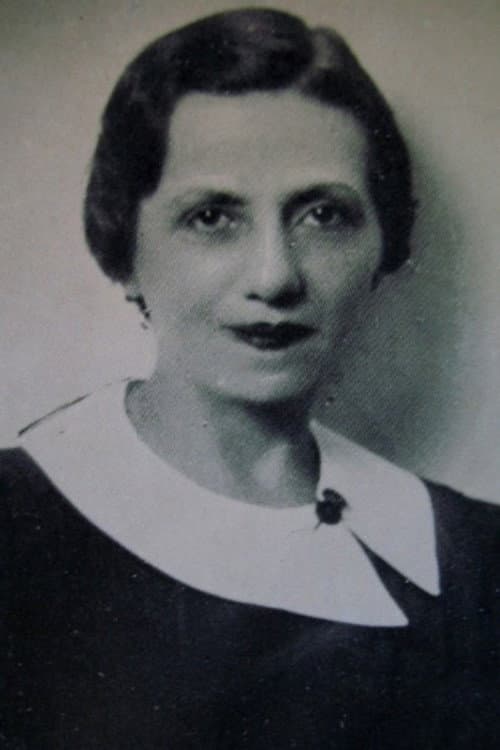
Marika Kotopouli (Greek: Μαρίκα Κοτοπούλη, 1887 - 1954) was one of the most important Greek theater actresses. She distinguished herself most as a tragedian in the works of foreign and Greek classical authors. She starred, however, in many different theatrical genres, including comedy and farce. Her performance in works by contemporary authors is considered unparalleled. Although she was not distinguished for her external appearance, she won admiration with the charm she radiated, as well as with the brilliance of her mind and the creativity of her thinking.
She was born in Athens. She was the daughter of Eleni and Dimitrios Kotopouli. Both of her parents were actors. She first appeared on stage as an infant on tour with her parents. In 1902, she was hired at the Royal Theater and began to become known to the wider public. Her debut at the Royal Theatre was in A Midsummer Night's Dream. An important moment in the young Kotopouli's career was her participation in Aeschylus' trilogy Oresteia in 1903, where the recitation of an ancient drama in the vernacular for the first time caused an earthquake in the theatrical and social conditions of the time.
She became a troupe leader in 1908 and in 1912 she settled at the "Omonoias" theatre, which was renamed "Marikas Kotopouli" and in 1936 she moved to the "Rex". In early 1929 she founded the "Eleftheran Skene", in collaboration with Spyros Melas and Mitsos Myrat. The creation of the troupe was designed as a counterweight to the imminent establishment of the National Theatre. After the dissolution of the troupe, she left in October 1930 for performances in the United States, where she remained until January 1932. Her desire to create a theatrical group that would rival the National Theater was realized when she returned from America and formed a troupe with her former rival, Kyveli, which enjoyed considerable success.
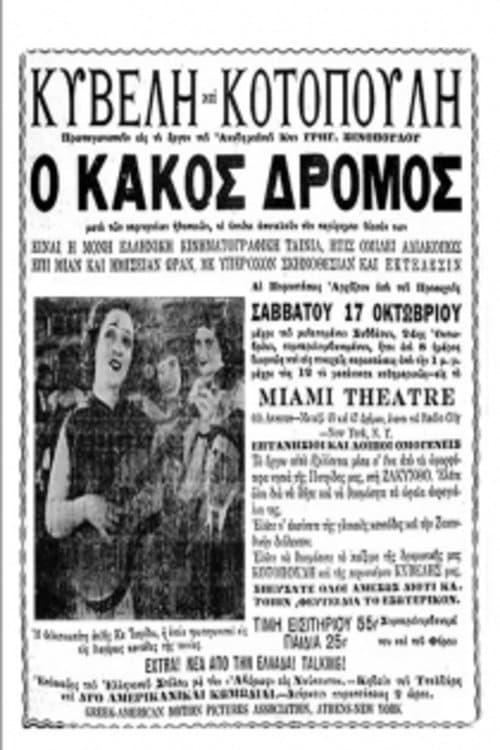
In addition to the theater, Kotopouli acted for the only time in cinema, in the Greek-Turkish production Bad Road (1933), a film that is considered lost.
Her personal life was stormy. Her much-publicized relationship with Ionas Dragoumis, which lasted from 1908 until the end of July 1920, when her lover was murdered by supporters of Venizelos, was scandalous for the time. The couple had been living together since June, without formalizing a marriage, which was impossible anyway, due to the class difference between them and the subsequent reaction of Dragoumis's bourgeois family.
In her political beliefs, Kotopouli was pro-monarchist, considering the palace to be a sacred institution. However, her personal relationships were not determined by this choice.
Kyveli, together with Marika Kotopouli, became for the theater-loving public the "sacred monsters" of modern Greek theater that they dominated for decades. The political beliefs of these actors had also influenced their popularity, especially during the heated period of the National Division, during which their theatrical performances constituted political events. The Venizelists were quick to applaud Kyveli and the anti-Venizelists Marika Kotopouli. Their admirers often caused incidents when they met after theatrical performances in the streets of Athens.
From Wikipedia, the free encyclopedia