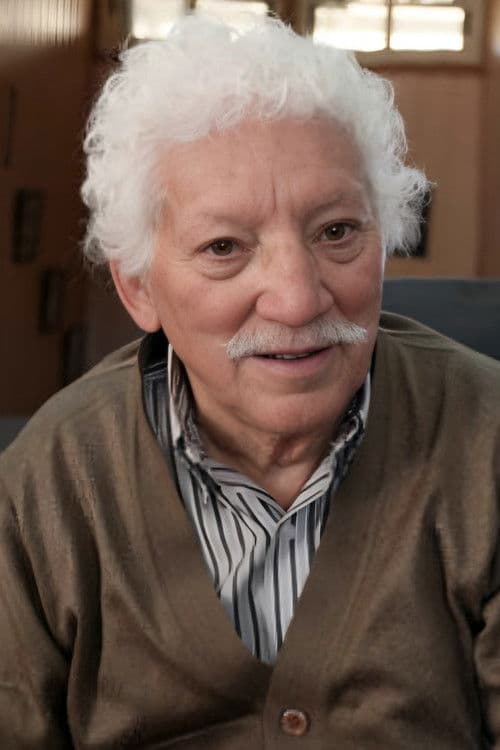
Hadj Rahim (الحاج رحيم), born in 1934, was the director of the first Algerian invisible camera in 1970. At that time, the director, with few technical and material means of today, had only succeeded thanks to his creativity, his know-how and his love of the profession. Hadj Rahim, who first had to come up with the idea of trapping people, was not only behind the camera but also in front where he often played the role of the trapper, that is to say he also had a real gift of actor.
The young Hadj Rahim left Algiers for a while for Paris, in the mid-1950s, where he discovered television through extras and radio where he was a manager. It was also in Paris where he encountered the commitment to independence among Algerian emigration. Back in Algiers at the beginning of the 1970s, we find him in particular in the credits of Vacation of Inspector Tahar by Moussa Haddad, for which Hadj Rahim was the assistant. The film, which is among the greatest public successes of Algerian cinematography, features a great comic figure, Hadj Abderrahmane with whom Hadj Rahim would have done theater at the Algerian Muslim Scouts school.
In the fictions subsequent to the Invisible Camera sequence, fictions of which Hadj Rahim will invariably be the screenwriter, he stands out with Le Mariage des dupes (Ars al moughaffalin, 1978) performed by Mustapha El-Anka and Ouardia Hamtouche, and especially Un aller simple (Mechia bila raj'a, 1980) where it is about a peasant family led by Hassan el-Hassani, who gives in to the sirens of the city, experiences the pangs of disillusionment, before returning to the village and being mortified, because, during their absence, the entire village changed under the weight of consumer goods that they thought were reserved for privileged city dwellers.
In 1982, Hadj Rahim tackled Serkadji, a fiction about the Barberousse prison in Algiers, where hundreds of FLN-ALN fighters and activists were incarcerated and executed. After its broadcast in 1985, the film will be the subject of criticism from former inmates on death row and their testimonies on torture, deprivation, bullying and their resistance will be the material for Barberousse my sisters of Hassan Bouabdellah.
After Khoud ma âtak Allah (1983) and the restructuring of the former RTA split into two entities ENTV and ENPA (1986), the latter being intended to produce for the first, Hadj Rahim like many directors joined ENPA and will continue with The End of a Strike (1992), The Portrait (1994) and a soap opera Hikayat ennas (2005), but ENPA has since disappeared from the radar and the public television company is no more than the shadow of 'herself. And with it lost and little by little forgotten talents like that of Hadj Rahim, to whom no particular tribute was paid by the small screen, except by a team sent to the burial of the director and who collected the regrets of two traveling companions from the ex-RTA: Moussa Haddad and Ahmed Bedjaoui who headed the dramatic broadcasts department at the turn of 1980.
He died on January 13, 2017 following a heart attack, he was 83 years old.