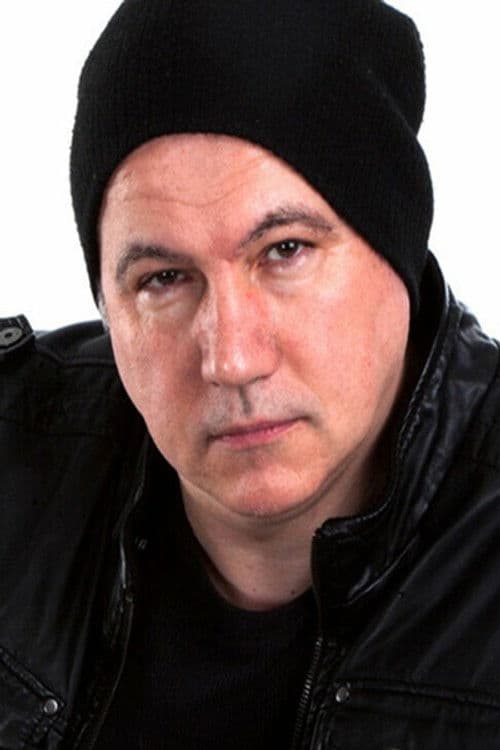
Steph Du Melo (Steven Dumelow, born 14.7.1961) is a British filmmaker whose work spans directing, editing, writing and producing within the independent and genre film space. He was the founder of MeloMedia Films Ltd, a UK-based production company committed to “producing high quality, thought-provoking feature films”. Du Melo began his professional life in the world of music and sound as a composer and pop star. His first film production role was as an orchestral recordist on Tom Waller's Monk Dawson (1998), on which his friend and collaborator Mark Jensen was composer. This early technical experience placed him close to the engine room of film production, developing both the discipline and craft awareness that would later feed into his directing and producing work.
In 1998 Du Melo co-founded the production company Renaissance 2000 Films. In 1999, they produced the Electronic Press Kit for the film The Criminal (directed by Julian Simpson). EPK production—interviews, behind-the-scenes footage, marketing material—giving Du Melo first-hand exposure to both the creative and commercial demands of feature-film promotion at the dawn of the DVD era, when EPKs were becoming essential tools for studios and distributors. Conceived as an ambitious independent film outfit, Renaissance 2000 developed a slate of projects with commercial potential across genre for TV and film. However, like many early-2000s independent ventures, they struggled against the realities of financing, development delays and distribution barriers. Most of the slate ultimately failed to reach full production.
The company’s defining project would become Fable, a self-funded, fully independent feature that entered production but was never fully completed. Du Melo, who co-led the project creatively, suffered a severe mental health breakdown during the process, which halted the film and ultimately caused the collapse of the company. This period marked a profound turning point in his professional life. While Fable did not reach completion, it stands as a formative moment—illustrating both the immense pressures placed on independent filmmakers and the personal cost that creative ambition can sometimes exact.
After a period away from the industry, Du Melo eventually returned to film work under a new professional identity, channelling his experiences into low-budget independent productions. His production company, MeloMedia Films, serves as the base from which he has developed independent feature films. His choice of genre and subject matter shows a leaning towards thriller and horror tropes, often with an investigative or social dimension (for example, missing persons, abduction, contagion) but his films have received largely poor reviews. For instance, a review of As a Prelude to Fear remarks that while the film taps into genuine anxieties (abduction, missing persons), it ‘adheres so closely to the standardised narrative formula of the genre’ and thus feels somewhat conventional. The same review notes Du Melo’s intention to connect the story to broader social issues (e.g., the number of missing persons) though the execution was viewed as less than fully successful. Similarly, C.A.M. was described as stepping into “red zones” of pandemic-conspiracy-thriller territory and leaning too heavily into found-footage aesthetics.