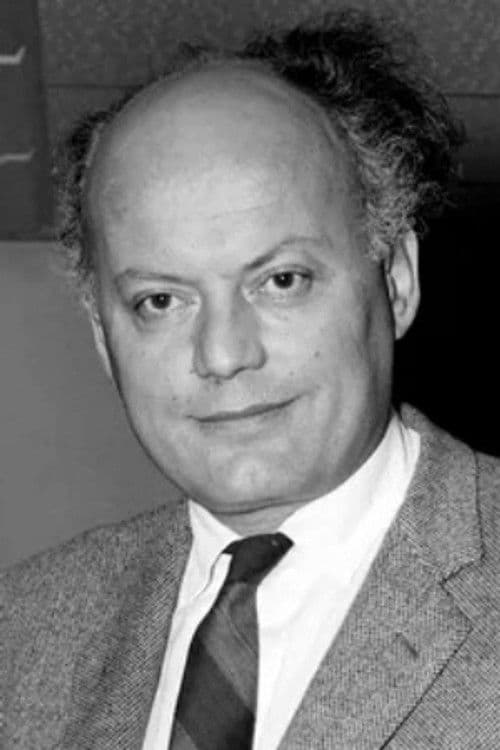
Frédéric Rossif (February 16, 1922 – April 18, 1990) was a French film and television director who specialized primarily in documentaries, frequently using archive footage. Rossif's common themes included wildlife, 20th-century history and contemporary artists. He frequently collaborated with notable composers Maurice Jarre and Vangelis.
Rossif was born in Cetinje, Montenegro, Yugoslavia. His family was killed during the Second World War. He studied in Rome in late 1930s and early 1940s before joining the French Foreign Legion's 13th Demi-Brigade in 1944. After the war, in 1945 Rossif established himself in Paris and worked at Club Saint-Germain. During those years he got acquainted with Jean-Paul Sartre, Boris Vian, Albert Camus, Ernest Hemingway and Malcolm Lowry among others.
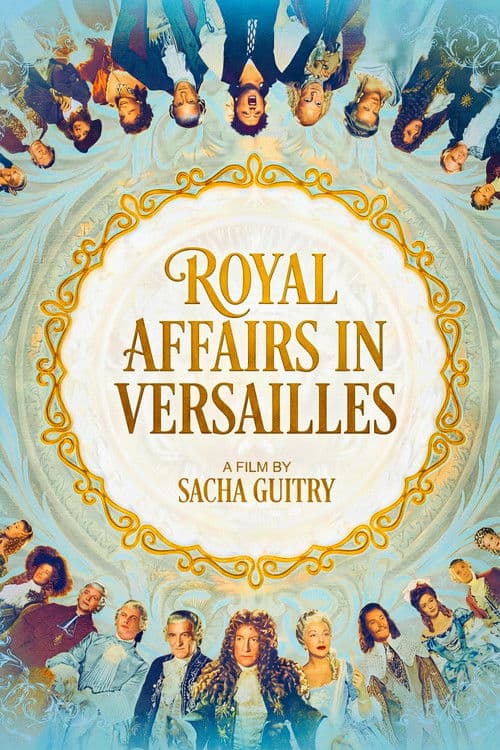
Since 1948 Rossif actively collaborated with the Cinémathèque Française, organizing, among other things, an avant-garde festival at Antibes in 1949–50. In 1952 he joined the ORTF. Some of the first projects he participated in include Cinq colonnes à la une, Éditions spéciales, La Vie des animaux and François Chalais' Cinépanorama (1956) (producer); La Villa Santo-Sospir (1952), a documentary about a villa decorated by Jean Cocteau (assistant director) and Si Versailles m'était conté (1954), in which he acted.
In late 1950s Rossif began writing and directing his own films, quickly achieving a considerable degree of success. His 1963 film Mourir a Madrid about the Spanish Civil War received the Prix Jean Vigo that year and was also nominated for an Academy Award for Documentary Feature. Several of his 1960s films were scored by the celebrated French composer Maurice Jarre. In 1970 Rossif completed his only non-documentary film, Aussi loin que l'amour, featuring Salvador Dalí as one of the actors.
In early 1970s Rossif met the Greek composer Vangelis, who was working in Paris at the time. The two collaborated on a large number of films, most notably the wild-life documentaries L'Apocalypse des animaux, L'Opéra sauvage and La Fête sauvage, some of the music from which was released on CD. Vangelis' music for an ocean scene from the 6th episode of L'Apocalypse, called "La Petite Fille de la Mer", subsequently became a modern classic. In 1980 Rossif directed a documentary dedicated to Vangelis, called L'Arbre de vie.
Rossif died in 1990 and was buried in the Cimetière du Montparnasse in Paris. His last projects included the monumental World War II documentary De Nuremberg à Nuremberg (1989) and Pasteur le Siècle, a documentary commemorating the 100th anniversary of L'Institut Pasteur (1987), a departure from the director's usual themes.
Source: Article "Frédéric Rossif" from Wikipedia in English, licensed under CC-BY-SA 3.0.