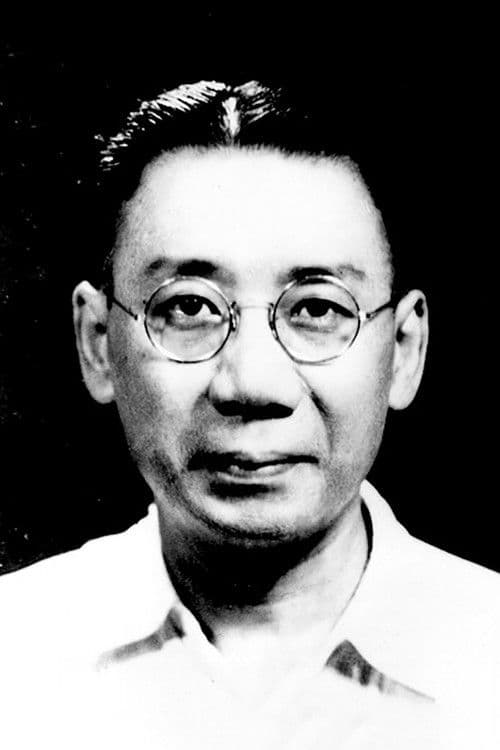
Born in Shanghai, China, Fei Mu is considered by many to be one of the major film directors prior to the communist revolution in 1949.
Known for his artistic style and costume dramas, Fei made his first film, 1933's Night in the City (produced by the Lianhua Film Company), at the young age of 27, and he was met with both critical and popular acclaim.
Continuing to make films with Lianhua, Fei directed films throughout the 1930s and became a major talent in the industry, with films like 1936's Blood on Wolf Mountain and 1935's Song of China. Fei's legacy as one of China's greatest directors was sealed with his 1948 influential masterpiece Spring in a Small Town about a love triangle in post-war China. In 2005, Spring in a Small Town was declared the greatest Chinese film ever made by the Hong Kong Film Critics Association.Fei remained active in this so-called "Second Golden Age" and also directed China's first color film Remorse at Death (1948), which incorporated Beijing Opera and starred Mei Lanfang. Following the Communist revolution in 1949, Fei Mu, along with many other artists and intellectuals fled to Hong Kong. There he founded Longma Film Company ("Dragon-Horse Films") with Zhu Shilin and Fei Luyi and produced (under the Longma name) Zhu Shilin's The Flower Girl (1951).
Following his death in Hong Kong in 1951, Fei Mu and his work fell into obscurity, as much of his filmography was forgotten or ignored on the Mainland, rejected by leftist critics as indicative of rightist ideologies. It was not until the 1980s, when the China Film Archive re-opened after being closed down during the Cultural Revolution, did Fei Mu's work find a new audience. Most significant was a new print made by the China Film Archive from the original negative of Spring in a Small Town.