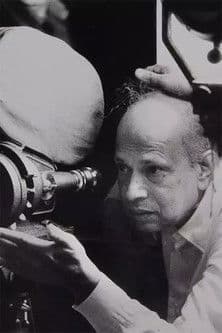
Tapan Sinha (2 October 1924 – 15 January 2009) was one of the most prominent Indian film directors of his time who made more than 40 feature films in Bengali, Hindi and Oriya in a career spanning nearly half a century. A contemporary of West Bengal's cinema icons - Satyajit Ray, Ritwik Ghatak and Mrinal Sen - Sinha was an equally powerful storyteller who, like his favourite novelist, Charles Dickens, won a large and appreciative audience by dealing with the problems that confront ordinary people.
Born in Kolkata, Sinha was the fifth child of Tridibesh and Pramila Sinha. He attended schools in Bhagalpur and Bankura. As a student at Patna University, Bihar, Sinha responded sympathetically to Mahatma Gandhi's Quit Indiamovement, launched against the British in 1942. However, when he moved to Kolkata University, where he was studying for an MSc in physics, he fell under the spell of British and American film-makers, particularly John Ford, Billy Wilder, Frank Capra and Carol Reed. He later claimed that it was Jack Conway's 1935 version of Dickens's A Tale of Two Cities that motivated him to become a film-maker.
After gaining his master's in 1946, Sinha joined the New Theatres studios, Kolkata, as a trainee sound engineer. Two years later, he moved to the Kolkata Movietone studio and, in 1950, he received an invitation to the London film festival and an opportunity to work at Pinewood studios, near London, where he took a job in the director Charles Crichton's unit as a sound engineer. While in London, he was exposed to the works of Italian directors Federico Fellini, Vittorio De Sica and Roberto Rossellini. On returning to India, Sinha made his first film, Ankush (The Goad, 1954), which featured an elephant belonging to a zamindar (tax collector) as the central character. His final film was released in 2001.
Sinha, whom many critics regarded as India's David Lean, was honoured at international festivals in Berlin, Venice, London, Moscow and San Francisco and had received the Dadasaheb Phalke award, the highest cinema honour from the Indian government in 2008.