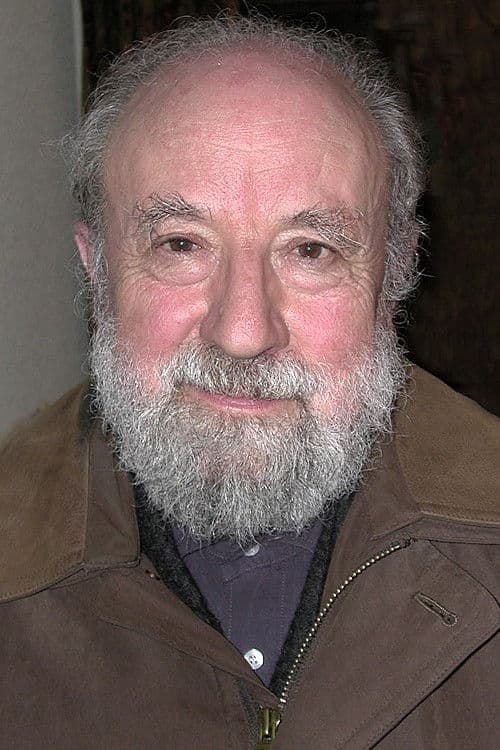
Michel Butor (14 September 1926 – 24 August 2016) was a French poet, novelist, teacher, essayist, art critic and translator.
Michel Marie François Butor was born in Mons-en-Barœul, a suburb of Lille, the third of seven children. His parents were Émile Butor (1891–1960), a railroad inspector and Anna (née Brajeux, 1896–1972). He studied philosophy at the Sorbonne, graduating in 1947. He taught in Egypt, Manchester, Thessaloniki, the United States, and Geneva. He won many literary awards for his work, including the Prix Fénéon and the Prix Renaudot.
Journalists and critics have associated his novels with the nouveau roman, but Butor himself long resisted that association. The main point of similarity is a very general one, not much beyond that; like exponents of the nouveau roman, he can be described as an experimental writer. His best-known novel, La Modification, for instance, is written entirely in the second person. In his 1967 La critique et l'invention, he famously said that even the most literal quotation is already a kind of parody because of its "trans-contextualization."
For decades, he chose to work in other forms, from essays to poetry to artist's books to unclassifiable works like Mobile. For artists' books he collaborated with artists like Gérard Serée. Literature, painting and travel were subjects particularly dear to Butor. Part of the fascination of his writing is the way it combines the rigorous symmetries that led Roland Barthes to praise him as an epitome of structuralism (exemplified, for instance, by the architectural scheme of Passage de Milan or the calendrical structure of L'emploi du temps) with a lyrical sensibility more akin to Baudelaire than to Robbe-Grillet.
In an interview in the Museum of Modern Art, New York, conducted in 2006, the poet John Ashbery describes how he wanted to sit next to Michel Butor at a dinner in New York.
After meeting in 1977, Butor became a friend of Elinor S. Miller, a French professor at Rollins College at the time. They worked collaboratively on translations, catalogues and lectures. In 2002, Miller published a book on Butor entitled Prisms and Rainbows: Michel Butor's Collaborations with Jacques Monory, Jiri Kolar, and Pierre Alechinsky.
Source: Article "Michel Butor" from Wikipedia in English, licensed under CC-BY-SA 3.0.