The Couch Critic Logo
The Couch CriticCouch Critic
TrendingMoviesTV ShowsListsReviewsWhat to Watch
LogoThe Couch Critic

Menu

TrendingMoviesTV ShowsListsReviewsWhat to Watch

© 2026 The Couch Critic

The Couch Critic Logo

The Couch Critic

Your go-to destination for honest movie and TV show reviews from a passionate community of critics. Join the conversation today.

X

Explore

  • Trending
  • Movies
  • TV Shows
  • Reviews
  • Lists
  • Games
  • About Us

Categories

  • Popular Movies
  • Trending Now
  • Upcoming
  • Airing Today
  • Movie Genres
  • TV Genres

Community

  • Guides
  • What to Watch

Legal

  • Privacy Policy
  • Terms of Service
  • Cookie Policy
  • RSS Feed
© 2026 The Couch Critic.•Built by Hayden Thorn
Cookie Settings
The Movie Database

This application uses TMDB and the TMDB APIs but is not endorsed, certified, or otherwise approved by TMDB.

Home/People/Maxim Gorky
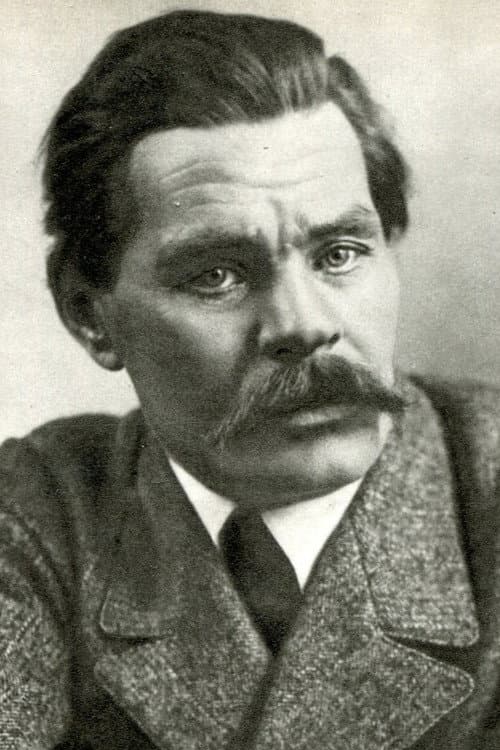
Maxim Gorky profile photo
Born
Mar 28, 1869Died: Jun 18, 1936
Lived 67 years
Place of Birth
Nizhny Novgorod, Russian Empire [now Russia]
Known For
Writing
Gender
Male

Career Highlights

2
Movies
2
TV Shows
Also Known As
Maxime Gorki
Maximo Gorki
Alexis Pechkov
Alekseï Pechkov
Алексей Пешков
+2 more
IMDb Profile

Maxim Gorky

Writing

Biography
Alexei Maximovich Peshkov (1868–1936), popularly known as Maxim Gorky (Russian: Максим Горький), was a Russian writer and political activist. He was nominated five times for the Nobel Prize in Literature. Before his success as an author, he travelled widely across the Russian Empire changing jobs frequently, experiences which would later influence his writing. Gorky's most famous works are a short story collection 'Sketches and Stories' (1899), plays 'The Philistines' (1901), 'The Lower Depths' (1902) and 'Children of the Sun' (1905), poem 'The Song of the Stormy Petrel' (1901), autobiographical trilogy 'My Childhood', 'In the World', 'My Universities' (1913–1923), and novel 'Mother' (1906). Though Gorky himself judged some of these works as failures, most are now seen as masterpieces. Some of his less-known post-revolutionary works such as the cycles 'Fragments from My Diary' (1924) and 'Stories of 1922–1924' (1925), and novels 'The Artamonov Business' (1925) and 'The Life of Klim Samgin' (1925–1936), Gorky himself was more proud of; the latter is considered Gorky's masterpiece and sometimes being viewed by critics as a modernist work. Unlike his pre-revolutionary writings (known for their "anti-psychologism"), these differ with an ambivalent portrayal of the Russian Revolution and "unmodern interest to human psychology" (as noted by D. S. Mirsky).
The Magic Beam poster

The Magic Beam

as Self (archive footage)
1963
Soviets on Parade poster

Soviets on Parade

as Self
1933