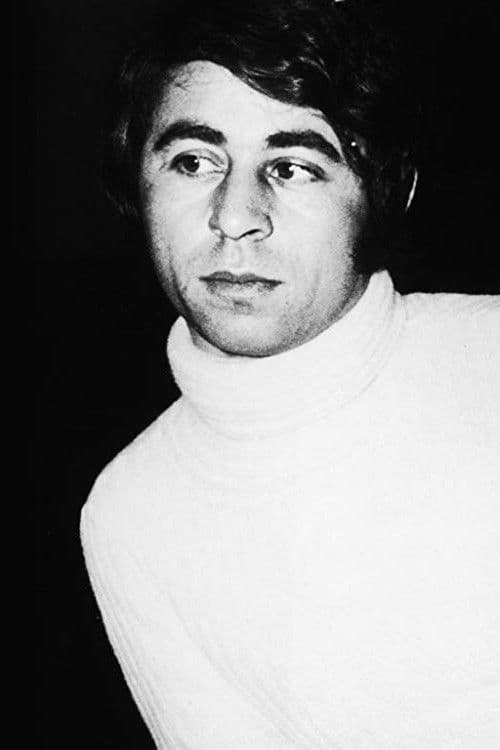
Francis Albert Lai (26 April 1932 – 7 November 2018) was a French composer, noted for his film scores. He won the 1970 Oscar for Best Music, Original Score and the Golden Globe Award for Best Original Score for the film Love Story. The soundtrack album went to No. 2 in the Billboard album charts and the film's theme, "Where Do I Begin", was a hit single for Andy Williams.
Lai was born on 26 April 1932, in Nice, France, the son of market gardeners of Italian origin. From a very early age, Lai was fascinated by music and he played first in his local regional orchestras. In Marseilles he discovered jazz and met Claude Goaty, a singer of popular songs in the 50s.
While in his twenties, Lai left home and followed Goaty to Paris, where he became part of the lively Montmartre music scene. The "Taverne d'Attilio" on the Place du Tertre in Montmartre, was a favorite place for the young talented Bernard Dimey with whom Lai composed his first song. Their song-writing partnership would extend to a hundred or so. After a short period with the orchestra of Michel Magne, Lai became an accompanist for Édith Piaf and composed for her.
In 1965, he met filmmaker Claude Lelouch and was hired to help write the score for the film A Man and a Woman. Released in 1966, the film was an international success, earning a number of Academy Awards. The young Lai received a Golden Globe Award nomination for "Best Original Score". This initial success brought more opportunities to work for the film industry both in his native France, where he continued to work with Lelouch on scores to films such as Vivre pour vivre (1967), Un homme qui me plaît (1969), Le voyou (1970) and La bonne année (1973), as well as in Great Britain and the United States. He was known for his support of Mireille Mathieu in many compositions and recordings. In 1970 he wrote the score for director René Clément's film, Rider on the Rain ("Le passager de la pluie"). It sold over one million copies and was awarded a gold disc in September 1971.
In 1970, Lai won the Academy Award for Best Music, Original Score and the Golden Globe Award for Best Original Score for the film Love Story. In the United States, the soundtrack album reached No. 2 in the Billboard album charts and the film's theme, "Where Do I Begin", was a hit single with lyrics by Carl Sigman for singer Andy Williams. The song would also be recorded successfully by Lai himself, with a full orchestra, and by Henry Mancini and Shirley Bassey. Lai's "Love Story" theme was heard in the 1978 Love Story sequel titled Oliver's Story, although the main score was composed by Lee Holdridge. ...
Source: Article "Francis Lai" from Wikipedia in English, licensed under CC-BY-SA 3.0.