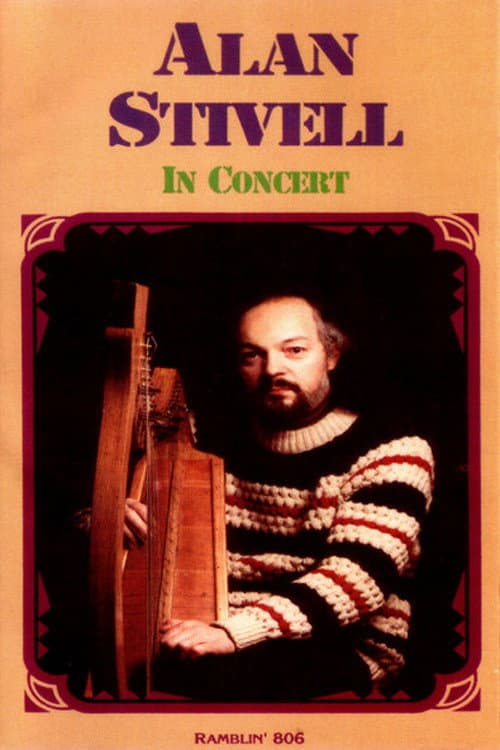
Alan Stivell (born Alan Cochevelou on 6 January 1944) is a French, Breton and Celtic musician and singer, songwriter, recording artist, and master of the Celtic harp. From the early 1970s, he revived global interest in the Celtic (specifically Breton) harp and Celtic music as part of world music. As a bagpiper and bombard player, he modernized traditional Breton music and singing in the Breton language. A precursor of Celtic rock, he is inspired by the union of the Celtic cultures and is a keeper of the Breton culture.
Alan Stivell was born in the Auvergnat town of Riom. His father, Georges (Jord in Breton) Cochevelou, was a civil servant in the French Ministry of Finance who achieved his dream of recreating a Celtic or Breton harp in the small town of Gourin, Brittany and his mother Fanny-Julienne Dobroushkess was of Lithuanian-Jewish descent. In 1953, Alan began playing the instrument at the age of nine under the tutelage of his father and Denise Megevand, a concert harpist. Alan also learned Celtic mythology, art, and history, as well as the Breton language, traditional Breton dance, and the Scottish bagpipe and the bombarde, a traditional Breton instrument, from the oboe family. Alan began playing concerts at the age of eleven and studied traditional Breton, English, Irish, Scottish, and Welsh folk music, also learning the drum, Irish flute, and tin whistle. He competed in, and won, several Breton traditional music competitions in the Bleimor Pipe band. Alan spent his childhood in Paris, with its cosmopolitan influences. But he fell in love with Breton music and Celtic culture, in general, and often went back in his teens to Brittany.
Stivell's first recording came in 1960 ("Musique gaelique"), a single that was followed by the LP Telenn Geltiek in 1964. He already recorded solo harp and harp backing singers in 1959 with Breiz ma bro ("Brittany my country") and a Mouez Breiz EP ("Voice of Brittany") with the female singer Andrea Ar Gouilh. His stage name, Stivell, means "fountain" or "spring" in Breton. The name refers both to the Breton renewal and to his surname Cochevelou (an evolution of kozh stivelloù, "the old fountains").
With a new bardic harp with bronze strings, Stivell began experimenting with modernized styles of music that became known as Celtic rock. In 1966, Alan Stivell began to perform and record as a singer. The following year, he was signed by Philips Records. This was during the birth of the New Breton and Celtic music movement.
In 1968, after two years of touring and regular appearances at the American Students and Artists Center in Paris, Alan joined the Moody Blues onstage to perform in London's Queen Elizabeth Hall.
In 1970, Stivell released his first hits, the single "Broceliande" and the album Reflets, both on the Philips record label. He became closely associated with the burgeoning Breton roots revival, especially after the release of the purely instrumental 1971 album Renaissance of the Celtic Harp, which won one of the most famous awards in France, the prize of the Académie Charles Cros. ...
Source: Article "Alan Stivell" from Wikipedia in English, licensed under CC-BY-SA 3.0.