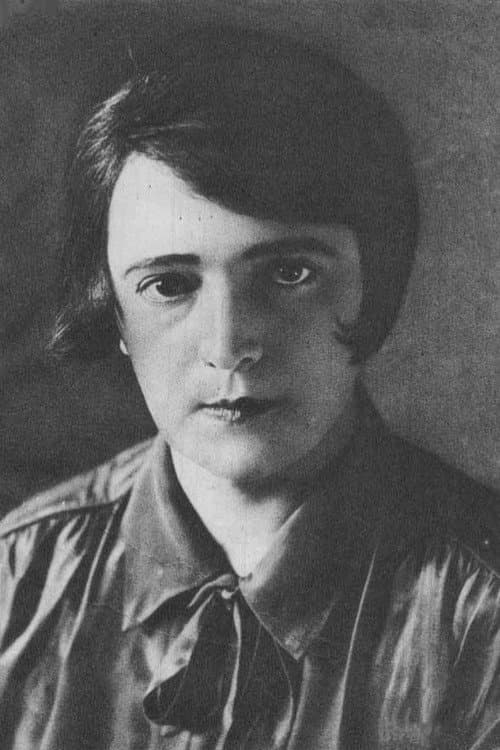
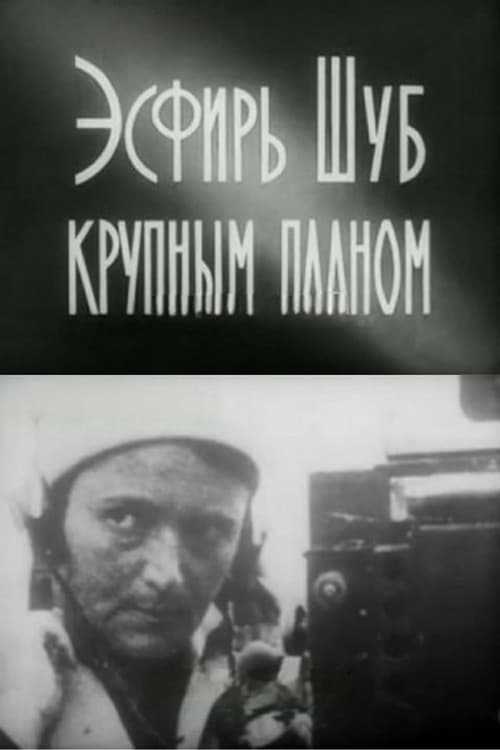
Esfir Shub, also referred to as Esther Il'inichna Shub, was a pioneering Soviet filmmaker and editor in both the mainstream and documentary fields. She was one of few women to play a significant role behind the scenes in the Soviet film industry. She is best known for her trilogy of films, Fall of the Romanov Dynasty (1927), The Great Road (1927), and The Russia of Nicholas II and Leo Tolstoy (1928). Shub is credited as the creator of compilation film.
Esfir Shub was born into a family of landowners. She studied literature in Moscow, but after Revolution she began to attend the classes at the Institute for Women's Higher Education and then got a job as a 'theater officer' at the State Commissariat of Education. In the theatre she worked in collaboration with the famous avant-garde director Meyerhold and the poet Mayakovsky, who was one of her friends.
Shub joined the Goskino film company and met Dziga Vertov. Their professional friendship was lifelong, but stormy. Shub shared his belief in film's intrinsic ability to reveal aspects of reality not visible to the naked eye, but she became engaged more in the interpretation of the historical world than in only contemporary matters.
First Shub worked as a re-editor of foreign films for Soviet distribution. In 1927 (the tenth anniversary of Revolution) she made her first documentary film The Fall of the Romanov Dynasty (1927). This film was the first part of the trilogy, which also consists of The Great Road (1927) and Lev Tolstoy and the Russia of Nicolai II (1928). In the process of making the trilogy, Shub had to contend with not only an overwhelming volume of material but also the problem of locating relevant footage. She often found that valuable documents of the pre-war period had been sold abroad or had been badly damaged in ill-equipped newsreel archives. Shub compensated the lack of material by using newly shot footage. Her films derive much of their power from this technique of providing a contemporary context for archival footage. Thus, Shub created the absolutely new genre 'historical compilation film'. She later claimed she just wanted to create 'editorialized newsreels'.
The critics and colleagues admired Shub's work, because she found a middle path between narrative and documentary forms. Sovkino denied her authorial rights for her trilogy claiming that she was just an editor. However, in 1935 Shub was awarded the title Honored Artist of the Republic.
In the beginning of the forties she collaborated with Vsevolod Pudovkin on the successful Twenty Years of Soviet Cinema (1940). Then she left Goskino to become chief editor of the 'News of the Day' at the central studio for documentary film in Moscow. Most of her later years were confined to editing duties. Shub was definitely the most prominent Soviet woman filmmaker of her generation.