Browse 33 movies from Colonial Williamsburg Foundation
This documentary which opens with a ten-minute period drama about the importance of Williamsburg in 1774, explains the mission of John D. Rockefeller, Jr., and Dr. W.A.R. Goodwin in the 1920s to restore Williamsburg to a colonial American icon. Through the painstaking research of curator, historians, and architects, the town's restoration plan is mapped out. Construction tradesmen from the twentieth century transform rundown exteriors into period edifices. Interiors are modified and restored to livable, sometimes elegant, period condition. This vast undertaking leads to mid-century historical interpretation about the importance of the people and ideas of Williamsburg that forged a new nation.
Jan 1951
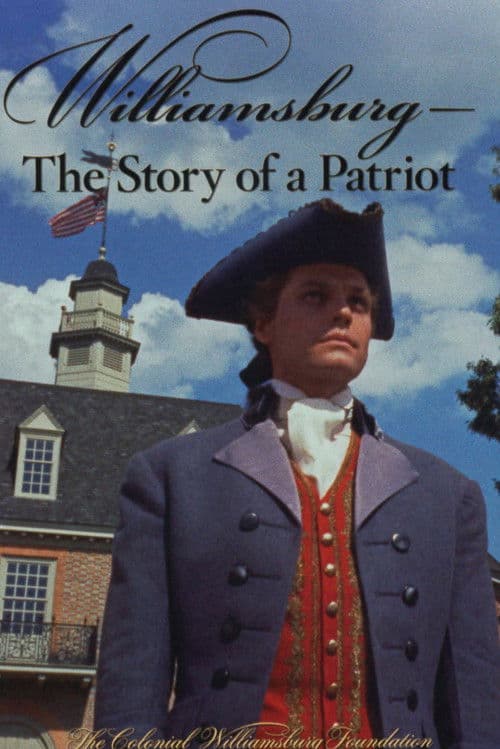
Williamsburg: the Story of a Patriot tells the story of Virginia's role in American Independence (up to the point of voting to propose independence at the Second Continental Congress), from the point of view of John Fry (played by a young Jack Lord), a fictional Virginia planter elected to the House of Burgesses.
Mar 1957
Music in eighteenth-century Williamsburg was a ritual of everyday life the accompaniment to everything from children's games to slave labors to marching militia. Even the simple sounds of an ordinary day seemed to mesh into a musical rhythm the beat of horses hooves, the rustling of the wind, the clinking of tavern glasses. The architecture, furnishings, costumes, and settings of this era stimulate the senses, putting you in tune with another time in American history.
Jan 1960
Presents a dramatization of the extended field trip made by Mark Catesby in colonial Virginia and the ultimate publication of his two-volume illustrated natural history of the birds, animals, plants, reptiles and fish he observed and sketched in the new world.
Jan 1965
With the help of Howard Goodwin, Dr. Goodwin's son, we present an authoritative documentary sketch with family album photographs, rare motion picture footage, and oral history recordings of the man whose vision for a city beautiful sparked the restoration of Colonial Williamsburg.
Jan 1997
The gun was a vital part of life in colonial Williamsburg, and this docudrama demonstrates the expertise that went into the making of each weapon. The master gunsmith explains the principal parts of an early American rifle and demonstrates the gun's complex manufacturing process. The guns of the period were crude military weapons, but with revolution stirring, the colonists depended on their weapons to send a message to the British Crown.
May 1969
While exhibiting their crafts, the cabinetmaker, cooper, carpenter, and basket maker of Colonial Williamsburg's Historic Trades discuss the importance of tools, then and now. Many of the tools shown were created by the blacksmith.
Jan 1993
Ivor Noel Hume takes viewers on a journey to several excavation sites in Colonial Williamsburg. You'll learn how experts date what they find and use laboratory processes to understand and protect the artifacts. All of this scientific analysis enables historians to bridge time by bringing the present into direct contact with the past.
Jan 1969
Marvel as skilled craftspeople transform white oak logs into finished baskets.
Jan 1968
The colonial silversmith produced items both functional and beautiful. In this 1971 docudrama, silver scraps are transformed into a magnificent new coffeepot under the skilled hands of the master silversmith. You'll witness the art and science of silversmithing at every stage from the adaptation of English designs and the pouring of molds to the forging, raising, and plashing that give the metal its shape and shine.
Jan 1971
This is a dramatization of the color and style of clothing distinctive to eighteenth-century America. It was an age of knee breeches, full gowns, fancy brocades, silk stockings, linen shirts, decorative buckles, elaborately embroidered coats, and wigs.
Jan 1976
Colonial Williamsburg's curators, conservators, archaeologists, and historic tradespeople pool their expertise to reveal the merits of early southern furniture and the technical skills of its creators.
In the eighteenth century, tradesmen passed along their skills and knowledge, the art and mystery of their trades to their apprentices. With mechanization, many of those skills were lost, but through research and practice, the tradesmen and women of Colonial Williamsburg have re-learned those arts and mysteries. In this video, Colonial Williamsburg blacksmiths demonstrate some of the fundamental techniques used to shape hot iron. They show how each process leaves telltale signs that give wrought ironwork its distinctive character and allow modern day tradesmen to read how an antique piece was made. They apply these techniques to manufacture a fireplace and iron patterned after an 18th century original.
Jan 1996
Describes the fashions of Eighteenth-Century America.
Jan 2005
This is story of a typical morning of a colonial household. Filmed in restored Williamsburg, the reenactment follows a family’s household slaves through their morning routines as they prepare breakfast for the master and his family.
Jan 1944
Provides a tour overview of Colonial Williamsburg.
Jan 2006
You'll see the progression of wares manufactured at England's celebrated Chelsea Porcelain Manufactory between 1745 and 1769 from simple tea services and soup tureens to elaborate statuettes. Expensive and difficult to obtain, Chelsea pieces were rarely found in the colonies.
The cooper works through the demanding process of creating a barrel. Using no measuring tool other than his own eyesight, the master cooper precisely cuts the wood into staves, then bevels, shapes, and smooths and fits components.
Jan 1967
Experience the pride and precision that went into every eighteenth-century instrument made in colonial America. Each part is handmade and carefully fitted by craftsmen as they create a small harpsichord, known as a spinet, and the period-popular violin. The instruments take shape under deft, steady hands that turn raw materials into works of art.
While explaining the trade of printing, this docudrama relates the importance of the printer as a communicator of news, information, and learning that was central to the colonial capital community of Williamsburg.
Dec 1952