Menu
© 2026 The Couch Critic
Browse 64 movies from Centralna Wytwórnia Programów i Filmów Telewizyjnych Poltel
Second half of September 1939. Lt. Brejer, along with a detachment of his sappers, receives orders to blow up the bridge. The promised explosives do not arrive. So Brejer gets the order to withdraw and reunite with the rest of the division. Along the way, suffering hunger and discomfort along with his soldiers, he joins various divisions, collects survivors and fights. From a German prisoner of war, he finally learns that the Soviets have entered Poland. Finally, he and his men manage to reach his home unit, but that unit has just surrendered to the Germans.
Sep 1989
Old couple dreams about a cruise.
Dec 1988
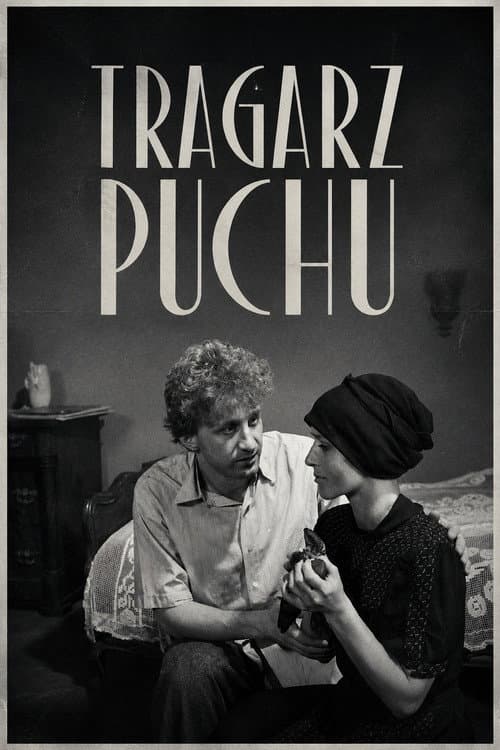
It's a film about solidarity and human help: in this case, from a less persecuted Pole to a more persecuted Jew. The film's protagonists are a young woman, Jadwiga, who makes a living feeding lice at the Institute, and a ghetto escapee, Dalek, and later his supposed sister, or rather his wife, Fryda, whom Jadwiga shelters in her apartment. The three characters fight for their lives, for survival, and not only for their own but also Fryda's unborn child. However, they fail, as a series of tragic events unfolds. Knowing that her husband, Dalek, will not reveal the truth about them to Jadwiga, who is in love with him, Fryda does so alone and, without saying goodbye, departs for the embattled ghetto. Her husband follows her.
Apr 1984
A dramatized retelling of the life of the Romanticism painter Piotr Michałowski.
Jan 1989
The nouveau riche chinchilla breeder hires a painter-portraitist.
Apr 1989
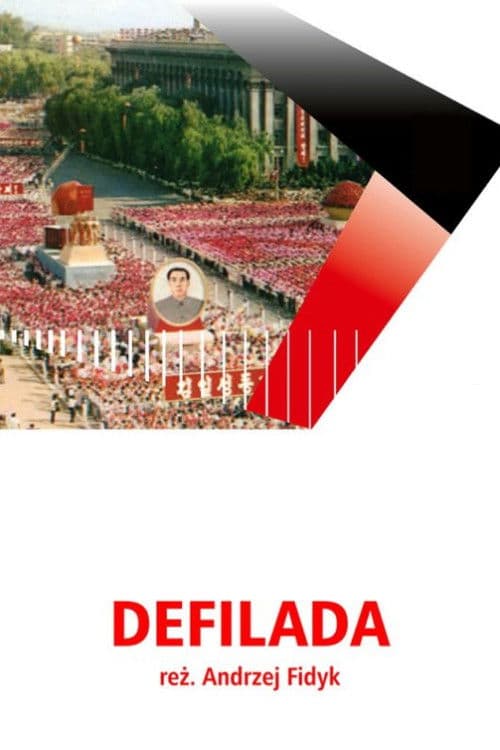
Defilada was made on the occasion of the 40th anniversary celebrations of state's founding in North Korea, which the regime intended to use to eclipse the 1988 Summer Olympics taking place that year in Seoul, South Korea. The North Korean regime invited filmmakers from countries then considered friendly (read: Communist), including People's Republic of Poland, which sent a team under Andrzej Fidyk. The documentary is primarily composed of declarative statements, as well as texts of North Korean newspapers and books. There was no author's commentary. Fidyk commented that he and his team were likely “the most disciplined” foreign team of filmmakers in North Korea, as they did not trouble the regime by looking under the surface - they were content with what they were given and asked to do. (Wikipedia)
May 1989
A UFO lands at night in a typical Masovian village. The villagers feel honored and want to be as hospitable as possible for the unexpected alien guests.
Mar 1986
Customs officer Andrzej Lechicki is arrested on charges of smuggling antiques. The defense of the accused is undertaken by attorney Sokor.
Nov 1986
The film is based on true events. Officers locked in a POW camp make a desperate attempt to get out. A group of daredevils undertake to dig an underground tunnel through which they can escape. We learn about their moral dilemmas, solidarity and loyalty to their friends. This is especially emphasized in the last scenes of the film.
Jan 1987
Kasia and Iwonka's father leaves the family, leaving the girls alone with their mother.
Mar 1985
A report on the Polish all-female expedition to the Karakoram led by Wanda Rutkiewicz.
Jan 1976
The film shows Poland regaining independence in 1918 and the formation of the first government of the Republic of Poland.
Most important events of November Uprising in Poland.
Dec 1980
"Legenda" is a document about a famous polish writer Stefan Żeromski. It serves as an interview with people who knew the artist.
Jan 1975
During the holidays, a famous actress gets into an affair with a student.
Apr 1981
The fate of a surgeon and prisoners during World War II.
Sep 1977
The writer Jan Kellert - the author of the widely known book "The Legend of the Vistula", which is part of the canon of pre-war middle school reading, comes from Lublin to Żmurki, where he spent the occupation. The division of the Żmurki estate is to take place the next day. The welcome dinner becomes an opportunity to exchange political views and a critical view of the manor's inhabitants on the current situation.
Aug 1984
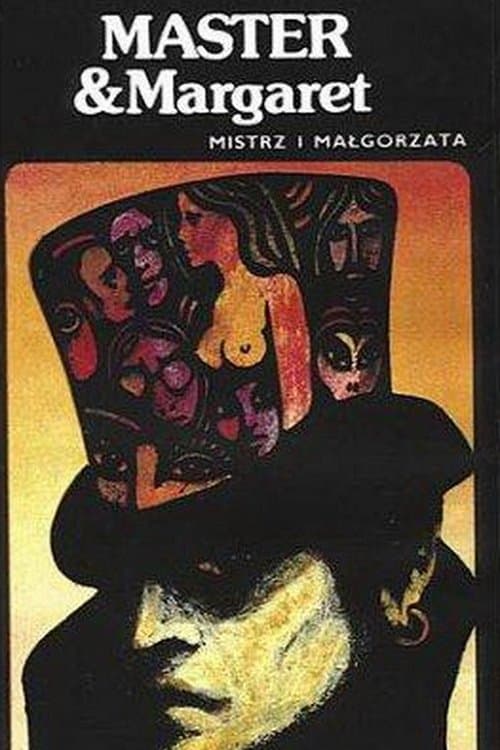
The Master and Margarita (Mistrz i Małgorzata) is a four-part Polish television production based on the novel by Mikhail Bulgakov.
Jun 1990
The tale of "The Golden Duck" in the reality of 17th-century Warsaw.
Dec 1976
A film about an outstanding philosopher, logician - born in 1902 Dominican Father Professor Joseph Maria Bochenski. Documentary about a man whose life was extraordinary. Lancer, military chaplain, participant in three war campaigns - as a lancer in 1920, as a soldier in the Independent Operational Group "Polesie" under General Franciszek Kleeberg, and finally as a member of the Second Polish Corps in the Battle of Monte Cassino. From 1964 to 1966 he was rector of the University of Freiburg in Switzerland, founder of the Institute of Eastern Europe, and author of many books on philosophy and logic.