Browse 40 movies from Crawley Films
A BAFTA award nominated Canadian documentary about the building of the fourth generator building at Kitimat, British Columbia and the aluminium smelters it will supply.
Jan 1956
A portrait of Newfoundland that records a way of life that has all but disappeared.
Jan 1951
The story of Dave, an emotionally unstable adolescent who cannot accept that his girlfriend has quit going steady with him and the football coach has benched him, and how he loses control and gets into trouble.
Jan 1957
An out-of-work Irish immigrant in Montreal remains hopeful that his luck is about to change but his disillusioned family grow tired of his constant lying, pigheadedness and instability.
Sep 1964
The Tsimshian legend of a blind old medicine man and the origin of the distinctive white pattern on the neck of the loon.
Jan 1949
An educational film from 1953 to encourage parents talk to their children about adolescence.
Dec 1953
This driver's education film is about the importance of driver behavior in preventing accidents. The narrator, Gordon Anderson of the Industrial Accident Prevention Associations of Ontario, points out that road accidents are a major cause of fatalities. The core problem lies with the driver, whose decision-making can be compromised by fatigue, alcohol, poor vision, and especially, "bad manners." Statistics and tragic real-life examples show that 81% of accidents are caused by driver errors, and 97% of accidents involve cars in good condition. The film advocates for a proactive approach to safety, urging drivers to follow simple rules of the road. It also suggests solutions like stiffer physical and mental tests for drivers, compulsory vehicle inspections, and use of safety belts. The biggest factor is a lack of courtesy. The film asks drivers to choose "safety or slaughter" by remembering their human limitations and treating other drivers with respect and good manners.
Jan 1965
Rather than adapt a later or create a new Oz story, this production has Dorothy still in posession of the shoes, and she clings to an apple tree during a tornado which takes her back to Oz. The Scarecrow, Tin Woodman, and Lion (using the names created for the nearly-abstract television series, Tales of the Wizard of Oz, from which this was derived) have had their MGM gifts destroyed by the restored Wicked Witch, and the four proceed to the Wizard for help, who is ineffectual as usual.
Feb 1964
An overview of the social, emotional, mental and physical changes which occur in the adolescent with suggestions on how adults can help.
Jan 1953
An afternoon and evening in the complicated lives of six teenagers.
A man obsessed with his award-winning lawn goes to great lengths to keep it looking great when mushrooms suddenly start appearing all over the yard.
Jan 1973
Since the first film was made explaining the power of the atom, nuclear technology has made great advances. This film is an up-to-date account of the many areas of nuclear research and recent developments in Canada. It was filmed at the long-functioning atomic reactors at Chalk River and Rolphton, and at the latest and largest atomic power station at Pickering, as well as at laboratories across the land where experimentation is carried out in both pure and applied nuclear science. Produced for the NFB by Crawley Films Ltd. for Atomic Energy of Canada Limited.
Teenager Mary has strong physical yearnings for her boyfriend, so she asks her mother for advice on what she should do about said carnal cravings.
The focus of this film is on Canada's nuclear research centre at Chalk River, Ontario. Key to atomic progress are the radioactive isotopes. The insertion and handling of these isotopes in the deadly interior of the reactor are shown in detail. Also shown are the applications of radioactive isotopes in various fields of endeavor, particularly medicine, agriculture, and manufacturing industries. Co-produced by the NFB and Crawley Films Ltd. with the assistance of Atomic Energy of Canada Limited.
Jan 1959
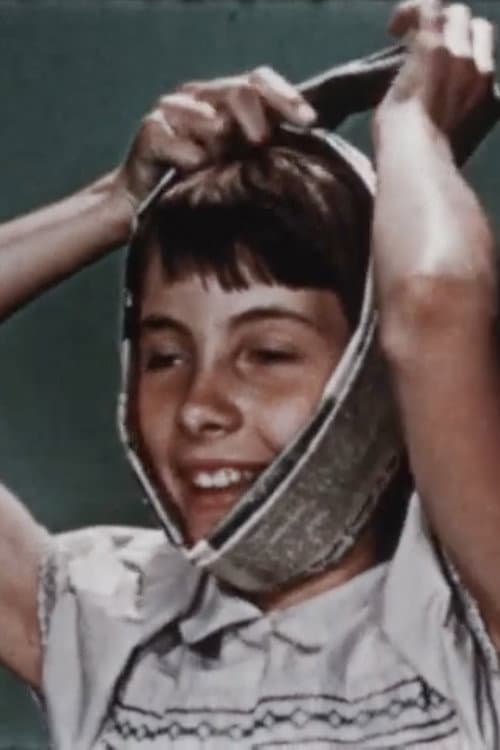
The film "Making a Mask" demonstrates the process of creating masks using simple materials like newspaper, paste, and clay. It follows a group of children as they mold their faces, apply layers of wet newspaper, and paint their finished masks. The project encourages creativity, allowing each child to design a unique character. The masks are durable and can be used for various occasions, showcasing the fun of crafting.
Man's need to create beauty, to interpret the world around him in image and color, has found expression in many forms, from the days of primitive culture to the present. This film surveys the work of Canadian craftsmen in many fields, showing how the changing Canadian scene has been their constant inspiration and how business enterprise today is increasingly using the skills of the artisan to enhance the decor of building interiors.
A study of the behavior of four and five year old children at home and at nursery school. At four the vacillation between infantile helplessness and vigorous self-assertion is seen, and at five the development of independence and the beginning of cooperation. Parents observe that, unpredictable as their behavior may be, it's fun to help in the development of the fours and the fives.
Liz tries to keep her friend from making the worse mistake of her life.
Documentary about Canada's war veterans and the meaning of Remembrance Day. Voiceover narration accompanies battle footage from the First and Second World Wars, intercut with scenes of present-day war veterans and their families in at Remembrance Day ceremonies at the National War Memorial in Ottawa. Also discussed are the raising of funds for veterans by the sale of pins in the form of poppies. Veterans and their families are shown making poppies and Remembrance Day wreaths.
May 1955
An account of the mining and refining of uranium showing how the development of energy from uranium is providing much of the world’s current needs. The film looks at the manufacturing of the uranium fuel used in CANDU lead reactors and explains the fission process, the fueling of reactors and the management of radioactive waste.
Jan 1980