Browse 36 movies from RM Arts
After the Viennese premiere, the Fledermaus (the bat) conquered the world. It is one of the few operettas that are regularly performed at the major opera houses such as the Metropolitan Opera, the Scala Milan, the Vienna State Opera and the Royal Opera House Convent Garden in London. John Cox directed this lavishly equipped production by Julia Trevelyan Oman initially in London in 1977. On New Year's Eve 1990, this staging offered the luxurious ambiance for the farewell to Joan Sutherland from her London audience. The singer had admired them since her first great success at this prestigious opera house in the fifties. The rushing feast in the second act reached its climax with its stormy cheered performance and the commitment of her friends and colleagues Luciano Pavarotti and Marilyn Horne, with whom she often stood together on the stage.
Dec 1990
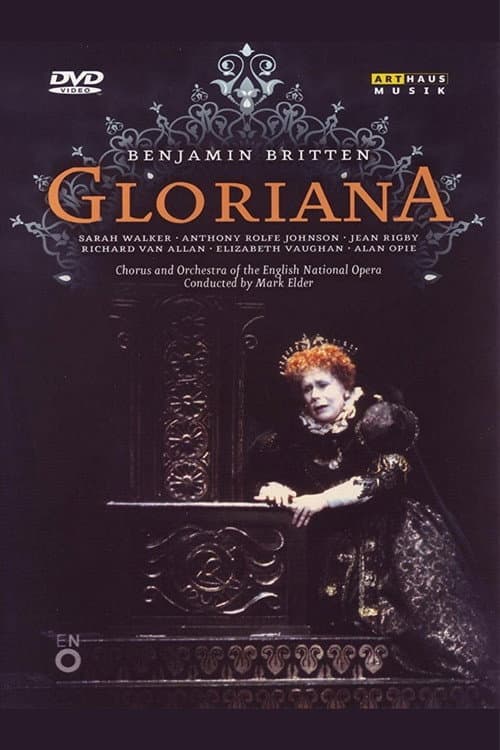
Gloriana, Op. 53, is an opera in three acts by Benjamin Britten to an English libretto by William Plomer, based on Lytton Strachey's 1928 Elizabeth and Essex: A Tragic History It was written to mark the 1953 coronation of Queen Elizabeth II.
Mar 1984
From the series "The Modern World: Ten Great Writers", this playful documentary introduces James Joyce's most famous work "Ulysses". It includes fantastic adaptations to film from passages of the novel. It also includes excerpts from a book written by Joyce's friend, the artist Frank Budgen, entitled "James Joyce and the making of Ulysses". Amongst those interviewed is author Anthony Burgess.
Jan 1988
European philosophers: Friedrich Nietzsche, Martin Heidegger and Jean-Paul Sartre. The theme revolves heavily around the school of philosophical thought known as Existentialism, although the term had not been coined at the time of Nietzsche's writing and Heidegger declaimed the label. The documentary is named after the 1878 book written by Nietzsche, titled Human, All Too Human: A Book for Free Spirits.
Feb 1999
This documentary examines Borges' extraordinary life and work, using dramatizations of his most memorable stories and rare interview footage with the author at his Buenos Aires home.
Jan 1983
American dancer and choreographer Hermes Pan recalls his life and work as he relives the glorious history of the Hollywood musical.
Jan 1990
Death in Venice was Britten's final opera--an extraordinarily atmospheric and haunting adaptation of Thomas Mann's novella, evoking the grandeur and shabbiness of a Venice in the grip of disease. He eloquently and evocatively describes the moral and physical degeneration of Aschenbach, the writer whose obsessive pursuit of beauty in the form of a boy leads him into humiliation and death. Robert Tear takes the demanding role of Aschenbach opposite Alan Opie, who sings the various baritone parts. To portray the beauty and fascination of the Polish family and Tadzio, Britten made prominent the use of dance, by turning these characters into dancers, choreographed in this production by Martha Clarke. This new production for Glydebourne is directed by Stephen Lawless and conducted by Graeme Jenkins.
Dazzling, brash and dynamic, yet equally graceful and poetic. DIVINING was Judith Jamison's first major work as a choreographer for Ailey, evoking a strong feeling for African tribal ritual, is set to hauntingly rhythmic drum music. REVELATIONS, often describes as the company's signature tune, has become an American classic. It expresses Ailey's intense feelings for his roots, with Ailey's vivid "blood memories" of the blues, spirituals, gospel music, ragtime and folk songs as well as the hard life of the Southern black during the Depression. Set to Modern Jazz, THE STUCK-UP takes place in modern-day Harlem, about the cruel reality of urban street life as a young man is destroyed by drugs. CRY, choreographed by Alvin Ailey in 1971 for Judith Jamison, is one of his most famous pieces. Created as a birthday present for his mother, it is Ailey's tribute to black women and inspires moving emotions with its portrayal of struggle, anger and most importantly, its feeling of celebration.
May 1986
The last and arguably finest opera of Modest Mussorgsky is captured in one of its most powerful interpretations in this 1989 recording from the Vienna State Opera, conducted by Claudio Abbado. A moody opera that is thematically broad at times and intimately personal in others, "Khovanshchina" tells the story of the 17th-century clash between Russian conservatives and Peter the Great's reformists. Among the singers is renowned basso Nicolai Ghiaurov and Paata Burchuladze, as well as Anatoly Kocherga, Ludmila Semtchuk, and Heinz Zednik.
Jan 1989
This luminous, visionary opera tells the story of how Mahatma Gandhi developed the philosophy of satyagraha, nonviolent active resistance, as a political revolutionary tool to fight oppression, connecting his lifework to three historical figures who advanced his philosophy: the celebrated Russian writer Leo Tolstoy, the great Indian poet and philosopher Rabindranath Tagore and the heroic American civil rights leader Martin Luther King. The libretto is comprised of passages from “The Bhagavad-Gita,” India’s greatest philosophical epic, and perfectly complements Glass’ ravishing score, mysteriously transporting the audience with a serene power and an all-encompassing sense of peace.
British series stressing the role of, and showing different kinds of, improvisation in music. Produced for UK's Channel Four. Written and narrated by Derek Bailey.
Feb 1992
BBC documentary about Franz Kafka played by GREEK TV in 1990. This documentary is one of the ten films of “The Modern World: Ten Great Writers (1988)”.
Oct 1988
The opening of the Picasso-National Museum in Paris granted a unique chance for Didier Baussy to document the precious collection in the museum in 81-minutes of film. The museum shows paintings held back by Picasso himself which have been very valuable for his connection to the world and his memories. A sensitive Analysis of these pictures dominantly from the Guernica-phase, grant a deep insight into the history of this artist and man Picasso, a geographical location of the scenes and a glimpse of his sources of inspiration.
Feb 1985
A documentary featured on BBC's Arena series in 1983. The author discusses his life, his work and his thoughts and opinions.
Mar 1983
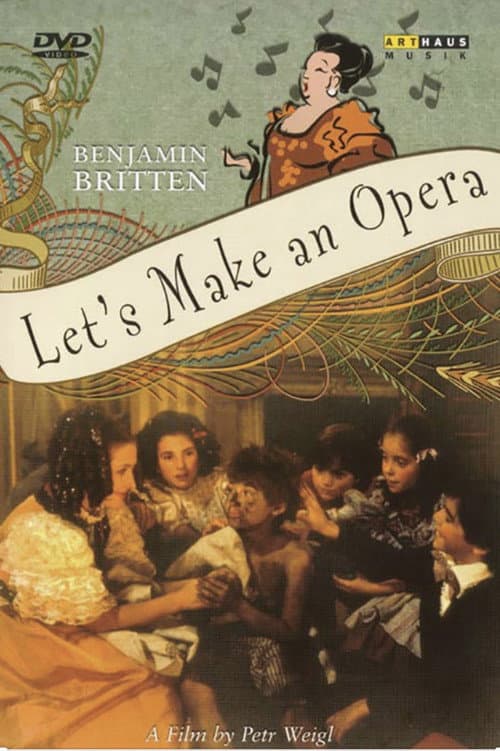
The story of a little boy named Sam, who is exploited by two evil chimney sweeps to clean narrow chimneys.
Oct 1996
Dame Janet Baker, in one of her greatest roles, leads a cast of some of Britain’s finest interpeters of baroque opera and their performance under the baton of Sir Charles Mackerras is one of the highest musical excellence. John Copley’s acclaimed English National Opera production was restaged in studio, skilfully using all the technical advantages offered, to create this top quality recording. The opera was first performed in 1724 at the Haymarket Theatre in London using castrati singers in the heroes’ roles. This production follows modern practice in using women in these parts. Dame Janet’s virtuoso role as Julius Caesar has been heralded as a masterful recreation of the music which Handel wrote for the finest singers of his time.
Jan 1984
Giacomo Puccini's bittersweet opera of high-spirited bohemians and the doomed love between Rodolfo, the idealistic poet and Mimi, the consumptive flower-maker, is a beautifully balanced series of tableaux depicting the infectious joie de vivre of youth and the tragic waste of disease and separation. The legendary and incomparable partnership of Mirella Freni and Luciano Pavarotti as the two lovers has been captured in this special live recording from stage of the San Francisco Opera. Brian Large has adapted Francesca Zambello's production for video, further illuminating the fascinating interaction of Puccini's characters. Gino Quilico sings Marcello, the colorful and moody painter, whose tempestuous relationship with the flirtatious Musetta (sung by Sandra Pacetti), comically mirrors the more profound love of Rodolfo and Mimi. Nicolai Ghiaurov sings Colline.
Idomeneo, King of Crete, has been away from home during the long years of the Trojan War. Idamante, his son, now regent of the island, waits for his return, heralded by the arrival of Trojan prisoners in Crete. One of these prisoners is Ilia, daughter of the murdered King Priam of Troy. Idamante has fallen in love with Ilia, but is loved by Electra, daughter of the Greek King, Agamemnon, who is taken refuge in Crete. The Drottningholm Court Theatre is a tiny and exquisite rococo theatre, the only surviving eighteenth-century theatre in Europe in perfectly-preserved working order. This revised revival of the acclaimed 1986 Drottningholm production by Michael Hampe conducted by Arnold Östman, was staged during the Mozart Bicentenary year.
Jan 1991
A historical adaptation of John Gay's 18th Century ballad opera, exuberantly performed for BBC television.
An exploration of composer Anton Bruckner's numeromania during a nervous breakdown and stay at a sanatorium.
Oct 1990