Menu
© 2026 The Couch Critic
Browse 22 movies from Documentary Educational Resources
FIRST FILM was edited and narrated by Lorna Marshall and is comprised of footage shot in 1951 on the second Marshall family expedition to the Kalahari Desert. It is intimate in style, very carefully filmed, with a wealth of practical information about the material culture and structure of Ju/'hoan (!Kung Bushmen) hunter-gatherer society. The film allows viewers to see some of John Marshall's earliest film footage and provides an interesting comparison with the more sophisticated shooting found in his later work.
0
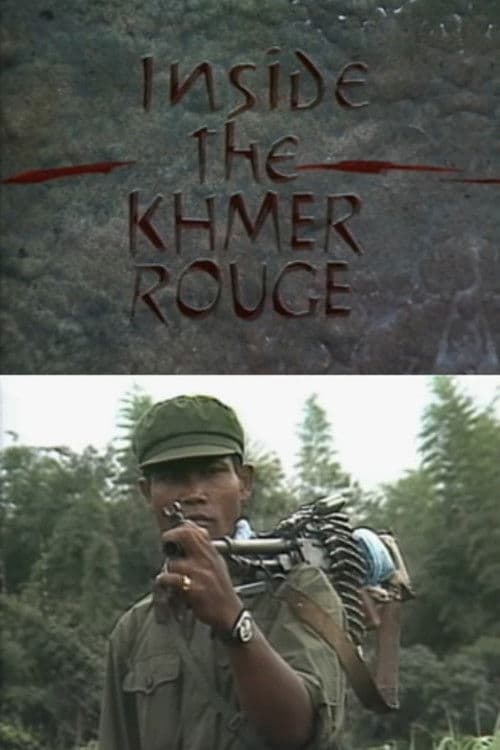
Inside the Khmer Rouge takes an in-depth look at the history, domination, and current status of the Khmer Rouge (a Communist regime) in Cambodia. The film features revealing interviews with soldiers of both the modern Khmer Rouge and those who fight in opposition. A comprehensive timeline of the regime's five-year occupation in Cambodia is dissected and includes a review of key individuals, ideologies, and locations where devastation hit hardest. Following this, the film takes a look at the effects on the Cambodian citizens upon the retraction of Vietnamese forces. Inside the Khmer Rouge continues to investigate the current tactics the modern Khmer Rouge implement and their attempts to persuade followers in order to rebuild and expand their regime. Oppositely, local forces or "jungle soldiers" discuss their devices for assuring the destruction and atrocities once caused by the Khmer Rouge never happen again.
Nov 1990
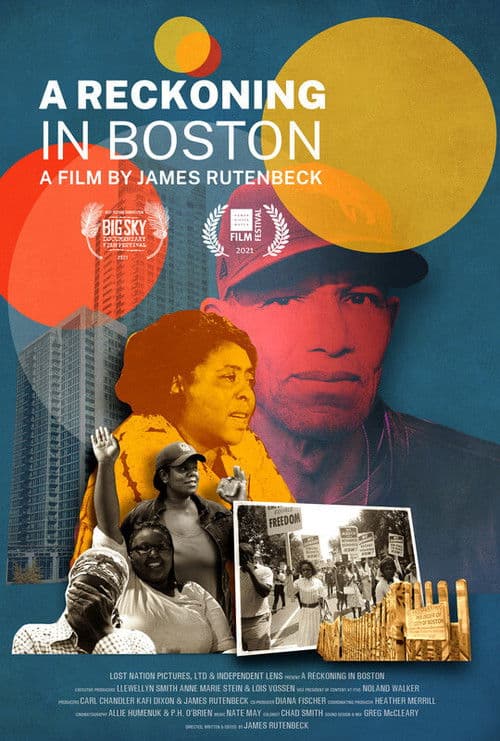
Kafi Dixon dreams of starting a land cooperative for women of color who have experienced trauma and disenfranchisement in the city of Boston. By day she drives a city bus; at night she studies the humanities in a tuition-free course. Her classmate Carl Chandler, a community elder, is the class’s intellectual leader. White suburban filmmaker James Rutenbeck documents the students’ engagement with the humanities. He looks for transformations but is awakened to the violence, racism and gentrification that threaten Kafi and Carl's very place in the city. Troubled by his failure to bring the film together, he enlists the pair as collaborators with a share in the film revenues. Five years on, despite many obstacles, Kafi and Carl arrive at surprising new places in their lives—and James does too.
May 2021
This film will help to introduce rebetiko, a relatively unknown musical form outside of Greece, to an international audience. It includes musical and dance performances of rebetika songs, archival footage, and interviews with the friends, relatives and colleagues of Markos Vamvakaris. This documentary not only creates a vivid portrait of a man, but also presents us with a social and historical framework of Greece during the first 70 years of the 20th century.
Nov 2000
A spring sea-ice sequence documenting travel, camp construction, domestic labor, and seal hunting among Netsilingmiut families.
Jan 1967
A late-autumn seasonal sequence documenting camp building, fishing, tool-making, and preparation for winter as a Netsilingmiut family travels downriver toward the coast.
An early-autumn sequence documenting domestic life and a coordinated communal caribou hunt at a river crossing camp.
Anthropologists Otto and Suhr explore how people in two very different cultures—the Netherlands and Baluan Island, PNG—grapple with the universal question of life after death. Their journey reveals not only diverse beliefs, but also their own limits of open-mindedness, moments of skepticism, and struggles to embrace unfamiliar ideas.
Dec 2023
Roach and Starbuck, two hardcore punks from Montreal, try to form their own political party, but run out of time due to Canada's electoral process. Instead, they decide to campaign for political office as independent candidates in a rich Montreal district called Outremont.
Oct 2006
The once thriving industrial town of Haverhill, Massachusetts on the Merrimack River now resembles, in the words of one of the film's subjects, "a ghost town where you expect to see tumbleweeds come rolling down Main Street." This film examines a dying industrial town and its politicians' search for votes over such issues as municipal spending, rising taxes, the revitalization of depressed areas, and attracting new industry. The film's central event is the 1976 Mayoral election. Election scenes are intercut with comments from Haverhill residents, members of a local foundation, political scientist Frances Fox Piven, the president of the local union, and the shoe manufacturers themselves. The oral history which surrounds the election footage is a reservoir of information about Haverhill's present condition as well as its past.
Jan 1978
Dedeheiwä, a shaman and headman in his village, takes nine of his children and grandchildren to the river where he washes them carefully and patiently.
Jan 1974
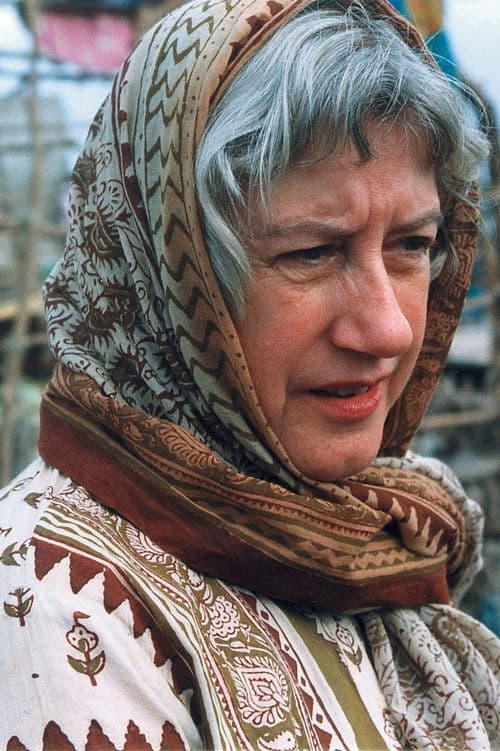
A Calling to Care is the inspiring story of 55 year-old Grace Stanley, a Canadian nurse who left her home and prestigious career behind to answer a calling halfway around the world in Karachi, Pakistan. Teaching nursing to local women in a strict Muslim culture that forbids them to even to touch men is a formidable task. However, Grace challenges her own values and belief systems to find common ground with her students, helping them to excel and feel respect for themselves in a culture that doesn't respect them. Whether it is getting her hands painted with henna, swimming fully-clothed in the ocean, or marching bravely with them on International Women's Day, Grace bonds with her students in a very special way, and ultimately discovers how the West can learn a lot more from the Third World than she ever thought.
Sep 2001
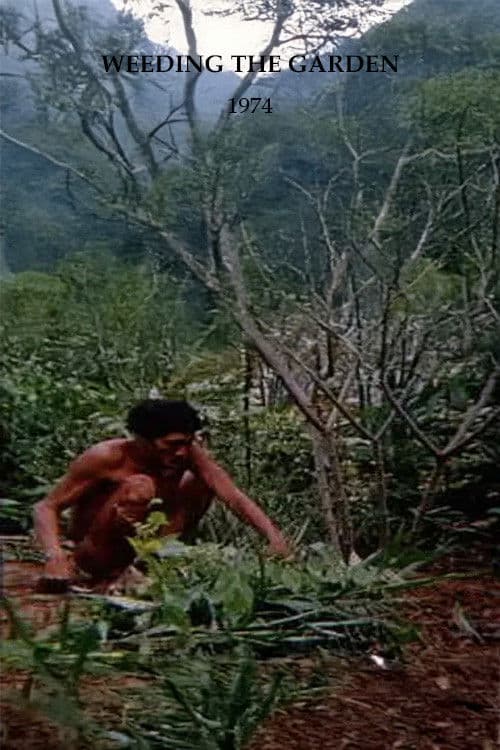
Dedeheiwa the shaman weeds his manioc garden and clears the leaves around his plantains. Tired and sore, he rests while he is massaged and groomed by his wife and numerous children, with whom he plays affectionately.
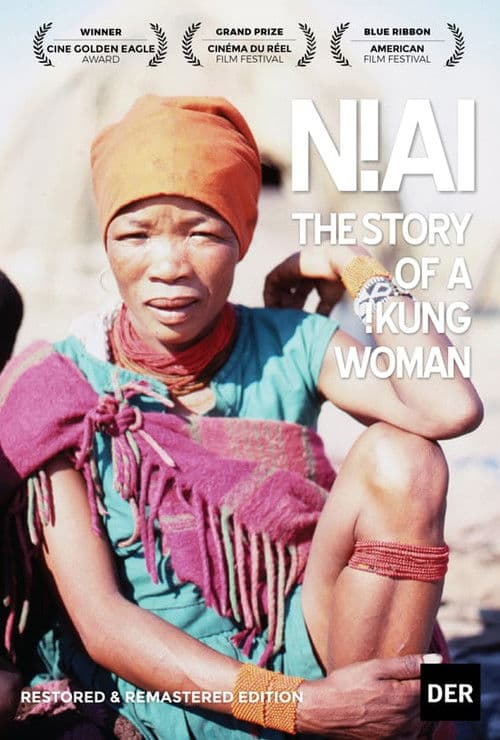
This film provides a broad overview of Ju/'hoan life, both past and present, and an intimate portrait of N!ai, a Ju/'hoan woman who in 1978 was in her mid-thirties. N!ai tells her own story, and in so doing, the story of Ju/'hoan life over a thirty year period. "Before the white people came we did what we wanted," N!ai recalls, describing the life she remembers as a child: following her mother to pick berries, roots, and nuts as the season changed; the division of giraffe meat; the kinds of rain; her resistance to her marriage to /Gunda at the age of eight; and her changing feelings about her husband when he becomes a healer. As N!ai speaks, the film presents scenes from the 1950's that show her as a young girl and a young wife. The uniqueness of N!ai may lie in its tight integration of ethnography and history. While it portrays the changes in Ju/'hoan society over thirty years, it never loses sight of the individual, N!ai.
May 1981
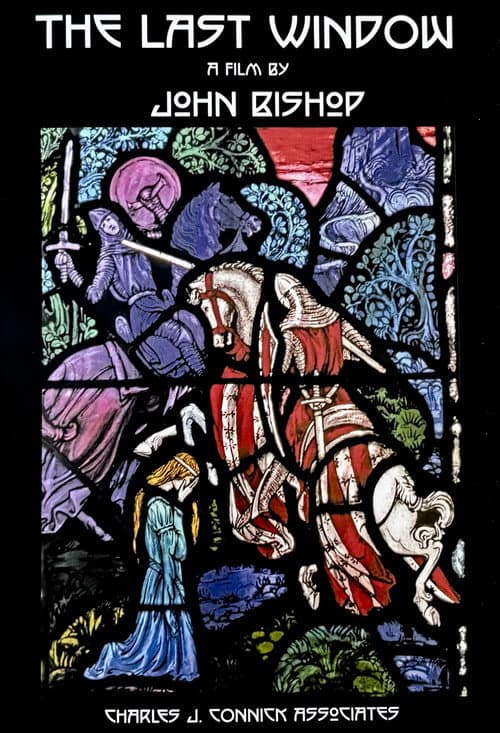
When Charles J. Connick Associates closed their doors in 1986, they left a legacy of 15,000 stained glass windows in more than 5000 churches, libraries and other public buildings. Founded on the principles of a medieval craft guild, this Boston studio was closely allied with Ralph Adams Cram, Dean of the Gothic revival in American architecture, and in it's heyday, between 1920 and 1950, employed and trained scores of artisans. The Last Window, narrated by Jonathan Fairbanks, Curator of American Decorative Arts Museum of Fine Arts Boston, follows the studio's final commission from design to installation; the artisans' commentary establishes the historical, aesthetic, and social context in which they work. Many examples of Connick windows are included, taking the film outside the studio to show the contrast between the workers' relationship with the art and that of the patrons and users.
Jun 1989
A tale, told by his five daughters, of the life and death of a man very representative of a Protestant Switzerland in the early 20th century where life was conditioned by the work ethic. He was first a farmer, then a factory worker, then the head of a small family affair where his daughters became his workers. The business grew into an large factory that would be eventually taken over by the only son. The five stories show us the family and professional context of the first half of the 20th century. They are also five different versions of the serene death of a man who felt he had done his duty. The film illustrates the ideas of Max Weber, known for their importance in understanding the Western civilization that emerged from the Reformation.
Feb 1978
Ano Ravenia, a mountain village in Greece, young men leave to find work, learn a trade or serve in the Army while a young woman may leave her father's house only to enter that of her husband. The unmarried girls remain in the village amoung the elderly folk, meeting together to embroider their trousseaus and chat. In a rural Greek community, it is not the role of women to express their point of view in public. The film allows the spectator to sit in one of these casual sewing sessions where the girls talk about their wishes and problems, most of which revolve around marriages that will change their lives.
Vaastu Marabu documents the theory and practice of the Vaastu tradition of Indian art, architecture, craft and design. One of the foremost shilpis (designer-builder-sculpter) of India, Shri. V. Ganapati Sthapati of Mammallapuram, meditates on his art and his occupation. The film shows the process of making stone idols at Mammallapuram, near Madras, of casting bronzes in Kumbakonam, and of building stone temples at Kamudhi, near Madurai and at Ratnagiri, near Vellore. It illustrates the continuity of the tradition and reveals a technology that is ancient, yet still relevant today. The film explores the process of translating inner experience into art, and invites us to experience the naked beauty of the form while understanding the metaphysical message. The art of the Vishwakarma has given form and expression to all denominations of metaphysical thought in India. The film also probes the underlying scientific and mathematical principles.
Jan 2004
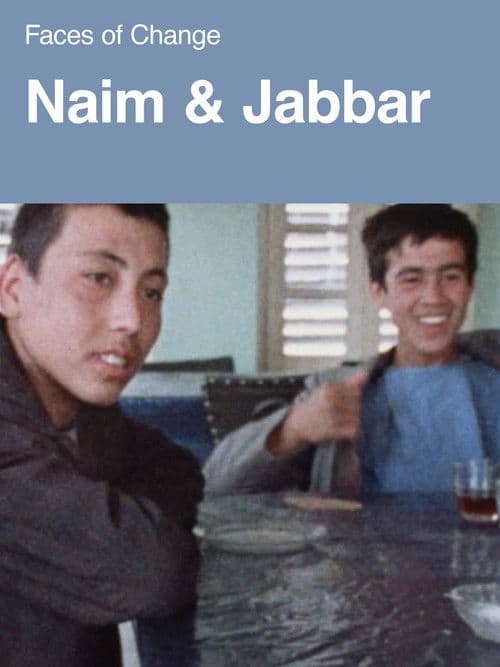
The hopes, fears, and aspirations of adolescence are expressed in the close friendship of two Afghan boys. As their acceptance of the filmmakers leads them to express their feelings more and more openly, the film grows rich in fact and themes of universal concern. Filmed in the Balkh Province, an area inhabited by Tajik and other Central Asian peoples. The town of Aq Kupruk is approximately 320 miles northwest of Kabul.
Aug 1974
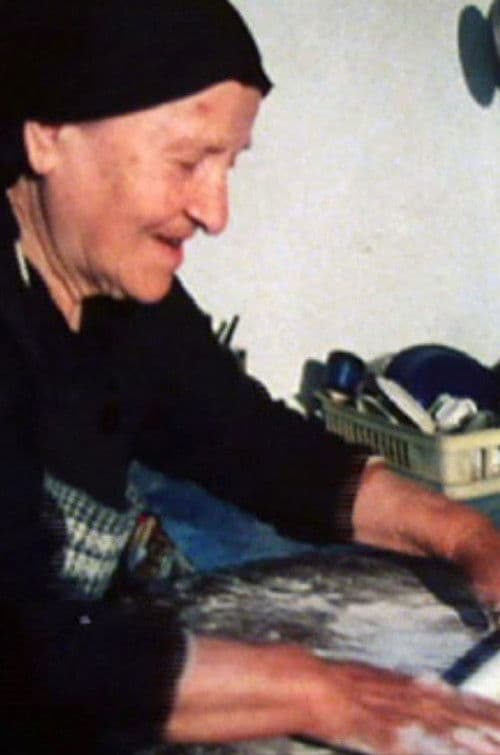
Kalliopi Kalogerou has spent her whole life in the Greek village of Ano Ravenia where she was born in 1900. Simple witness of the century, she lived through Turkish domination and successive occupations linked to different wars. Most of her family stays elsewhere, in Greece or abroad (USA, Canada, Germany, Bulgaria); her shattered family world is representative of the Greek diaspora. The film is exclusively devoted to her life story, told to a young Epirot friend, Eleni Pangratiou-Alexakis, and to her daughter, Evguenia, both of whom have settled in the States. The result is a rich, yet austere film where nothing distracts the viewer from the dialogue and the face of the storyteller. It also constitutes an ordinary yet important testimony on this long and painful page of Greek history (1900-1983).
Jan 1996