Menu
© 2026 The Couch Critic
Browse 92 movies from INCE - Instituto Nacional de Cinema Educativo
An amalgamation of accents and life experiences from different parts of Brazil reunited on the city of Brasília.
Jan 1966
Brazilian documentary film directed by Salvyano Cavalcanti de Paiva that showcases the evolution of Brazilian artists in the American film industry between the late 1920s and 1950s. Using archive footage, it highlights the contributions of figures like Carmen Miranda.
Jan 1970
A morning in the farm shown with a beautiful musical background.
Jan 1956
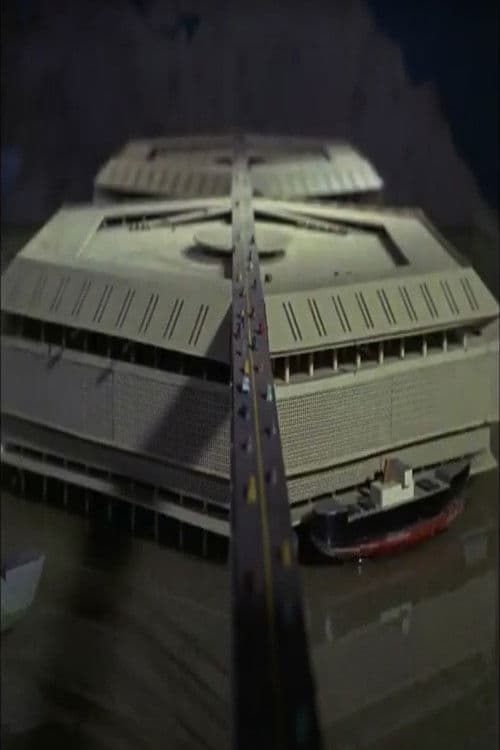
The architect Sérgio Bernardes' vision of the future for Rio de Janeiro. Models and designs of airports, ports, and remodeled neighborhoods propose the creation of a vertical city for the urban problem and its transformation into an international center for commercial and
The planning of the city, linking its architecture to its topography and the reasons that allow it to have normal and continuous traffic, eliminating the circulation problems of all major cities. Details of the buildings destined for the Government, the residences and the commerce. (Brazilian Cinematheque)
Jan 1964
Jan 1954
May 1936
The arrival on Rio de Janeiro of the remains of the members of the Inconfidência Mineira movement, who fought from freedom in the late 1700's. The event was followed by statesman Getúlio Vargas, other politicians, military men and a large crowd
Dec 1936
Jan 1942
Sugarcane is cut and milled in an animal-drawn mill. The sugarcane juice is taken to a tank to strain the liquid. The bagasse is used to feed the furnace that heats the pan where the juice is boiled. The mill grinds the coffee, whose husk is also used as fuel to feed the furnace. Care is taken with the boiling juice to reach the required consistency. The molasses is then obtained, which is beaten, deposited in molds and, after drying, removed and its burrs trimmed.
Jan 1958
The concerto for piano and orchestra of Fantasia Brasileira and its movements (Prelude, Song, Dance), illustrated by images of the performing musicians and Brazilian scenes: a raft at sea, a farm, rural workers, a church and a series of waterfalls.
Jan 1943
Jan 1937
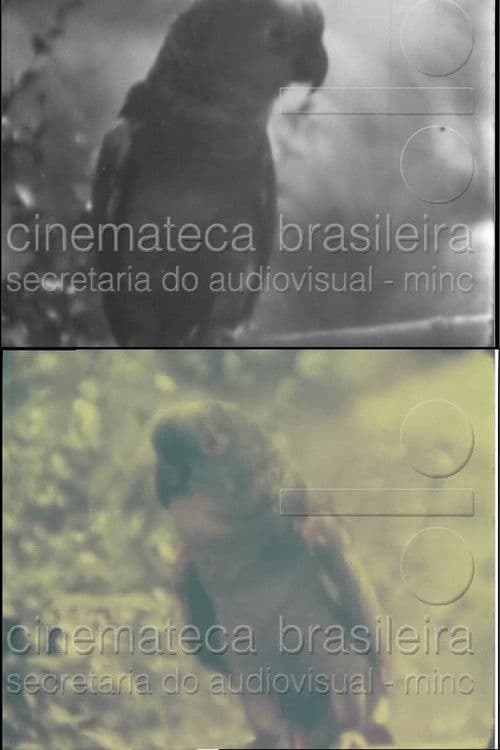
Balanced on a perch, the parrot is encouraged to imitate the sounds of human speech.
A cinematographic interpretation of a Casimiro de Abreu poem.
Aspects of the life of the Kamaiurá, an indigenous tribe that inhabits the Upper Xingu. The manioc-based food, the training with bow and arrow and the work carried out by the young Indian, the girls learn how to spin, and the boys develop the knowledge of the tribe with the shamans. An important rite is the Kuarup, which honors a great dead leader. The procedures for the rite: the decoration of tree trunks, the painting of bodies, the dance choreography, the physical confrontation between the Indians. Finally, the trunks are taken by children to the waters of the Xingu River.
Jan 1963
Animations (only parts in nuclei in the film) and images, many of them archival and foreign, illustrate that the notion of time is associated with movement and its measurement is performed by the rotation of the Earth around its axis and the Sun. The angle of inclination of the Earth in this last movement also marks the climatic seasons. From the need for greater accuracy in measuring time, gnomons and solar quadrants arose, for whose reading the duodecimal numbering is used. Based on this numbering, time zones and mechanical measuring devices were established, illustrated by the clock mechanism with a church bell. The evolution of astronomy determines the creation of more accurate electronic devices for the evaluation of time, such as the meridian telescope, the Markowitz chamber, the electronic oscillators and the telescope, with which astronomers work at the National Observatory.
Dec 1958