Browse 22 movies from Vídeo nas Aldeias
Mythical-religious interpretation of the Mbya-Guarani on 17th century Jesuit reductions in Brazil, Paraguay and Argentina.
Jul 2012
Shomõtsi is a witty and engaging Ashaninka Indian, a father who has raised his children alone. A neighbor and friend of the filmmaker, he discusses the Ashaninka uses of anatto dye, cassava and of Coca. Unlike whites, he says, Indians respect coca's medicinal power. Shomõtsi and two other elders go to a neighboring city to collect their pensions. They have to set up camp overnight waiting for their money and grumble about the materialism of the Brazilian shopkeepers. After making a few modest purchases, Shomõtsi gladly heads back to the village.
Jan 2001
Nov 2019
The 'Vídeo nas Aldeias' performed with the Enawenê Nawê Indians, for fifteen years, extensive records of Yaõkwa, their longest ritual, in which the masters of ceremony pull, for seven months, a myriad of songs, in order to maintain the balance of the earthly world as a spiritual world. In this film, another fifteen years later, the Enawenê Nawê rediscover these images and, with them, deceased relatives, customs that have fallen into disuse and precious ritual songs.
Nov 2020
In the village of Koenju, in Rio Grande do Sul, young Mario and his "gang" make fun of the challenges of today's Mbya-Guarani reality.
Jun 2014
Jan 2015
With no Forest left to hunt and no land to cultivate, the Maby-Guarani depend on the sale of their handcraft to survive. Three young Guarani filmmakers accompany the daily life of two comunities united by the same history, since the first contact with the Europeans until the intense coexistence with today’s White people.
Jan 2008
Chanter Tachico Guajajara shares the story of how his people learned the sacred chants that conduct their rituals and festivities.
As Ariel Ortega thinks about the history of contact of the Mbya-Guarani, he tries to understand how his people got expelled from their land.
Jan 2011
Jan 2009
In 1985, a daring worker of the Bureau of Indian Affairs in Brazil denounced a massacre in the lawless region of Corumbiara. The investigations turned to a series of indigenous genocides in the area. Spanning 20 years, the film shows the search for proof and the version of the survivors, when they were finally found, hiding in the forest, terrified of white men.
Aug 2010
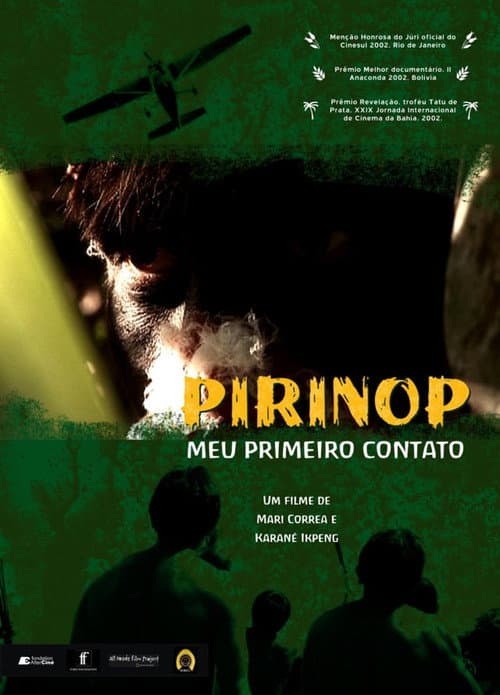
In 1964, the Ikpeng Indians had their first contact with the white man in a region close to the Xingu River. Threatened in their territory by the invasions of miners, they are transferred to the Xingu Indigenous Park. The Ikpeng remember these moments and interpret episodes that the white man and his camera did not witness.
Jul 2007
An immersion in spirituality and everyday life of the Mbya-Guarani from the Koenju village in Southern Brazil.
During a video workshop at the Kuikuro village, an eclipse happens. Suddenly, everything changes.
Jan 2004
A team of Xavante filmmakers has collaborated to realize this visual archive of the complex Wapté Mnhõnõ ceremony. Taking place over several months with much elaborate rehearsal and preparation, the ceremony involves the participation of several different groups of boys and men in the roles of initiates, godparents and rivals.
Jan 1999
Jan 1995
Comments on the history of a people, made by the filmmakers and their characters. From the time of contact, through captivity in rubber plantations, to the current work with video, the testimonies give meaning to the process of dispersion, loss and reunion experienced by the Huni kui.
Jun 2008
Thirty years ago, a rubber company enslaved a group of Asháninka people, manipulating them into tapping the trees in the lush borderland between Peru and Brazil. The company was expelled by a coalition of Indigenous and non-Indigenous people, led by one mixed race couple. Now the adult children of this marriage combat political corruption and ongoing environmental disaster.
Four Ikpeng children introduce us to life in their village. They show their families, their toys, and their celebrations with grace and lightheartedness. We meet the characters that make up their everyday world - from baby chickens to the village chief - and we see the children helping with chores, learning to hunt, going to school and playing games. Often comparing and contrasting themselves to earlier generations, they are aware of their cultural heritage and how it has changed since their grandparents' time. Engaging and candid, the Ikpeng children are full of curiosity and ask that people of other cultures send their own video-letters.
Panará characters and filmmakers comment on the creation process of both The agout's peanut and After the egg, the war and discuss about the use of video in their community.