Menu
© 2026 The Couch Critic
Browse 2 movies from Goshu Films
This documentary records Hoaas' personal encounter with the closed society of North Korea. As with her earlier work, Hoaas approaches her film as a cumulation of fragments encompassing different perspectives that together offer a point of entry into a complex society. Her diary-style narration signals her limited personal perspective into this culture, especially given the brief filming period and her difficulty in breaking through the facade of the showcase version of Korea insisted upon by her official guides. Hoaas' restricted visual access, and her reluctance to present over-familiar images of the hardship and depravation informed her decision to use this narrative device to frame her film within the context of the famine crisis that began in 1997 following the failure of crops caused by two consecutive years of heavy flooding.
Feb 1998
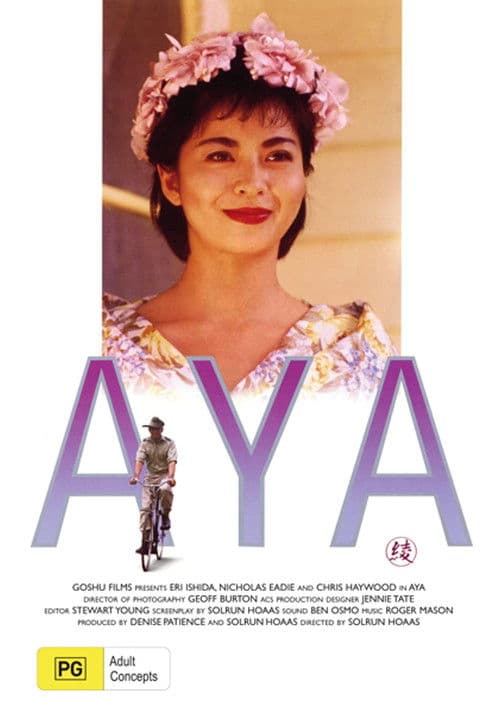
Aya, a young Japanese war bride, arrives in a small Australian town during the 1950s. She and her husband, Frank, are very much in love. Yet somehow Aya still feels more comfortable with the Japanese-speaking Mac, a close friend of Frank's, whose wartime experiences left him with a deep regard for Japanese culture. But Frank wants Aya to forget her Japanese past. Aya finds work in a Japanese restaurant and has a short affair with an Australian-Japanese businessman. With her marriage falling apart, Aya leaves Frank.
Oct 1991