Menu
© 2026 The Couch Critic
Browse 344 movies from Fernsehen der DDR
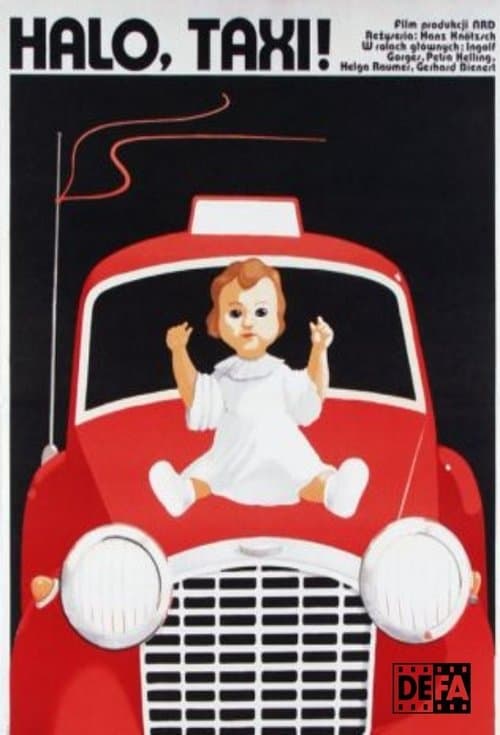
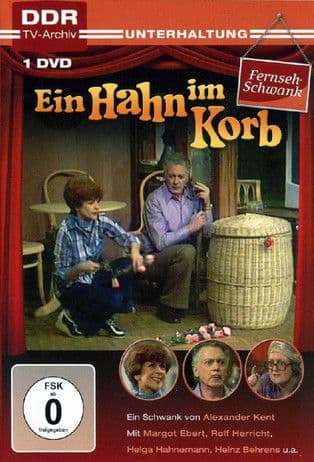
The story of a philanderer behind the wheel of a cab, who gets into a series of hilarious but also adventurous situations, was based on the actual experiences of Berlin cab drivers. It is an entertaining portrayal of how the main protagonist, Eddy, is to be cleverly dissuaded from his dashing bachelor life. Gaby and her grandpa come up with a few ideas. This is necessary, because Eddy may be a proper cab driver, but in his private life he knows no rules when it comes to winning over pretty girls.
Mar 1974
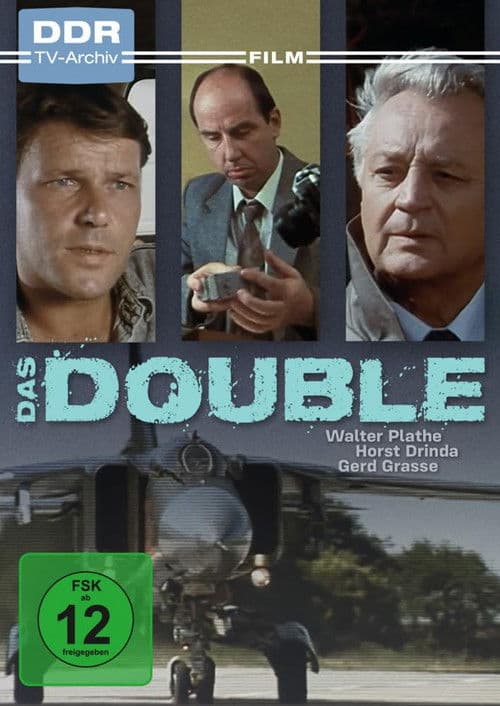
During a training flight, the experienced MiG fighter pilot Major Klaus Kornhod almost crashes. An investigation into the incident reveals that Kornhold is no longer allowed to fly MiGs for health reasons. A heavy blow for the passionate aviator, who had been in the service for 15 years. He decides to start retraining as a helicopter pilot.
Feb 1984
Jan 1990
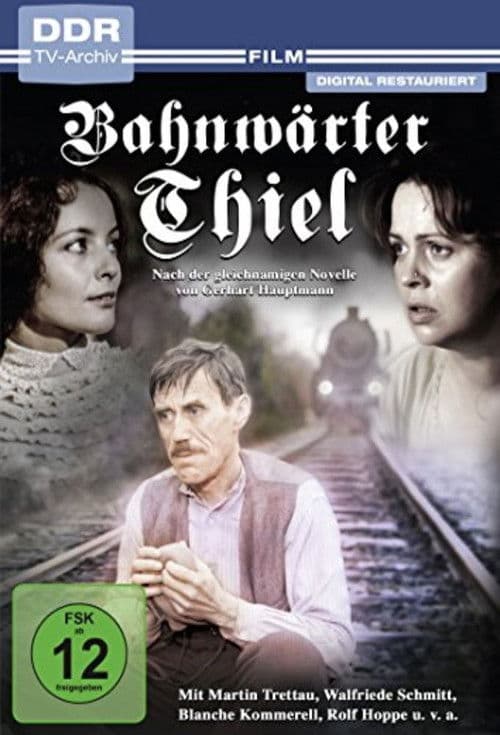
The film tells the tragic fate of railroad guard Thiel at the end of the 19th century. Thiel, who spends his days in the dull, monotonous fulfillment of his duties, has lost his gentle, quiet wife Minna. He remarries out of concern for his young son Tobias. His second wife Lene, with whom he also has a child, is superior to him in vitality and has a rough passion. He discovers that his child from his first marriage is being discriminated against and tormented by her - Thiel withdraws more and more into himself and becomes lonely. When Tobias is killed in an accident, he blames Lene, and disaster is inevitable...
Nov 1982
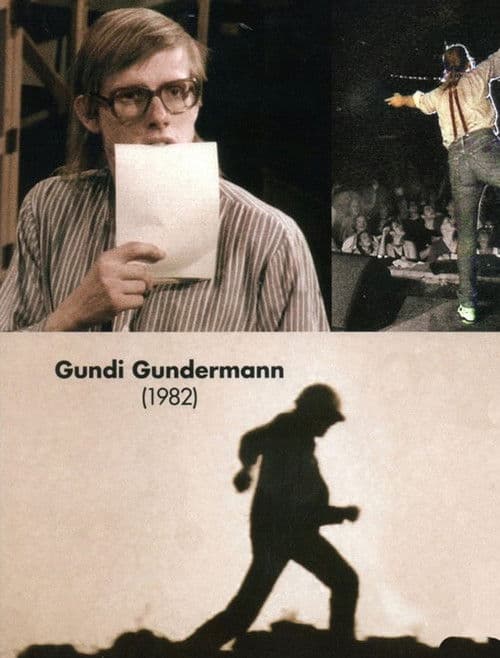
This historically relevant documentation about the Lusatian original Gerhard "Gundi" Gundermann, who was received ambivalently at his time, is a truthful, unfalsified contemporary document, both about the folk song singer and excavator driver himself, as well as about the realities of the time within still existing GDR. His actual quality and significance to this day is evident in the timelessness of his profound songs and lyrics, also written for other artists, in their universality and the poetic power of various interpretations.
Jan 1983
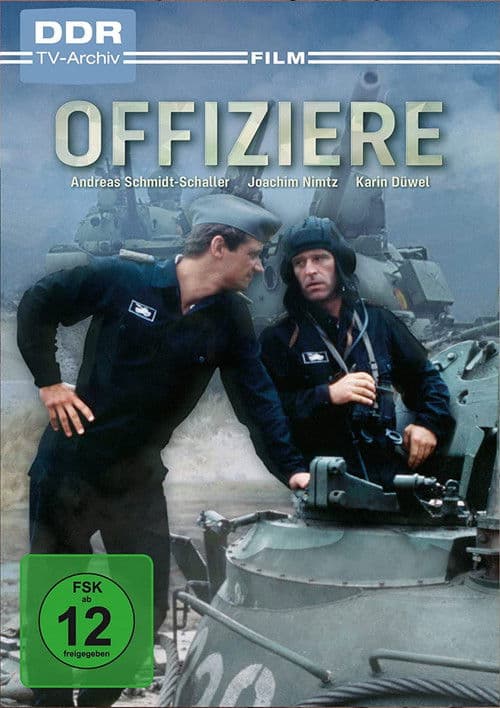
Major Leska, who has proven himself as a troop officer in a tank battalion in complicated maneuvers, is to become an instructor. He sees this as a challenge and is looking forward to the new task. But then the decision is made in favor of his friend Hans Helbig, who has just graduated from the military academy with distinction and was once Leska's subordinate. The conflict that erupts between Leska and Hans puts a strain on their working relationship and puts their friendship to the test. They have to prove themselves during an important maneuver.
Feb 1986
The emaciated weavers deliver their homework to the factory owner Dreißiger and receive their wages, on which they cannot live and cannot die. Driven by hunger, they ask for more money, but to no avail. Only the young baker and the reservist Jäger put up a fight, and both manage to encourage a large group of weavers to revolt against the factory owner. They break into his house and destroy it, whereupon he flees. The revolt continues, the weavers move through the surrounding villages, where more people join them. A little later, the military arrives to intervene against the angry crowd and restore the old order...
Nov 1962
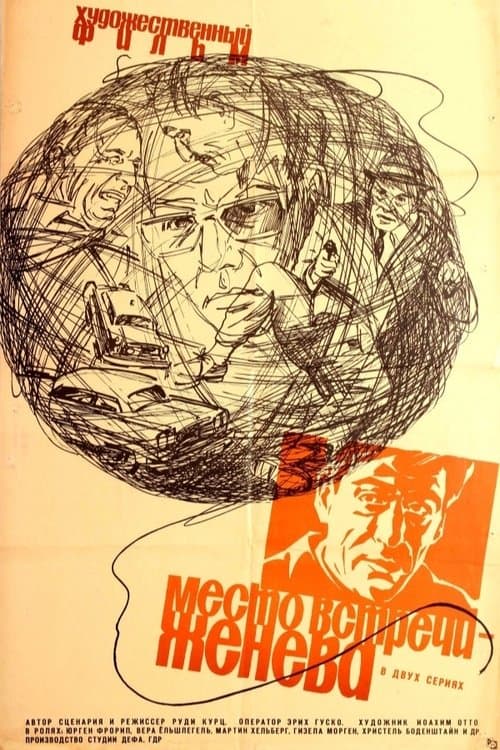
The East German scientist Professor Gerlach has made a significant discovery with his research into how a new, even stronger pesticide can be protected against ineffectiveness through hydrolysis. This fact has not gone unnoticed by other interested nations. At the International Congress of Chemists in Geneva, a power struggle broke out between agents of the BND and the CIA over a preparation that had been smuggled into Switzerland without the knowledge of Dr. Werner, Gerlach's GDR representative and assistant, and which the enemies hoped would shed light on the composition of the invention.
Jan 1968
The Klemmers and the Neuberts live in a two-family house. The day before their driving test, Egon Klemmer and Bruno Neubert secretly buy a small blue Saporoshez from Ms. Stepper. Buying a car triggers turbulent entanglements, primarily due to Egon, who uses the little blue man for a secret jaunt.
Oct 1978
Physicist Karjoli’s death leads his pupils, Harry and Friedbert, to discover a process for transferring life experiences. They test it on a fisherman, Borkentin, hoping he’ll learn to swim. The drama reveals that true progress requires personal learning.
Marcel Schlurfke is not exactly the heartthrob that friends Elke and Gitte are looking for. So they think about how to get rid of this annoying admirer. The best way is to put him in a position where he makes a fool of himself. This is what happens to the aforementioned Marcel, who suffers a total shipwreck with his "cooking skills". And after this failure, Marcel can only place himself in the care of his father Wollermann.Elke's father is a very desirable man in certain respects: in his spare time, he likes to wallpaper and transform worn-out rooms into pretty rooms. For Elke herself, however, this is a problem, because her father repeatedly takes possession of her (desired) admirers and promotes her to "honorary helper" in wallpapering matters. Only Marcel Schlurfke proves his touchingly helpless clumsiness in these assignments too.
May 1972
On April 6th, 1987 Santana & band gave a striking concert in the Palast Der Republik, East Berlin, East Germany. The concert was re-broadcasted on thursday March 31, 2011 on the Erlebnis Musik program, MDR Fernsehen, Germany.
Apr 1987
In two chapters the film shows men in divided Germany willing to leave their country. In the first chapter, East-Germans are shown who leave their wives and children behind in order to live in the Federal Republic of Germany. In the second chapter, unmarried West-Germans try to move to the German Democratic Republic.
Apr 1966
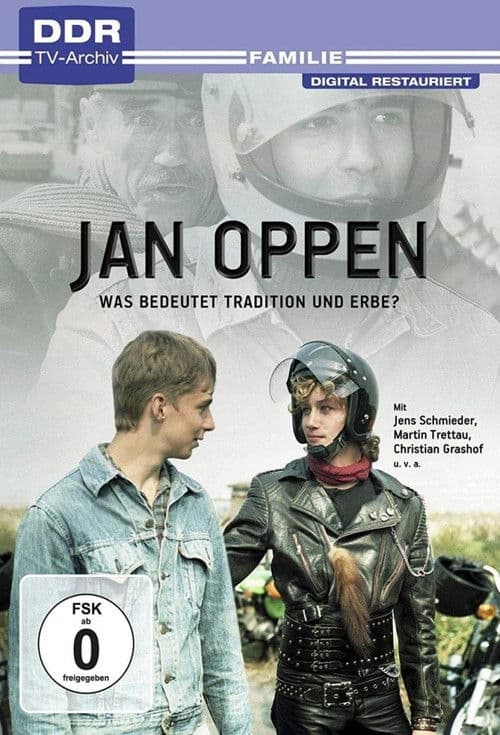
The Oppen family has lived in Berlin, Griesener Straße, for generations. The first names of the family members are also repeated, so the grandson Jan has the same first name as his grandfather. The Oppens' husbands have maintained a tradition up to now: they were or are all carpenters. But the latter does not yet fall on fertile ground with 16-year-old Jan, whose passion is the moped, his "machine". Of course, he is a newcomer among the motorcycle fans around the black Jonny, but he loves to be in their company to experience adventures, and of course he wants to be able to "keep up" with them. Jan has already developed a strategy for how he can do this.
Mar 1987
Pensioner Kagel sets up a village museum and wants to donate the farmhouse parlor to the district museum. But farmer Büttner secretly sells an old chest. When night watchman Kuwalski disappears, even the criminal investigation department gets involved...
Oct 1975
Journalist Daniela Dahn interviews the East-German author Christa Wolf during the German reunification: reflections on history, changing politics, life and work.
Jan 1991
Apr 1989
At the end of the 1980s, a film team is about to visit Lukas Wolf, Friedrich Wolf's eldest son, who lives in the state of New York, USA. They carry with them a letter from his half-brother Markus Wolf the Stasi chief from GDR. The brothers have not seen each other since 1933; on the other hand, Lukas met his other half-brother Konrad Wolf once in New York City, where they got along very well, after many years of separation. Johanna and Lukas come from Friedrich Wolf's first marriage with Käthe Gumpold, Markus and Konrad, from the second wife Else Dreibholz.
Dec 1988
The impoverished and homeless orphan girl Anna Barbara sets out in search of the mysterious golden thaler. The rag collector Hans Geiz offers her the promise of it if she toils in his underground kingdom for three years.
Feb 1985
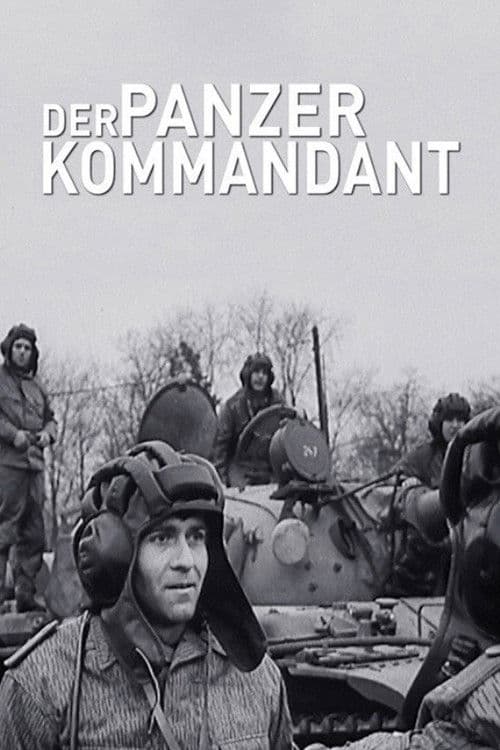
Tank commander Sergeant Tessen does not believe that his crew can become a successful collective and requests his transfer, but he finally withdraws his request due to a young boy to whom he carelessly promised a tank model. However, this would first have to be made by the crew members. New difficulties arise, even though everyone agrees to keep the soldier's word of honor. The spell is only broken when the tank gets into a dangerous situation during an underwater journey and the four of them have to prove themselves together.
Mar 1970