Menu
© 2026 The Couch Critic
Browse 22 movies from Grupo Experimental de Cine Universitario
Documentary about Nelson Mandela.
Jan 1989
Documentary about the origins of jazz in Panama, which generated the tambojazz genre.
Jan 1993
Documentary by Pedro Rivera.
Jan 1979
As part of the process of political and social transformations undertaken by the military government, a new political model based on the election of corregimiento representatives (505 in total) popularly chosen and that will replace the former Assembly of Deputies controlled by political parties by political parties traditional The majority of the members of this new political experiment are peasants, indigenous, workers and community leaders.
Jan 1973
Documentary by Aby Martínez and Fernando Martínez, about mejorana or socavón music.
Jan 1988
For the first time, a painting contest is organized whose theme is the fight for Panamanian sovereignty over the Panama Canal. A primordial experience in the country, its executors, popular artists born in the bowels of the countryside and the city, provide an enriching testimony of their lived experiences in the face of colonialism.
Jan 1975
An ironic portrayal of the days of the U.S. blockade of Panama, set during the dictatorship of Manuel Antonio Noriega, just months before the country was invaded by U.S. troops.
Synthesis of the first stage of the comprehensive development project for the Bayano region, aimed at converting a marginalized rural region into a pole of national development. 34 thousand hectares of jungle are cut down and burned to be converted into a lake that will serve as a reservoir for a state hydroelectric plant.
Jan 1974
Panama’s strategic geographic position has long been its greatest economic asset, with the Canal serving as the cornerstone of its development. Yet for decades, control of this vital waterway remained in the hands of a foreign power. Through interviews with residents of Panama City, Una bomba a punto de estallar (1977) captures the hopes, doubts and political sentiments surrounding the negotiation of the new treaties between Panama and the United States, offering a vivid portrait of a nation debating its sovereignty and future.
Jan 1977
Documentary dedicated to Manuel Tito Benitez, a volunteer member of the Student Federation of Panama who died in an accident while performing volunteer work in the remote region of Coclesito. The film depicts this experience and testifies to the efforts of the students in the struggle for national liberation.
Aug 1976
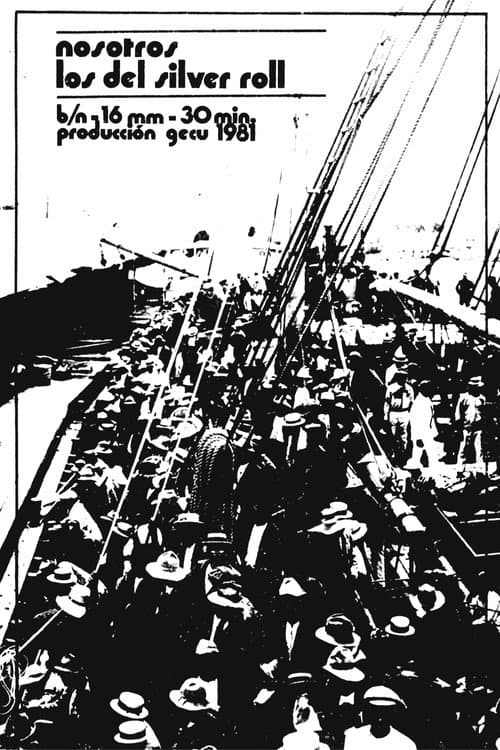
Afro-Antillean workers hired for the construction of the Panama Canal are brought from their homes to work in conditions that were not those promised. They, the descendants of African slaves and domesticated from England, manage to raise their voices against American injustices.
Jan 1981
A musical group of young people from Viejo Veranillo perform protest songs in favor of the sovereignty of Panama. Set in 1976, a year before the signing of the Torrijos-Carter Treaties, the members of the group led by “Chirri”, vocalist and ukulele player, tell of their experiences in the neighborhood and their disagreements with the US military on the border that divided its community with the old Canal Zone.
Jan 1976
The Nicaraguan revolutionaries, determined to overthrow the bloody dictatorship of Anastasio Somoza, enjoyed the semi-clandestine support of the Panamanian government and popular organizations from 1974 onward. Following the Sandinista Front's victory, which toppled a dynasty that had ruled for over 45 years, General Omar Torrijos visited that sister nation to strengthen ties between the two peoples.
Jan 1982
In March 1973, the United Nations Security Council met in Panama City to debate the Panamanian claim for a new treaty that would end the colonial presence of the United States in its territory. The majority of the participating states of the Council recognize the justice of Panama's cause and give it their support, but the United States vetoes the resolution.
Documentary about calipso music in Panama.
Jan 1991
Documentary about the strike of March 1976 in the Panama Canal, promoted by the United States.
One year after the creation of the National Assembly of Community Representatives (1972), a new power structure established by the government, significant changes had taken place throughout the country. This documentary records the most important of these transformations, as well as the working methods of the Assembly. It follows the consultation tours organized by the Legislative Council, during which basic forms of grassroots organization are discussed at the community level. The film also draws a parallel between life in the countryside and in the city.
Documentary about calypso signer Lord Cobra.
Jan 2000
Based on a poem and archive images, the military aggression of the US army stationed in the Canal Zone against the Panamanian people who demand to raise their flag in the territory occupied since the beginning of the 20th century is reconstructed and denounced. The aggression that occurred between January 9 and 11, 1964 left a balance of 21 patriots.
Jan 1972
Documentary about painter Víctor Lewis, from Colón, Panama.