Menu
© 2026 The Couch Critic
Browse 5 movies from Telewizja Polska (Białystok)
Feb 2008
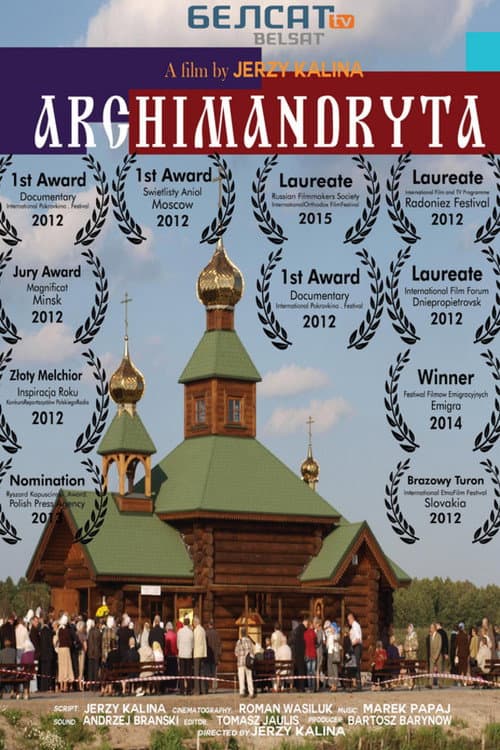
Archimandrite Gabriel -- an Orthodox monk from the Podlasie province in Poland -- is the founder and sole inhabitant of the Kudak grove hermitage by river Narew. During his first few years there, he lived and prayed in a wagon house, without electricity, running water, or contact with the outside world. After five years, thanks to the help of people of Orthodox faith from local villages, the grove saw the rise of a wooden church, a dormitory for monks, and outbuildings. Pilgrims are drawn to the place by archimandrite Gabriel's personality: he can find common ground with anyone, he grants spiritual advice, heals with herbs, and keeps bees. When necessary, he rolls up his sleeves and works on building the hermitage right alongside everyone else. The archimandrite's biggest concern is finding a successor. Prospective monks don't last long in the hermitage, however. They can't stand the lack of access to civilization, common comforts, and contact with their peers.
May 2012
An attempt to characterize Alexander Lukashenko's rule. Belarusian intellectuals speak out, drawing attention to the phenomenon of this presidency. Lukashenko, one of the most active opponents of communist rule and an excellent speaker, managed to gather the most talented politicians around him. At the same time, he made excellent use of the Belarusian mentality, skillfully using the media to proclaim the threat from the West and other populist slogans, including promises of universal prosperity. Despite repeatedly violating the constitution, he enjoys unwavering support among ordinary people. But is he a dictator in the full sense of the word?
Jan 2003
The Old Believers community in Minsk has about two thousand members, mostly emigrants or their descendants from the Vitebsk and Gomel regions. And there is no real temple. Twenty years ago, when every tenth believer professed the old faith, this was not a problem. People would meet for prayers at the home of the nastawnik, Alexander Belov. Now, not everyone who wants to attend the service can fit in. That is why, for six years now, the nastawnik and the church committee have been trying to build a molenna in the capital of Belarus.
Jan 2010
At the turn of January and February 1946, a Special Action Unit of the National Military Union, commanded by Lieutenant Rajs, pseudonym "Bury," pacified five villages, killing 80 people. The victims were exclusively Orthodox Belarusians. Among the dead were 28 carters, kidnapped on the outskirts of the Białowieża Forest to transport the Unit. After a few days, when the carters had fulfilled their task, they were shot and buried in a mass grave. It took 50 years before the families of the murdered could learn the fate of their loved ones. After half a century, on the initiative of a committee bringing together the families of the victims, an exhumation was carried out. The religious ceremonies accompanying the burial of the remains of the shot carters were attended not only by the families of the victims, but also by the local community, both Belarusians and Poles, who showed their solidarity with them.
Jan 2000