Menu
© 2026 The Couch Critic
Browse 3 movies from A. G. Films
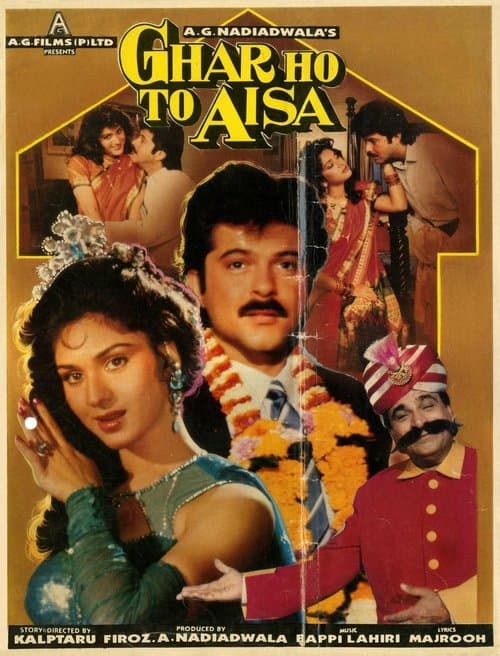
The Kumar family consists of Ramprasad, his wife, Durga; their married son, Vijay, his wife, Sharda, their daughter, Pinky; a married daughter who lives with them, Kanchan, her husband, Bajrangi, and a son; an unmarried and unemployed son, Amar. Save for Bajrangi and Amar everyone else likes to bully and abuse Sharda and make her do all the house-work, especially Kanchan and Durga who don't even need an excuse to beat, slap her, and even burn her arm in scalding hot water. Amar finds a job with Dwarkaprasad, and falls in love with his daughter, Seema. One day Amar has to be go to Delhi, and four days later when he returns home he finds that Sharda and Pinky are missing, and Sharda's mom, Devki, is dead. He frantically searches for them and comes across their dead bodies. The question remains how did Devki die, and how were Sharda and Pinky killed?
Apr 1990
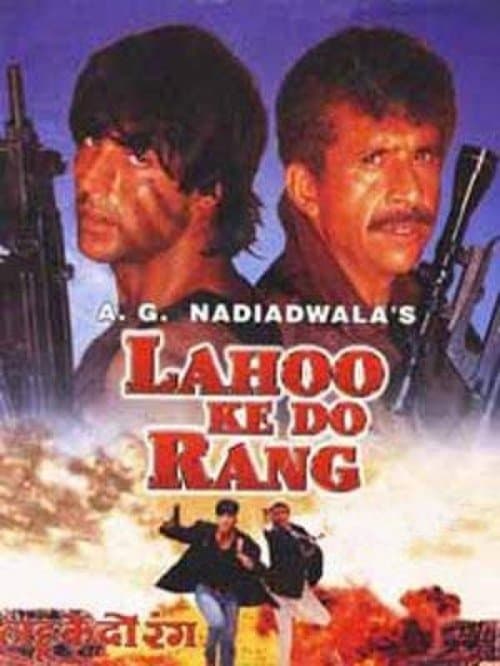
Lahoo Ke Do Rang is about customs officer Bharat Srivastav who lives a middle-class life with his sister Rajni, wife Sangita and a small son. Rajni is soon to get married to Inspector Gautam. He is known for his unorthodox methods of apprehending smugglers, and it is these methods that land him in trouble with the Shikari brothers. Bharat decides to oppose them, and as a result the Shikari brothers recruit false eye-witnesses, pay them to give false testimonies and get the complaint dismissed. When Bharat persists, his family is abducted and subsequently killed. Bharat manages to kill some of the culprits, however, is arrested, found guilty and sentenced to life imprisonment. On the way to prison, the vehicle meets with an accident, killing everyone on board. Relieved at the death of their nemesis, the Shikari brothers celebrate only to find out that they now have a new unknown enemy, an enemy who will kill them one by one for an unknown reason.
Mar 1997
Possibily a transposition from Johann Nestroy's 1835 parody play "Weder Lorbeerbaum noch Bettelstab", or maybe "Lorbeerbaum und Bettelstab; oder, Drei Winter eines ..." by Karl von Holtei.
Apr 1913