Menu
© 2026 The Couch Critic
Browse 46 movies from Ronin Films
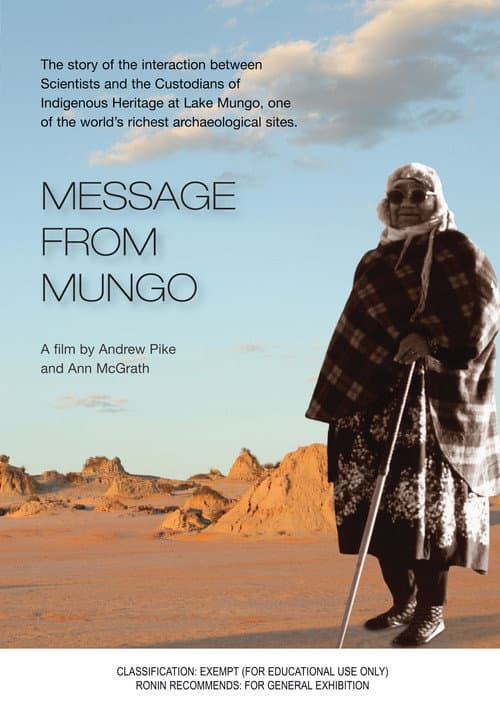
Lake Mungo is an ancient Pleistocene lake-bed in south-western New South Wales, and is one of the world’s richest archaeological sites. Message from Mungo focuses on the interface over the last 40 years between the scientists on one hand, and, on the other, the Indigenous communities who identify with the land and with the human remains revealed at the site. This interface has often been deeply troubled and contentious, but within the conflict and its gradual resolution lies a moving story of the progressive empowerment of the traditional custodians of the area.
Sep 2014
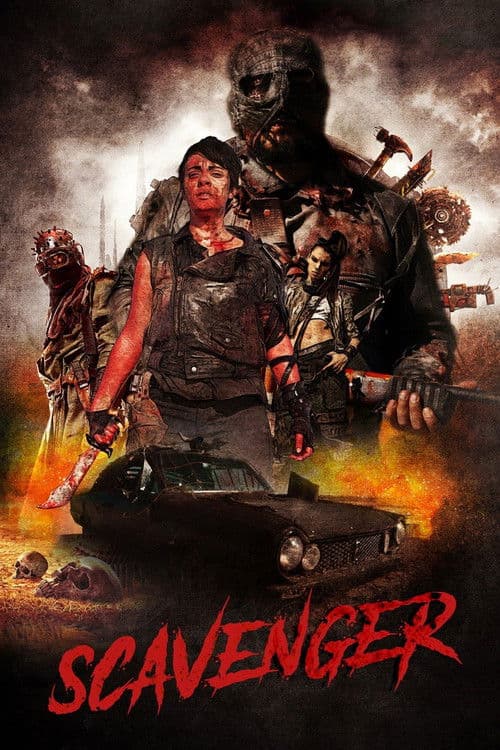
In a future devastated by economic crisis, corruption, social inequality, and diseases, Tisha, an organ trafficker and hitwoman, will have to face her own demons.
Nov 2019
The story of a Japanese scholar, Minoru Hokari, who, before his death in 2004 at the age of 32, achieved work which today commands an ever-widening audience. It is a story of cross-cultural understanding, how Gurindji Elders in the Northern Territory tasked Minoru to relay stories from their culture to a wider world.
Sep 2025
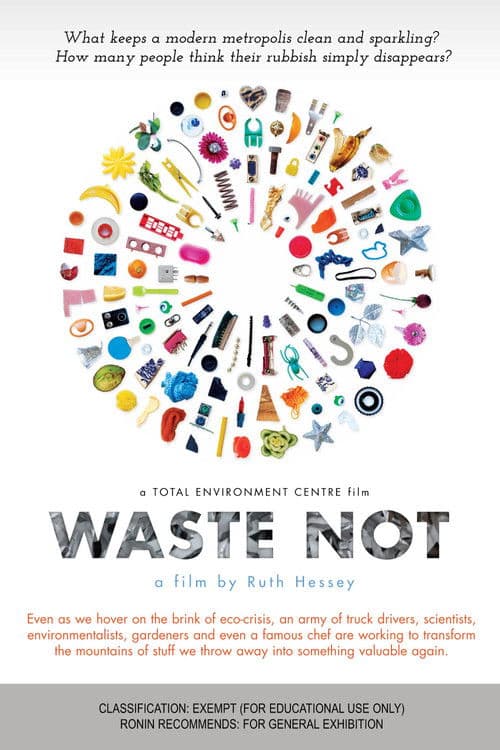
Waste Not is a film about where your garbage goes, who sorts it for you, and what it is worth if it isn't just tossed into landfill. It's easier and cheaper to retrieve gold from old computers for instance, than to dig it up. Organics can be used to create fertiliser and green electricity and yet each Australian sends half a tonne of food waste to landfill each year where it is contaminated with chemicals and e-waste. We recycle only 50% of all our waste. There is an alternative to environmental apocalypse and we don't have to wait for the politicians to make it happen. All we really need to do is be creative and use our imaginations to turn this waste into wealth again. Waste Not talks to scientists, workers at waste depots, environment campaigners, gardeners and even a famous chef about how easy it is to save the planet by simply recycling properly.
Jan 2011
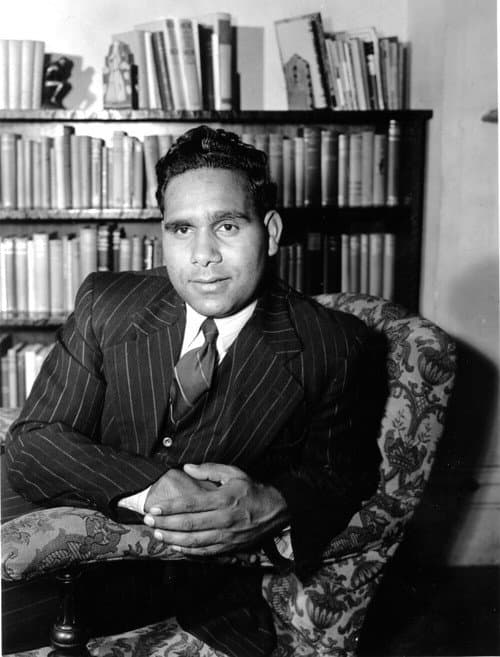
An insight into the life of Indigenous singer Harold Blair, who achieved overseas success at a personal cost. In 1945, Harold broke free of the restrictions placed on his community to perform opera and begin to change the limitations of the era.
Jan 1994
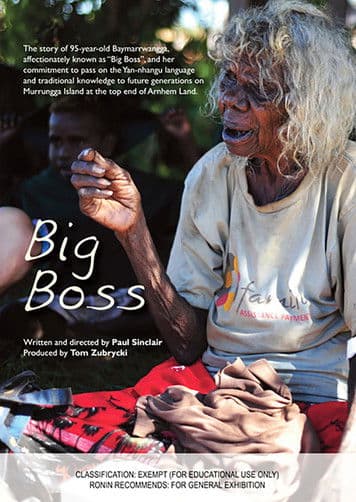
The story of 95-year-old Aboriginal elder Laurie Baymarrwangga and her work to maintain the language and cultural traditions of the Yan-nhangu people of Murrungga.
Feb 2012
This documentary records Hoaas' personal encounter with the closed society of North Korea. As with her earlier work, Hoaas approaches her film as a cumulation of fragments encompassing different perspectives that together offer a point of entry into a complex society. Her diary-style narration signals her limited personal perspective into this culture, especially given the brief filming period and her difficulty in breaking through the facade of the showcase version of Korea insisted upon by her official guides. Hoaas' restricted visual access, and her reluctance to present over-familiar images of the hardship and depravation informed her decision to use this narrative device to frame her film within the context of the famine crisis that began in 1997 following the failure of crops caused by two consecutive years of heavy flooding.
Feb 1998
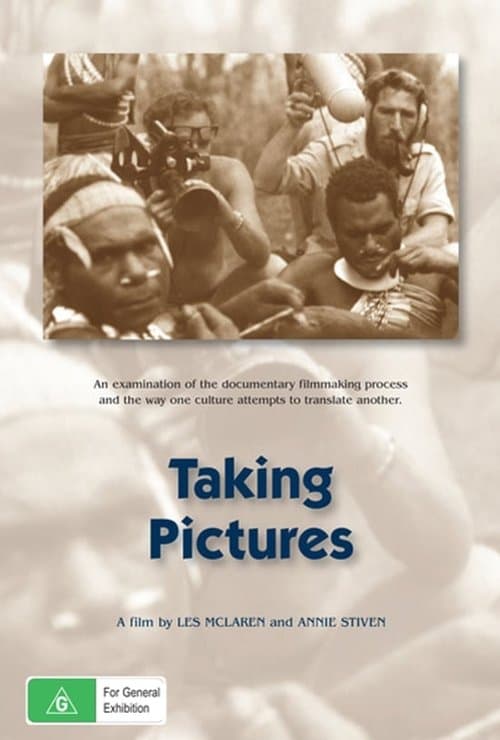
Before the 1970s, the Commonwealth Film Unit represented the people of PNG in a paternalistic way, as curiosities. The unit used pompous voice-overs telling viewers what they should believe. Les McLaren and Annie Stiven are two of a group of Australian filmmakers who have lived and worked in PNG during the past 25 years and who see their roles rather differently. Through their films, they have endeavoured to reflect Papua New Guineans' complexity of thought, language and culture, using a wide variety of filmic styles and techniques. The film features interviews with a variety of Australian filmmakers who have worked extensively in PNG, including Bob Connolly and Robin Anderson, Chris Owen, Dennis O'Rourke and Gary Kildea. This documentary is a fascinating tracing of PNG culture and history from the 1930s until today.
Jan 1996
On June 21 2007, the Howard Federal Government launched an intervention into Aboriginal communities in the Northern Territory. It was one of the most dramatic policy shifts in the history of Aboriginal affairs. Relentless media attention focuses on ideological arguments for and against the Intervention, while the voices of those affected by the policy are rarely heard. For this film more than 40 Alice Springs town camp residents were interviewed in depth over the course of eight months to find out the answer to the question - is it working?
Jun 2009
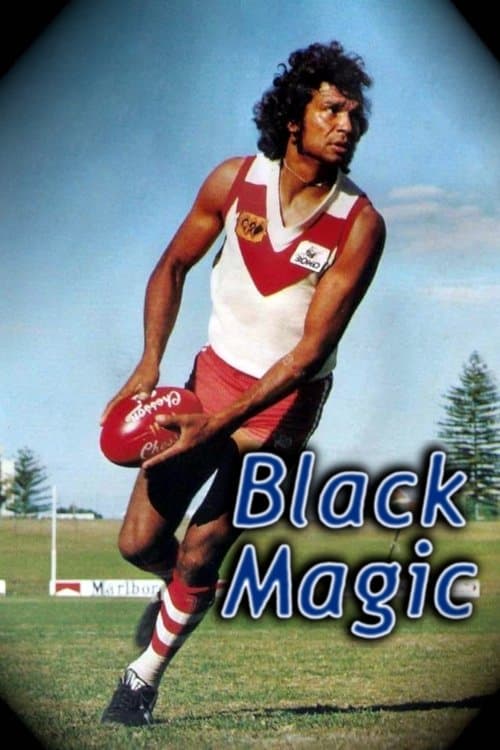
Although about top Aboriginal sportsmen, BLACK MAGIC is more than a film about sport. It is an account of the creative use of sport made by the Noongar people of Western Australia's south-west to advance their people's standing. Denied access to other areas of social life like most Aboriginal communities at the time, the Noongars, from as early as 1920, channelled the natural talent of their young people into the arena of competitive sport, notably running, boxing and football. Competitive sport, as filmmaker Paul Roberts notes, is 'an open gate, a universal rite of passage, an opportunity to achieve recognition and acceptance.'
Jul 1988
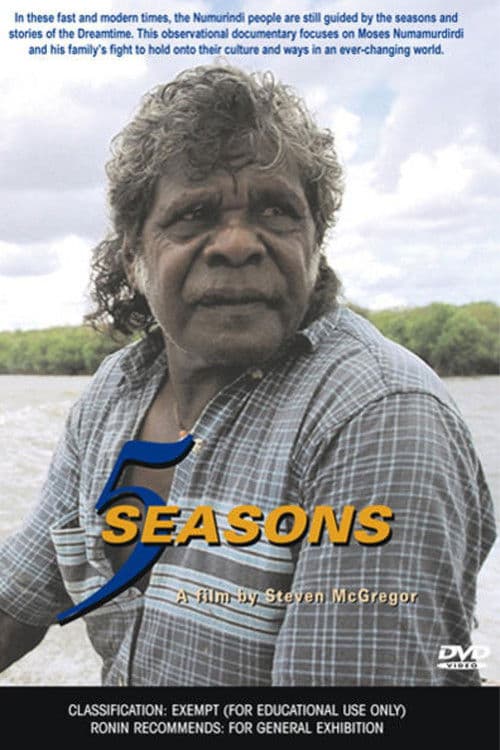
In these fast and modern times, the Numurindi people are still guided by the seasons and stories of the Dreamtime. This observational documentary focuses on Moses Numamurdirdi and his family's fight to hold onto their culture and ways in an ever-changing world.
Jun 2005
Moffatt was the first Australian to exhibit at the gallery and her exhibition, Free-Falling, from October 1997 to June 1998, took the New York art world by storm. "Moffatt explains her influences and intellectual themes, she gives our camera exclusive insight into her thoughts and her daily dealings in New York. Gradually the viewer pieces together her fascinating narratives and come to understand her world and her vision." - Jane Cole.
Jan 1999
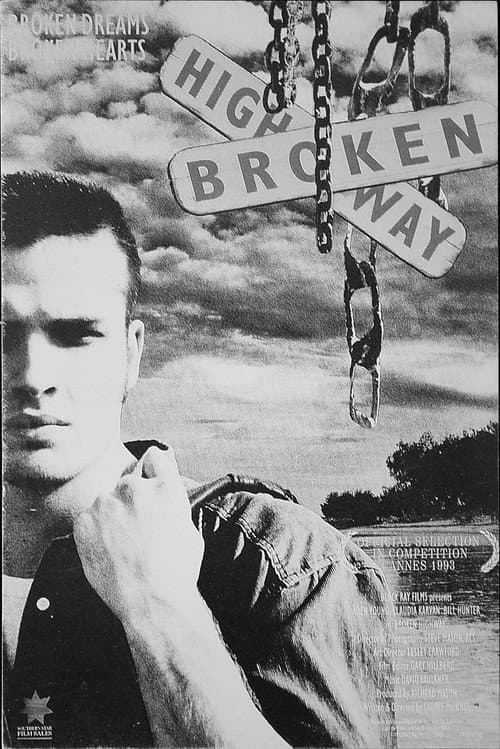
In this moody black and white drama, very much in the mode of the American "western," but with its own film noir characteristics, a whole town is heaved out of its doldrums when a pair of mysterious strangers come visiting. In the beginning of the film, Angel is traveling with his friend Max on a ship to Honeyfield, a town on the coast of Australia. He is coming home to die. Instead, he dies on board the ship, willing his boots to Angel, and an unopened package to someone called "The Dead Man," in Honeyfield. Also on the ship is a man named Tatts, a far less pleasant personality. When Angel gets off to head into Honeyfield, Tatts decides to follow along unseen. The package, Angel was told, contains something its intended recipient has been looking for without knowing it. On finding the recipient, a mean-spirited old man who is more or less the boss and owner of the town, he learns that the package contains opium.
Jun 1993
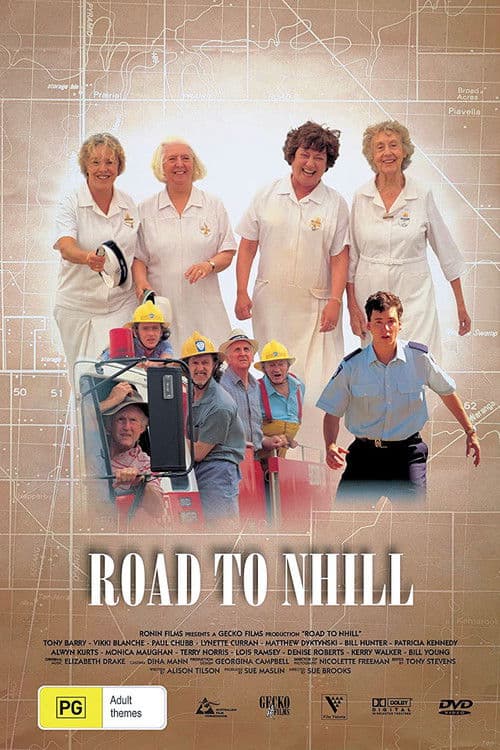
Four women bowlers on their way home to Pyramid Hill (population 550) from a tournament roll their car on a deserted road in rural Victoria. They are coping fairly well until the local men and emergency services start trying to help.
Nov 1997
THREE BOYS DREAMING follows three Indigenous boys over four years as they chase the dream of becoming professional AFL footballers.
Jun 2010
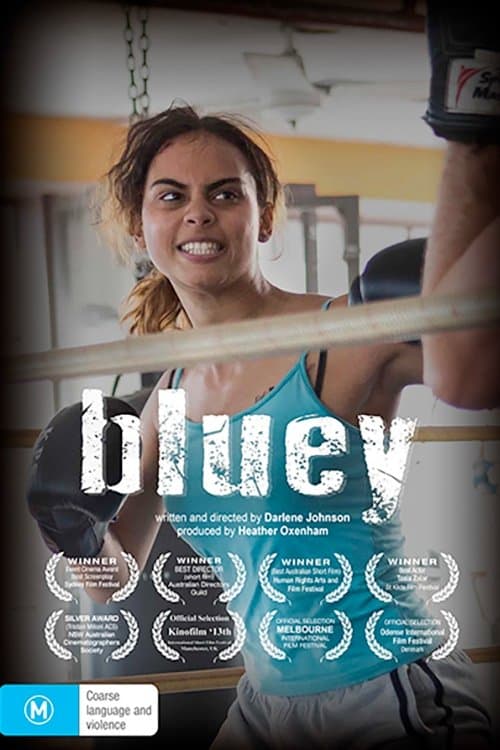
Bluey, an angry young woman trapped in a life of violence, meets a mystery mentor who could change everything. Bluey is a story of courage, heart and the fight for survival.
Jun 2015
Ben Chifley (1885 – 1951) was a railway engine-driver who became Australia's best-loved Prime Minister in 1945. He was a politician from an Irish-Australian working class background who lived by principles of compassion and concern for his fellow Australians. His philosophy and example have never been more relevant than in the political arena of today. As Prime Minister and Treasurer, he had a profound effect on the path of Australian history following World War Two, and many advantages enjoyed in our society that we take for granted today are the product of his vision.
Aug 2008
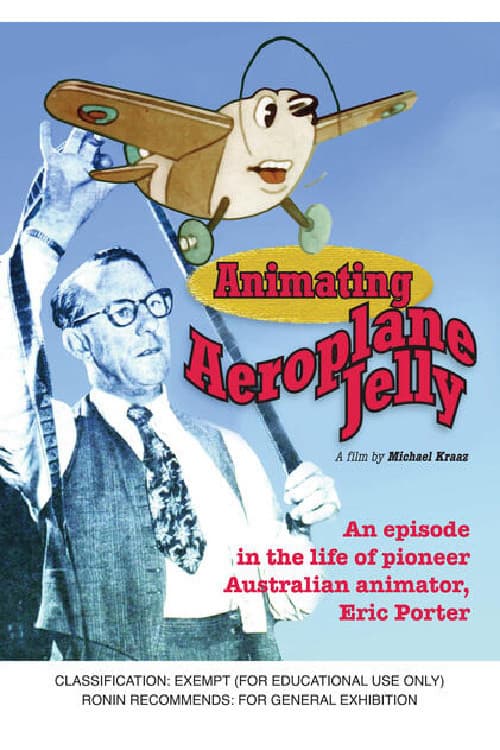
A documentary about Australian animation pioneer Eric Porter’s work on the iconic Aeroplane Jelly animated promos of the 1940s and 1950s.
May 2020
'I want to make a film about women' is a speculative documentary love letter to Russian constructivist women. The new Soviet Union of the 1920s championed equality for women and great innovation in the creative arts. Until it didn't. Looking back at that time, history remembers the men who were celebrated and then shut down. But women were there, too, and they were influential, powerful and brilliant. 'I want to make a film about women' gazes in to a creative communal kitchen and watches these women transform it into a workshop, then a stage set, then a film, all the while juggling noisy men and the wolves of history. It imagines what the revolutionary women artists of the 1920s said, what they did, and what they might have created had it not been for Stalin's suppression.
Oct 2019
With young women 18-24 being most at risk of abuse, Australian comedian Becky Lucas sets out to understand what an abusive relationship looks like, how it begins and why it's so hard to intervene.
0