Menu
© 2026 The Couch Critic
Browse 4 movies from Siła-kino
Apr 1912
There was Hersh Dubrown - a quiet, god-fearing, poor and virtuous scribe of holy books. And behold, his house became a battlefield between Good and Evil. The good was based on Hersz Dubrown's pure soul - and Satan reached for this soul. He lost her and corrupted her with money. . . Satan first appeared as a lottery ticket seller. He persuaded Hersz to buy a lottery ticket, let him win and get rich. And Hersz for winning the lottery - tempted by Satan - sets up a factory and produces mechanically. . . tallit. Satan, in the form of the merchant Uriel Mazyk, ruins the homeworkers who make tallits by hand. But Satan cannot defeat Hersh Dubrown. When he was up to his ears in sins, he punishes himself - he commits suicide.
Jan 1912
Dec 1911
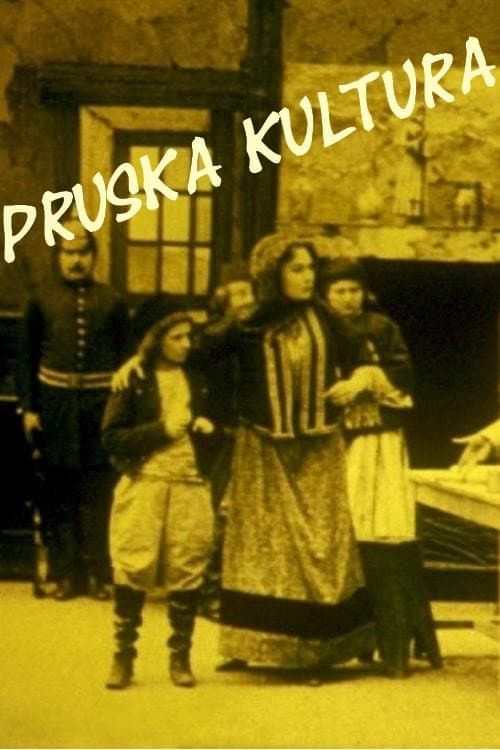
The oldest surviving Polish film, Pruska Kultura depicts the persecution of Poles under Prussian Germanisation, drawing on events such as the 1901 Września school strike and the struggle of Michał Drzymała. Produced by Warsaw cinema owner Mordechaj Towbin, the film combines fictional drama with documentary-like elements, following a traditional Polish family subjected to violence, eviction and repression by Prussian authorities. Running just over eight minutes across twelve episodes, it culminates in an allegorical apotheosis of Poland, portraying generations and social classes united in suffering and hope for national rebirth. First shown abroad under the French title *Les Martyrs de la Pologne*, its strongly anti-Prussian message attracted international attention. The long lost French print was rediscovered in 2000 at the Bois-d’Arcy archives and returned to Poland in 2008, making this politically charged work an invaluable landmark of early Polish cinema.
May 1908