Menu
© 2026 The Couch Critic
Browse 7 movies from Yang Fudong Studio
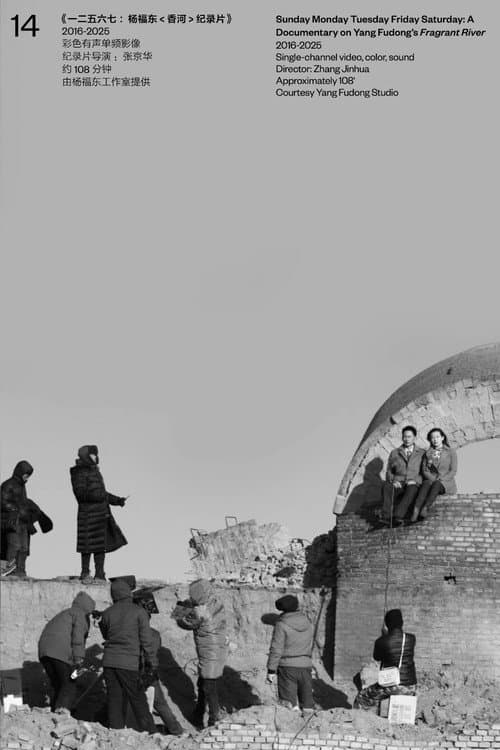
This documentary by Zhang Jinghua captures behind-the-scenes moments and glimpses of everyday life during the filming of Yang Fudong’s Fragrant River.
Nov 2025
Yang Fudong, one of the most influential contemporary artists in China, is known for his epic black-and-white films and photographs, which straddle the worlds of contemporary art installation and cinema. Moving Mountains is a 46-minute, black-and-white film, accompanied by photographs from the film set, drawings and props. The film is inspired by the ancient tale of a man, seeking to move a mountain, and extolls the virtues of perseverance and collective action. The artist makes this story a poetic reflection upon human nature and the shifting values to which it can be subjected.
Dec 2016
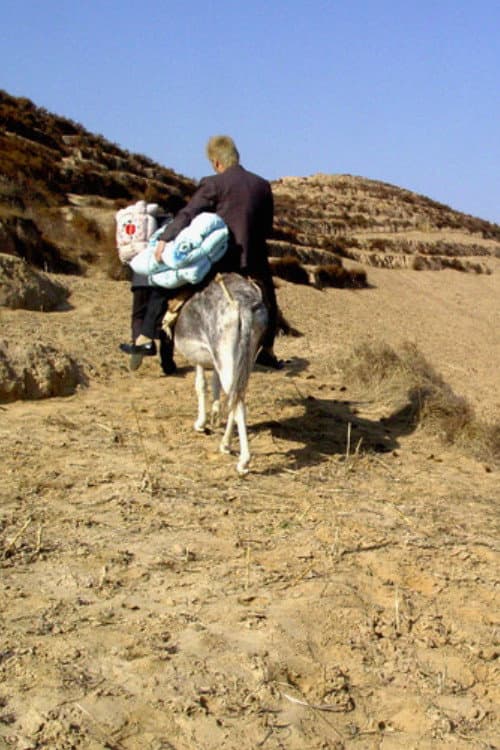
An Sai, Shanbei, An isolated village on the Loess Plateau, Northern China. Two young outsiders are moving in, While two young locals are struggling to escape. Comes into view a donkey full of luggage, Comes also into view a young couple, He carries her on a bike...
Feb 2005
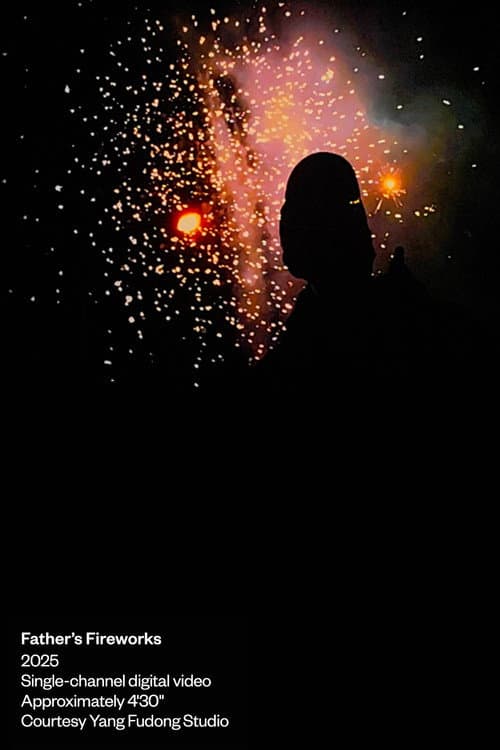
Father’s Fireworks is a short film the artist edited out of footage of daily life that he had previously shot. The film first depicts a worrisome and loving letter written by Yang Fudong's father to Yang Fudong through textual still frames, after which it shows the artist’s father setting off fireworks in celebration of the New Year.
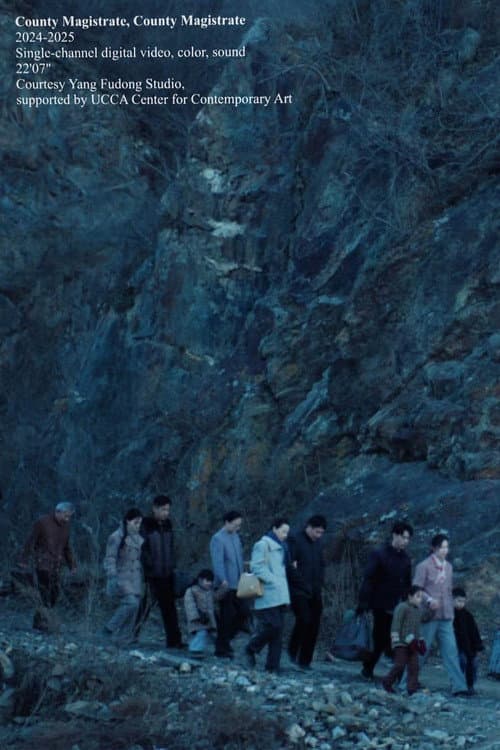
County Magistrate, County Magistrate depicts a collective migration unfolding in an indeterminate time and place. Men, women, and children from a village move through mountains as the sky gradually grows dark, walking resolutely into the distance until they arrive at a new settlement. The abandoned courtyards they leave behind still bear traces of daily life: a steaming kettle, unfinished bowls of food, an old television flickering with static, and worn-out pieces of furniture. The camera then slowly pans to an outdoor movie screen showing After Armistice, a black-and-white film released in 1962. In the film, a man draws a business card from his pocket and introduces himself as Xianghe’s newly appointed county magistrate. At this moment, the story slips into another layer of fictional time and space.
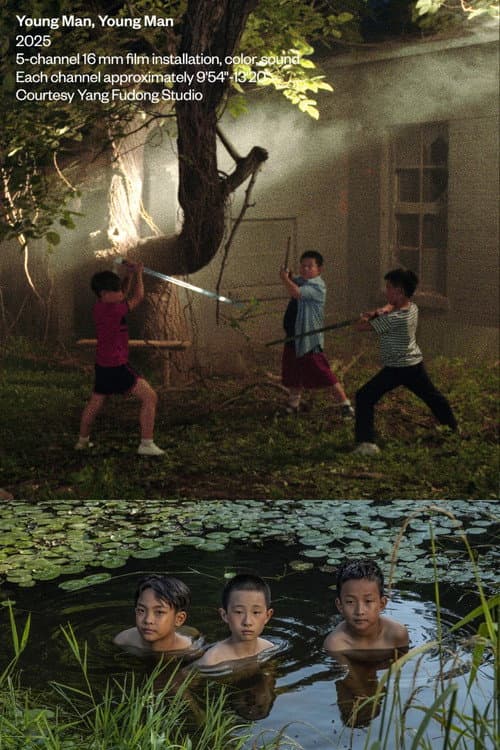
Young Man, Young Man unfolds in a fragmented structure, reconstructing Yang Fudong’s recollections of his 1980s adolescence in a Beijing military compound, along with scattered memories of collective life in the post-socialist era. In the film, young boys run, practice martial arts, wait for the bus, splash in water, and play in cornfields. There is no fixed narrative; instead, the boys seem to drift through an endless summer. Yet an undercurrent of distance and estrangement suggests that childhood has already quietly slipped away. These moments of adolescent innocence and loneliness, crystalized within the film, form a dreamlike allegory.
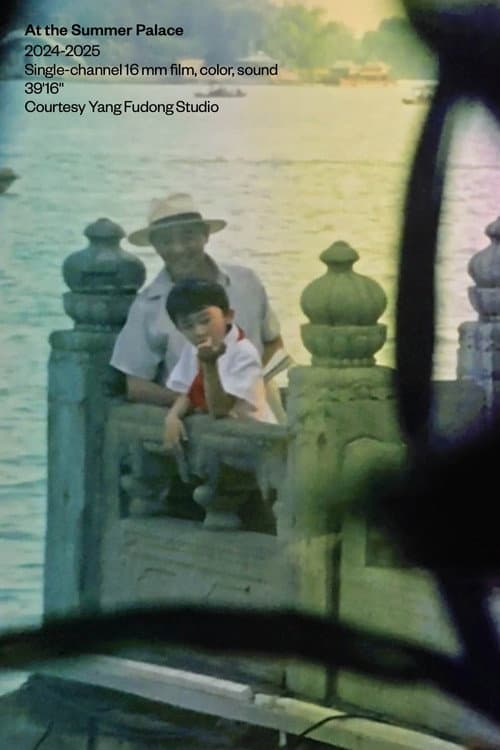
At the Summer Palace follows a mysterious man and a young boy as they wander through the Summer Palace, clad in clothing recalling styles from the 1980s and 1990s. The work unfolds like a hazy moment between dreaming and wakefulness, recalling the stillness of a languid afternoon. The era-specific details present in the setting seem to anachronistically clash with their pair’s clothing and behavior. Through this dislocation of time and space, Yang Fudong evokes the complex emotions of childhood, specifically the mixture of curiosity and unease a child feels upon encountering the strange and unknown.