Menu
© 2026 The Couch Critic
Browse 8 movies from Como Film
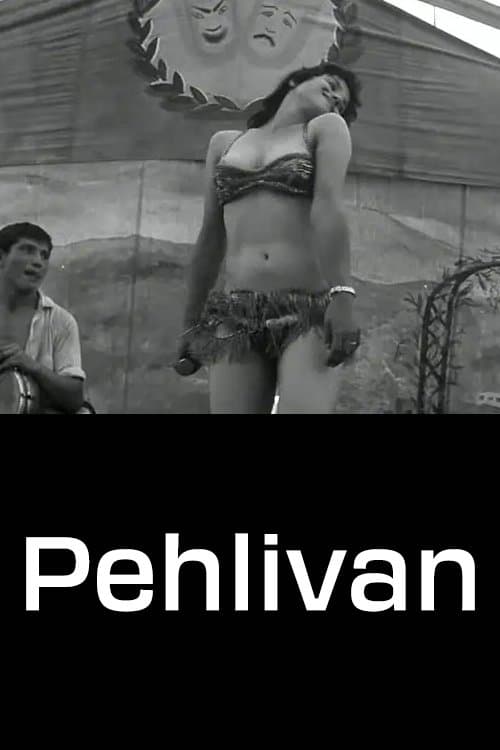
Pehlivan focuses on a three-day wrestling competition, an ancient tradition that dates back over a thousand years to the time of the Ottoman Empire, originating in the games the soldiers would play to entertain themselves in between battles. Maybe that's why there's more than a hint of homoeroticism in the way the wrestlers oil themselves up with grease, making sure to cover every inch of their bodies so that their opponents will be unable to get a grip. Pialat's closeups emphasize the men's muscular bodies jammed together and sliding off one another, posed in intimate, twisted arrangements, struggling desperately for a grip on each other's bodies. Arms are jammed down pants, one of the only places there's some potential for a handhold, and the whole thing is very suggestive and sensual, a form of intimate male contact that's sanctioned as a show of strength and masculinity.
Jan 1964
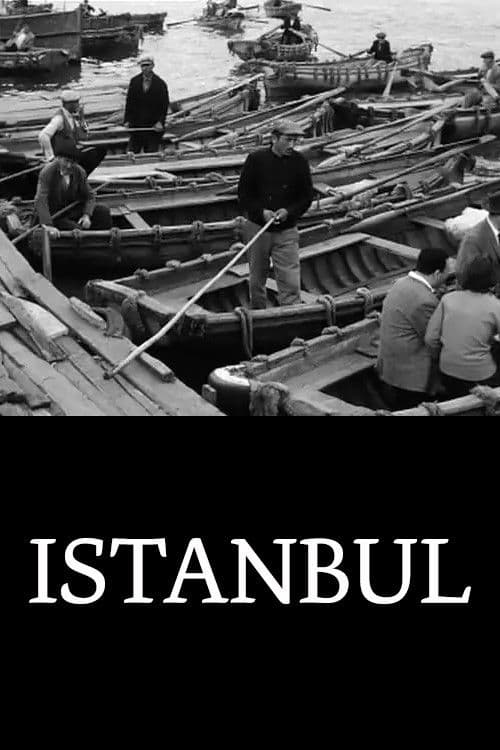
All of Pialat's Turkish films are uniquely interested in the country — especially Istanbul — as it was, not just as it is at the precise moment that Pialat is filming it. History informs these films in a big way, with the voiceover narration (which incorporates excerpts from various authors) introducing tension between the images of the modern-day city and the descriptions of incidents from its long and rich history. Istanbul is probably the most conventional documentary of Pialat's Turkish series, providing a general profile of the titular city, its different neighborhoods, and the different cultures and ways of living that coexist within its sprawling borders. As the other films in the series also suggest, Pialat sees Turkey, and Istanbul in particular, as a junction point between Europe and the East, between the old and the new, between history and modernity.
Short doc by Maurice Pialat. The first film in the series set at Turkey, Bosphore, is also the only one that was shot in color.
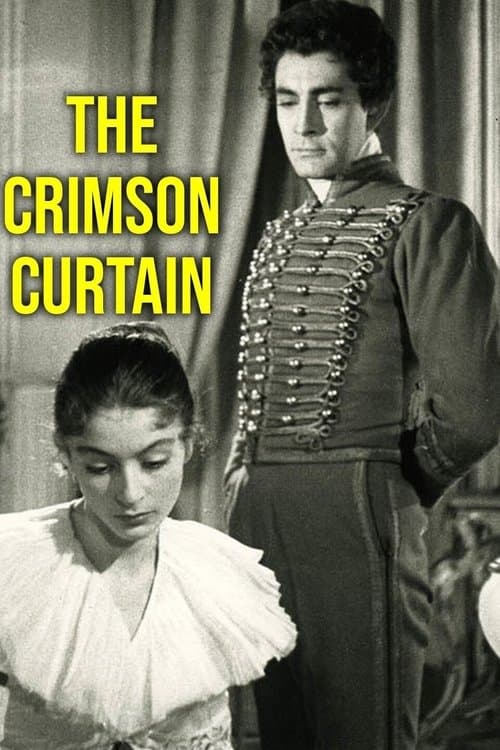
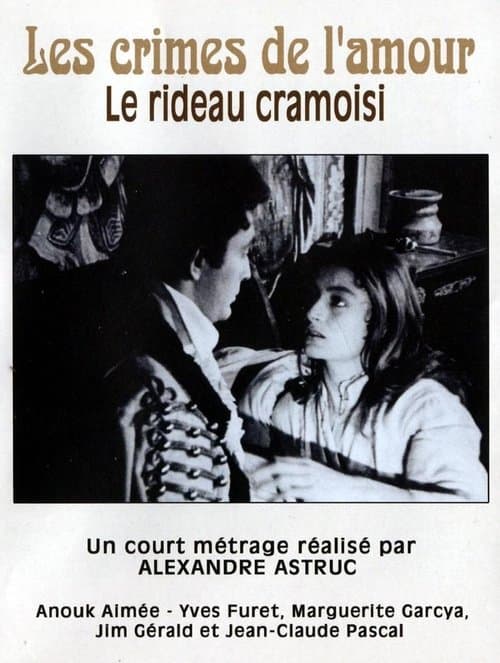
A twenty year old Anouk Aimée stars as Albertine, the daughter of a bourgeois couple who house a young officer during the Napoleonic wars. Newly promoted, the officer (Jean-Claude Pascal) is quartered by a dull bourgeois couple who treat him with a cold politeness bordering on indifference.
Mar 1953
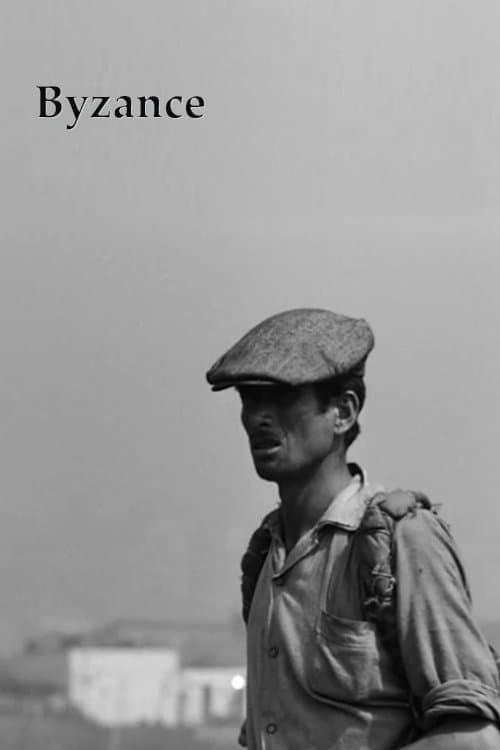
Byzance uses a text by Stefan Zweig to describe the Ottoman conquest of the city in 1453. Before he turned to feature filmmaking in 1968 with Naked Childhood, Pialat worked on a series of short films, many of them financed by French television. Byzance is one of Pialat’s six Turkish shorts.
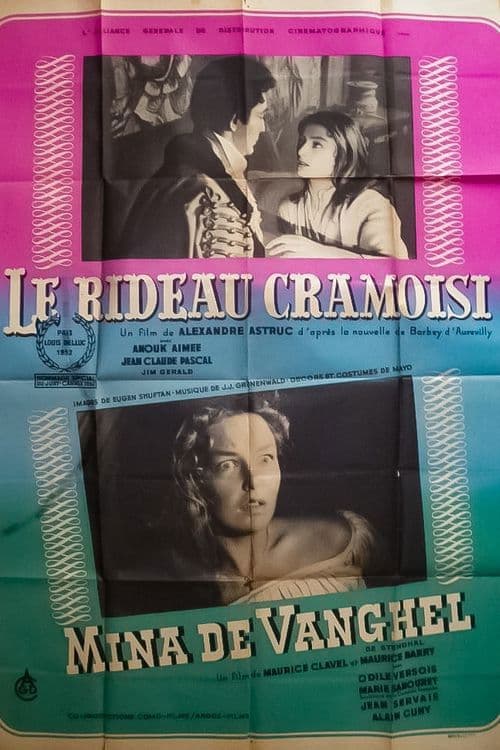
Two adaptations. First, "Le Rideau cramoisi" by Jules-Amédée Barbey d'Aurevilly is about a young second lieutenant of hussars, garrisoned in the provinces, who evokes a strange adventure. Staying with an old couple, he acts as acquaintance with Albertine, the daughter of his hosts, fell in love with her and, after paying her assiduous courtship, made her his mistress. But one night, she died in his arms. He tried in vain to get rid of the corpse and ended up run away. Second, "Mina de Vanghel" by Stendhal is about Mina, a young German, who came to settle in France with her mother in 1820. Her father, a deceased Prussian general, left her a immense fortune. Courted, she falls in love with Monsieur de Ruppert, a ruined man whose castle her mother bought. But Mina does not take long to unmask the dowry hunter.
Jan 1953
A romantic German girl is brought to France. After an interlude with an old roue, she falls in love with a simple, but married, man. She goes to work for him as a servant, but after a night of love with him, she commits suicide.
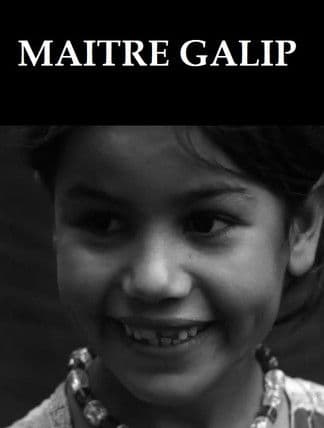
Maître Galip is the most poetic and powerful of Pialat's Turkish Chronicles, using the poems of Nazim Hikmet to accompany a series of evocative images of ordinary working class people in Istanbul. This was the film that Pialat himself claimed was the most complete realization of what he was aiming for with his Turkish documentaries. It's not difficult to see why this was his favorite: here he abandons the historical commentary and documentary observation of the other shorts in favor of an emotional emphasis on the lives of the poor and the unemployed.