Menu
© 2026 The Couch Critic
Browse 18 movies from TV Studio Filmów Animowanych
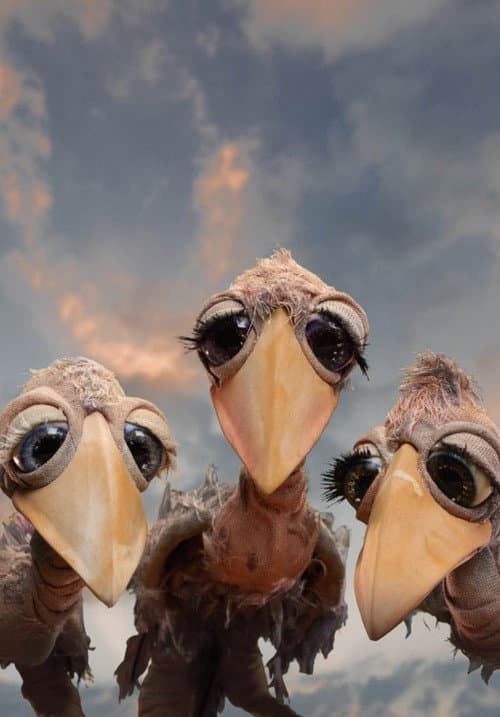
An animated film for children and family audiences based on a simple, wise, and yet funny story by the outstanding Polish philosopher Leszek Kołakowski entitled " Who would like to cheer up an unlucky rhinoceros? ". In his tree nest in the savannah, a wise old Marabou stork tries to calm the young birds as they take their first flight. He decides to tell them why the Rhinoceros sitting under the tree is crying and has a compress on his bottom. It turns out that the Rhinoceros is very worried because he desperately wants to fly, but he can't and is ashamed to admit it. A certain ubiquitous Sparrow decides to teach him how to fly...
Nov 2023
0
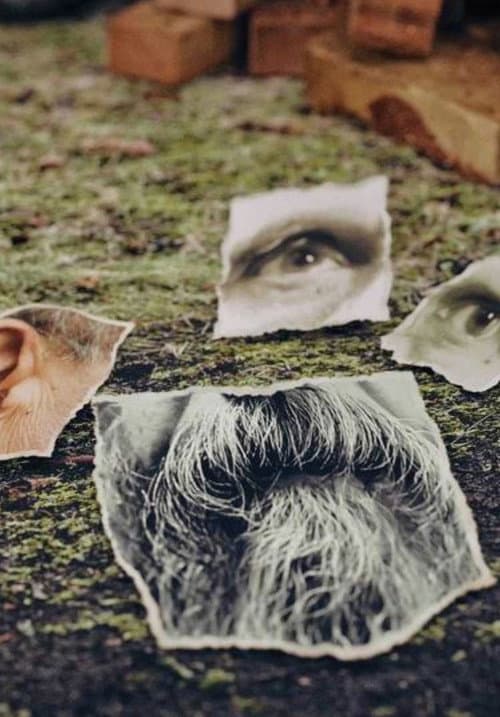
The film Survival offers a grotesque critique of homelessness and environmental decay through a unique blend of live-action and diverse animation techniques, including pixilation and 3D. As an auteur project, it integrates these styles seamlessly to create a striking artistic vision. Its scenography embraces upcycling or "trash art," echoing Marcel Duchamp’s legacy of elevating banal objects into profound art. By incorporating street art and graffiti, the film sparks dialogue about art’s role in society. This innovative approach transforms waste into priceless commentary, challenging viewers to reconsider their surroundings and the nature of creativity itself.
Jan 2025
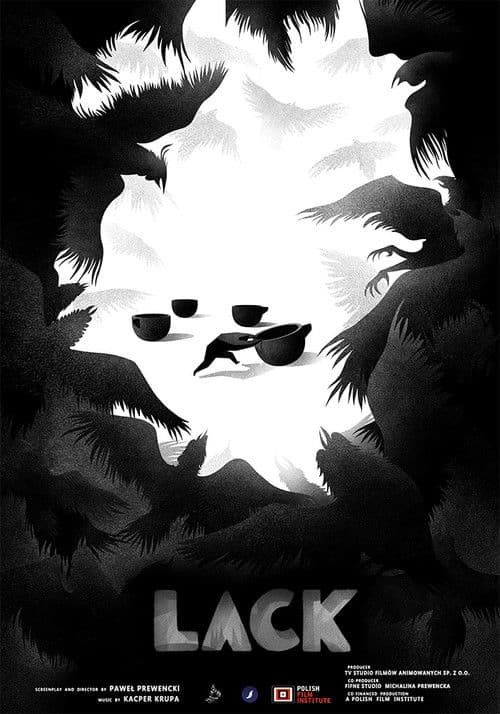
An intimate take on the emotions related to awaiting a baby and the grief after the infant’s loss. The pain accompanying the parents was depicted by means of visual symbols and metaphors. An economical, surreal story about a personal tragedy which, at the same time, is a remarkably beautiful observation of the love between two people who are trying to overcome a trauma together.
May 2023
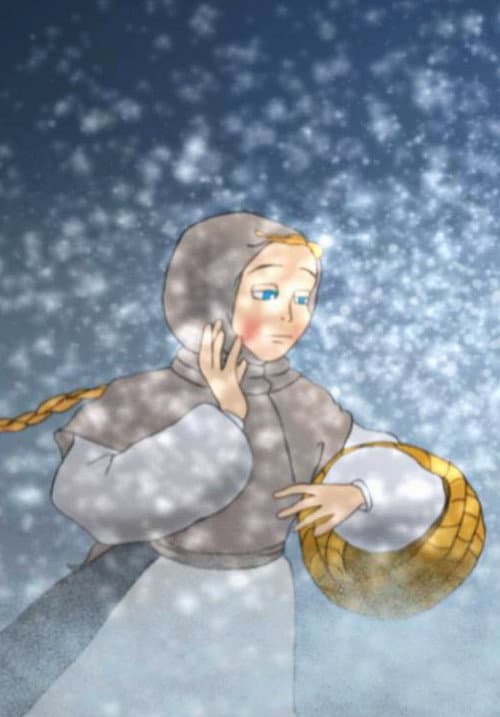
Zuzia lives with her Stepmother and her daughter Rózia. She works hard from dawn to dusk. However, the Stepmother decides to get rid of her and sends Zuzia into the forest in the winter to gather violets and strawberries. In a clearing in the forest, Zuzia meets the Twelve Months. December grants her request, and to the Stepmother's surprise, Zuzia returns home with violets and strawberries. The Stepmother sends Zuzia to gather gold. When Zuzia brings gold, she decides that next time Rózia will go to the Brothers of the Months and bring back even more gold. Rózia insults Grudzień and his brothers. The Stepmother and her daughters' greed are punished. Grudzień's brushwood turns into snakes. The Stepmother and Rózia flee, and Zuzia begins to manage her father's cottage alone. Based on the fairy tale by Janina Porazińska entitled 'About the Twelve Months'.
Apr 2004
Aug 2026
An animated film for children, created using the technique of painted animation. It was created to commemorate the 200th anniversary of Hans Christian Andersen's birth.
Aug 2005
'Dies Irae' from Wolfgang Amadeus Mozart's Requiem. This is a fully original film impression, realized using the technique of painting animation performed directly under the camera (each frame will be painted with oil paints on stretcher bars). The film's script is inspired by the Apocalypse of St. John from the New Testament. Jasińska creates an impressionistic story around the vision of the four horses and riders of the Apocalypse.
Oct 2006
A film miniature with classical music, based on the film "Len" based on the story by Hans Christian Andersen. The flax was sown and grew. A blue flower unfolds from the buds. Time passes. The flax has matured. People come and uproot it. They soak it in water, dry it over a fire, put it in a kiln, break it, soak it again, and tear it into shives. Finally, the flax turns into fibers and is sent to the spinning wheel, and then to the loom. On the loom, the flax is transformed into a beautiful piece of linen…
Oct 2005
Original animated film for children from the series "Paint Me a Fairy Tale...", created using the technique of painting animation with oil paints on canvas directly under the camera. Ole Śpijsłodko is the third film in the series and the first adaptation of this Andersen fairy tale, similar to the earlier films Len (2005) and It's Quite True! (2014). A magical journey into the land of dreams and imagination. It attempts to tame the phenomenon of dreams and the childhood (and not only) fear of night and death. When Hjalmar falls asleep, Ole Śpijsłodko descends from the moon and invites Hjalmar on a journey through dreams. He transforms his room into a forest where Hjalmar's books and notebooks soar like birds. Another time, Ole summons a swallow, which takes Hjalmar on a soaring journey to the clouds, only to fly to the moon at night. One day, Ole meets Hjalmar with his brother, who visits everyone only once...
Jan 2021
Once upon a time, or perhaps not so long ago… beyond the mountains, beyond the forests, or perhaps somewhere nearby… in the well-known city of Krakow, dogs, cats, mice, and even humans live in great friendship. Until one day, thanks to the dog Thug and the cat Gryzelda, an unwritten law is broken, concerning who gets what if they fall from a stall onto the ground. And so a code is written, intended to apply to everyone. However, everyone soon interprets the code to their own advantage, until everyone ends up arguing with everyone else… a story about how breaking the law for personal gain always leads to chaos and deep divisions, and how the old saying "living together like cats and dogs" didn't just come from nowhere…
Sep 2017
A story about how grace, modesty, unpretentiousness, and an affirmation of life lead to happiness, based on the fairy tale by Maria Krüger of the same title.
Jan 2016
Original animated film for children from the series Paint me a fairy tale… , made in the technique of painting animation with oil paints on canvas directly under the camera. It's Quite True! is the second film in the series and the first screen adaptation of this Andersen fairy tale, similarly to the previously made film Len (2005).
Sep 2014
A series of original animated films for children, based on adaptations of Hans Christian Andersen's fairy tales, which combines an artistic style of execution - animation on canvas with oil paints directly under the camera of Joanna Jasińska-Koronkiewicz. The cycle consists of four selected fairy tales: To pewna wiadomość, Ty wiesz najlepiej, Ole Śpijsłodko, Kwiaty małej Idy. Namaluj mi bajkę… (Paint Me A Fairy Tale...) is the pilot episode of the series.
Jun 2011
A film impression set to classical music, with a narrative layer inspired by the vocal performance of Fryderyk Chopin's Ballade in F minor, Op. 52 , by the Novi Singers. The starting point is the separateness, the loneliness, of the bodies, souls, thoughts, and feelings of a woman and a man. In the empty space of the frame, day dawns, and the light moves toward the west. Dusk falls, then night, then day again. The dark silhouette of a man appears. He looks for something at the other end of the road. He waits. As night falls, he disappears, and the white silhouette of a woman appears. She, too, waits, looks for it. The night passes, another day dawns. When they finally wait patiently longer than usual, they see each other for the first time. It's an extraordinary moment, the magic of love's birth. After the rapture of love, it's time for life...
Feb 2010
A long, long time ago, or perhaps not so long ago… Beyond the mountains, beyond the forests, or perhaps somewhere nearby… in a village not far from a large city, a widower, Jakub the Lumberjack, lives with his daughter, Dorotka. Dorotka is a good and hard-working girl, so her father often calls her his treasure. Word of "Jakub's treasure," passed from mouth to mouth, turns into gossip and reaches the ears of the greedy townswoman Brunhilda. A treasure is a treasure, surely buried somewhere; it must be acquired, Brunhilda thinks, and under the pretext of taking care of the house and Dorotka, she quickly arranges a wedding. Her cunning plan is foiled by a rooster with a golden feather, which Dorotka brings from the market… Episode from the series Polish Fairy Tales and Fables.
Dec 2008
The wizard Prospero collects honey from wild bees. He is accompanied by Fantazy Bear, Julka, Zagadka, the Happy Beetle, and Kapa-Kapa the Frog. In the grotto, the wizard makes candles from wax combs, while Julka and Zagadka prepare wax for pouring and fortune-telling. While everyone is busy guessing the shadows cast on the wall, the Owl sneaks into the grotto and steals the Owl's cube. At the request of his friends, Zagadka tells the extraordinary story of his magic cube. The friends set out for the Petrified Tree to retrieve the cube from the Owl. Fantazy Bear sneaks into the Owl's tree hollow and manages to convince him to give up the cube. In the Owl's hands, the cube regains its extraordinary power. Episode 11 from the Fantazy Teddy Bear series.
Nov 2007