Browse 9 movies from Lightworks
Like Ezekiel's vision in the valley of dry bones, a typos of a new beginning. In among all the feelings of loss and deprivation occur intimations of the final culbute general, of the dissolution of time, of a now that vanishes between the no longer and the not yet. Lamentations is comprised of a complex audio and visual patchwork: a philosophical meditation superimposed as text throughout the film; vignettes featuring a comical but disturbing Franz Liszt, a debate between Isaac Newton and George Berkeley, an angry, deranged man in an alley, and an arrogant psychiatrist; and a final search for salvation in the forests of British Columbia, the American Southwest, and Mexico's Yucatan.
Oct 1985
Jan 2012
A compelling and revealing exploration of one person's psyche in crisis.... The film is a screen diary of a man in his early 30s afflicted with a life-threatening disease, a man confronting his own mortality.
Jun 1979
"Breathtaking in its techniques, rhapsodic in its passion, and encyclopedic in its scope, the film traces the long fall from paradise into modern barbarism." - Art Gallery of Ontario
Jan 1982
The memory of a nearly perfect evening.
May 1980
Inspired by remarks made by Freud, "Eros nowhere makes its intentions more clear than in the desire to make two things one." and by Nietzsche, "What must these people have suffered to have become this beautiful."
Jan 1980
"The film was made using principles derived from Stephen Wolfram’s work on cellular automata (A New Kind of Science) to determine the content or colour of the shots, their duration, and the time of their appearance: the palette of effects, and their rhythmical development (from the simple alternations with which the film begins to the complex dynamic structures of its later parts),is entirely the result of computational processes that model natural events. John Cage instructed us that art should imitate nature in its manner of operation; I have tried to take the lesson. The music was composed by Colin Clark, using related principles".
Jun 2004
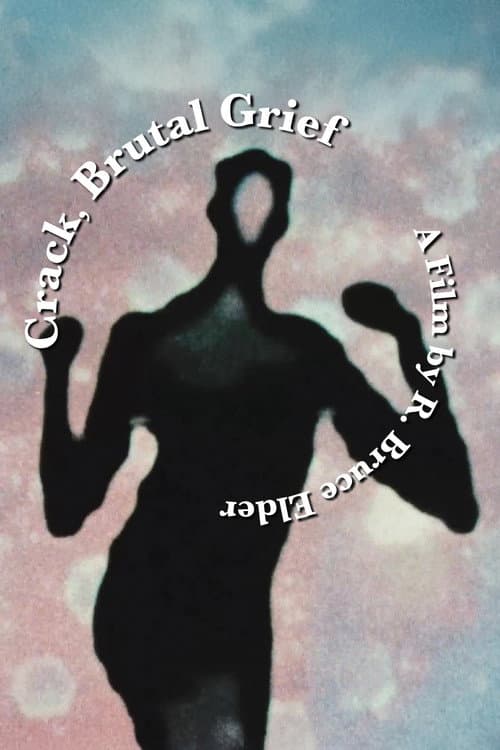
Powerful and raw, ‘Crack, Brutal Grief’ is an impressive extension of R. Bruce Elder's obsessions with history, media culture, psychology, technology, and the cruelty found in nature. The film acts as a primal scream, literally and metaphorically. The point of departure for the film came shortly after the gruesome suicide of Elder's close friend.
Jan 2000
Using optical printing techniques with unusual color processing effects, Unremitting Tenderness offers a series of transformations of a dance sequence. The effect Elder seeks is one of "scales falling away from the eyes, layer by layer, as if progressing unremittingly closer to the optic nerve."
Nov 1977