Menu
© 2026 The Couch Critic
Browse 4 movies from KYO-DAI
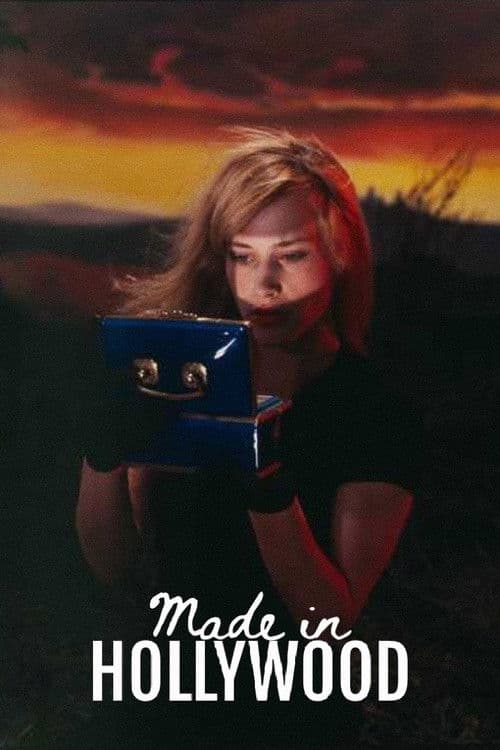
A parable of the Hollywood image-making industry told through a pastiche of narrative cliches.
Oct 1990
Deconstructing the myth of Oedipus within the framework of an ancient Japanese folk story, the Yonemotos craft a highly charged discourse of loss and desire. Quoting from Bunuel, Freud, pop media and art, they place the symbology of Western psychosexual analytical theory into a cross-cultural context, juxtaposing the Oedipal and Kappa myths in a delirious collusion of form and content. The Kappa, a malevolent Japanese water imp, is played with eerie intensity by artist Mike Kelley; actress Mary Woronov plays Jocasta as a vamp from a Hollywood exploitation film. Steeped in perversions and violent longings, both the Kappa and Oedipus legends are presented in highly stylized, purposefully "degraded" forms, reflecting their media-exploitative cultural contexts. In this ironic yet oddly poignant essay of psychosexual compulsion and catharsis, the Yonemotos demonstrate that even in debased forms, cultural archetypes hold the power to move and manipulate.
Jun 1986
Using the syntax of daytime soap operas, Green Card tells the story of Sumie, a Japanese artist who marries an American surfer/filmmaker to enable her to remain in the United States. When the couple’s views towards the agreement move in opposite directions, cultural differences and expectations become pronounced. Casting an ironic eye on the Los Angeles lifestyle and art scene of the early 1980s, this stylised narrative asserts that the delirium of Hollywood ‘reality’ has a manipulative impact on personal relationships.
Jan 1982
In this tour-de-force of stylized deconstruction, the Yonemotos rewrite a traditional narrative of desire — boy meets girl, boy loses girl. Employing the hyperbolic, melodramatic syntax of Hollywood movies and commercial TV, they decode the Freudian symbology and manipulative tactics that underlie media representations of romantic love, and expose the power of this media “reality” to construct personal fictions. Using the psychoanalytic language of advertising, cinematic and television texts to tell the love story of a pole vaulter/concert cellist and a cowboy/Abstract Expressionist painter, they rupture the narrative with psychosexual metaphors and references to pop media and art. Self-conscious strategies such as overtly Freudian symbols, flashback reconstructions of childhood traumas, Wagnerian orchestration and loaded cliches are wielded with deft irony.
Jun 1984