Menu
© 2026 The Couch Critic
Browse 27 movies from Arts Council England
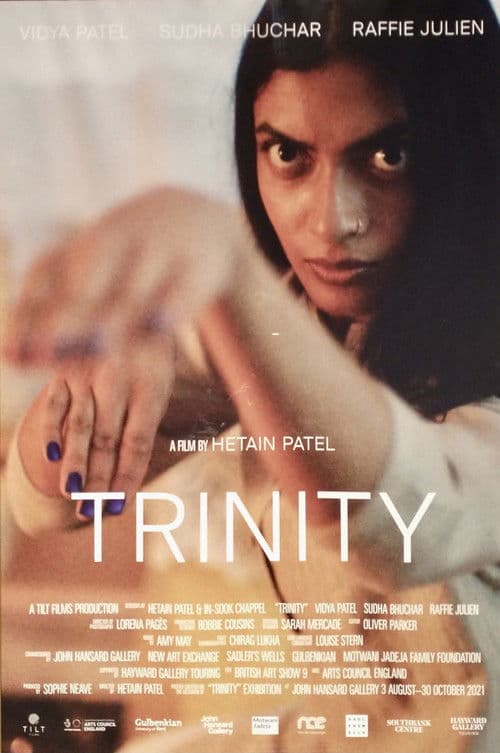
Patel’s new film Trinity, continues his exploration of language and physical communication, centring on the discovery of a martial language that once united humanity. Interspersed with visual references from his life – both his artistic practice and his Indian cultural heritage, the film features two women – a young British Indian woman (played by Vidya Patel) and a young Deaf garage worker (played by Raffie Julien) – engaging in a fight, creating a unique physical language weaving together martial arts and sign language. A coming of age story intermingled with supernatural references, Trinity transforms traditional Indian practices with a recognisably Hollywood approach, employing an epic soundtrack and fight choreography. The film explores the representation of the British Indian experience on screen, emphasising the female voice, intergenerational conflict and the truth that our bodies hold beyond language, foregrounding a strong sense of hope.
Aug 2021
Familiar Phantoms is an experimental documentary short film about memory, history and trauma.
Mar 2023
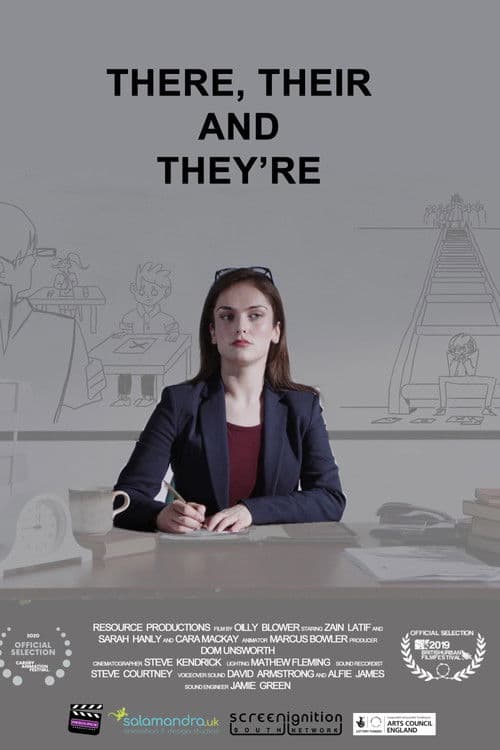
A live action/animated short about a boy who’s sitting an exam he desperately doesn’t want to be in. His stream of conscience runs wild as his frustration grows at being forced into taking the exam. His arch rival Jess is sitting opposite of him as she whips through the paper. Joe eventually gives up on the paper, turning to his drawing to illustrate his thoughts.
May 2018
When did you last rest? When did you float weightlessly, your aching muscles soothed by lapping water?
Jan 2019
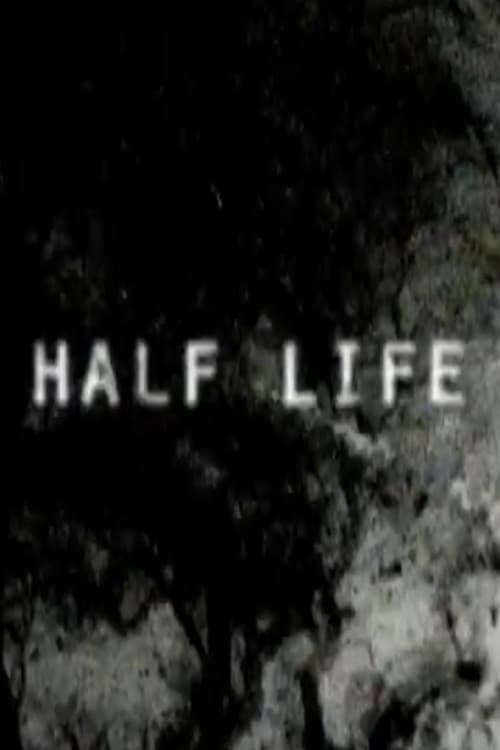
In an office world of half light, flickering fluorescent tubing, ringing phones and monotonous paperwork, the residents sit trapped in a state of frustration, inactivity, boredom or semi-consciousness. As the lights flicker, they get on with their chores and tasks, maybe half aware that they may never escape their surroundings for anything better.
Nov 2004
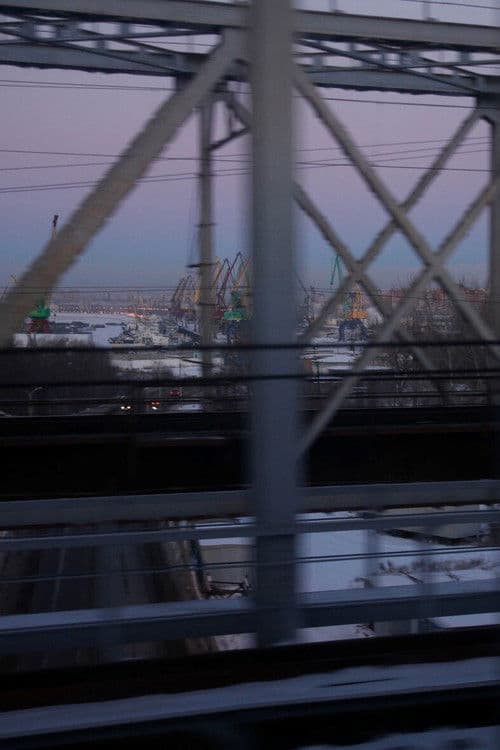
Sarah Turner's film is a ghost story that explores what we forget and how we remember. The stunning imagery comes solely from the window of the Trans-Siberian train, shot first in 1987-8 and then again in 2007-8. The re-enactment of the journey is a memory work, a re-enactment of the past in the present through the process of filming. But the return journey is haunted by the voices of two dead friends that dominate the soundscape of the 'archive' footage.
Jan 2009
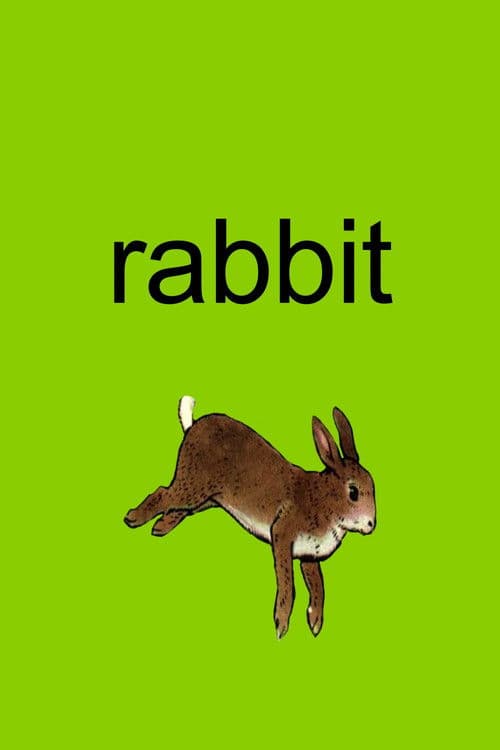
A tale of lost innocence, greed and the random justice of nature. When a boy and girl find an idol in the stomach of a rabbit, its magical abilities lead to riches. But for how long?
Dec 2005
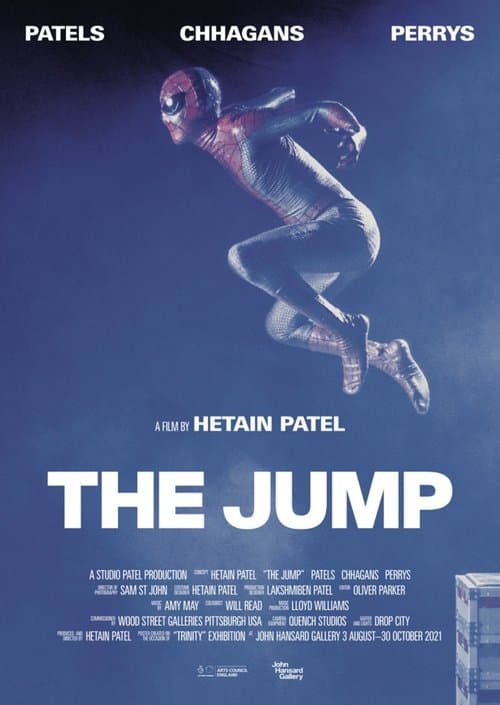
The Jump connects the widely recognised fantasy of Hollywood action and superhero films with the domestic setting of the artist’s British Indian family home in the UK. Featuring 17 of his family members, the film was shot in his grandmother’s home, the house that he and all of his immigrant relatives have lived in at various points since 1967, and where his grandmother still lives.
Jan 2015
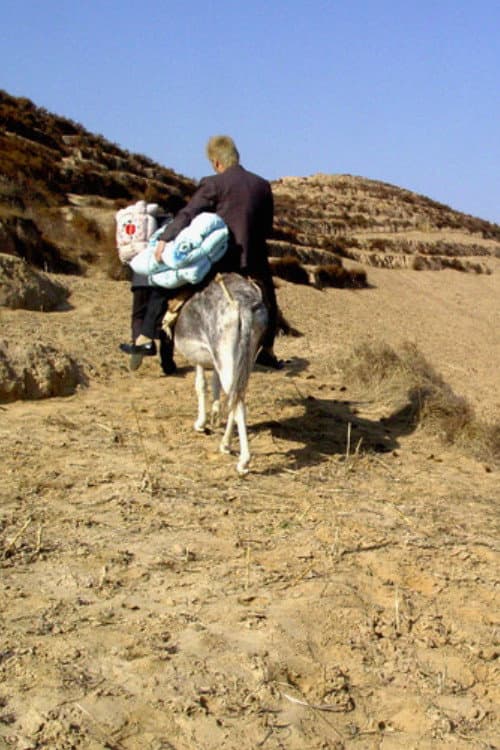
An Sai, Shanbei, An isolated village on the Loess Plateau, Northern China. Two young outsiders are moving in, While two young locals are struggling to escape. Comes into view a donkey full of luggage, Comes also into view a young couple, He carries her on a bike...
Feb 2005
From the lush and green grass of the Kazakh Steppe to the glorifying architecture of its capital, from its giant open-air mines to the traces of invisible nuclear power, Kazakhstan is here captured in fragments. A fake observational film, but a genuine geographical and historical journey, through the remnants of the Soviet past and the contemporary capitalist ambitions of the country.
Apr 2020
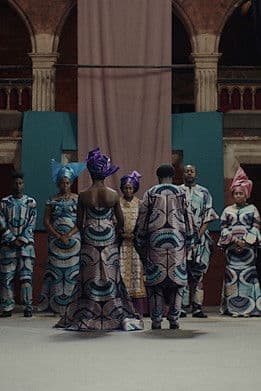
Don’t Look at the Finger follows a ceremonial ‘fight’ between two protagonists, a man and a woman, in the grand architectural setting of a church. The way the characters communicate is a feat of choreography that combines Kung Fu with signed languages to express a ritualistic coming together.
Sep 2017
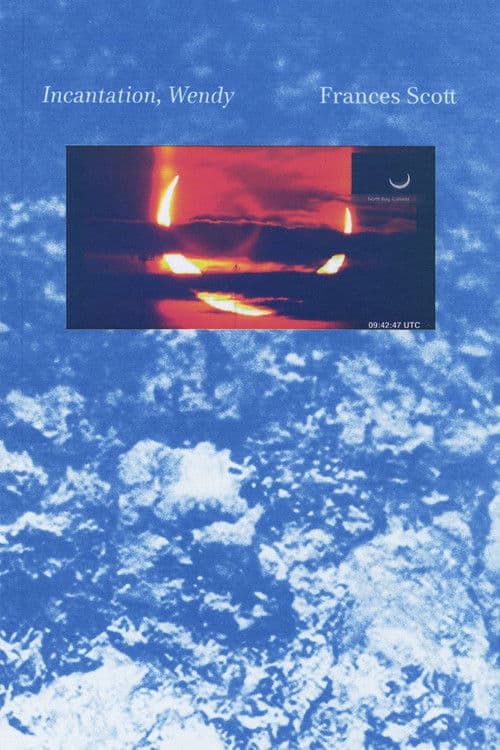
‘Wendy’ is a film response to the work of composer, electronic music innovator and polymath, Wendy Carlos. The work orbits a duet rehearsal for four hands on one piano. Together, Frances Scott and Chu-Li Shewring learn to play ‘Timesteps’, transcribed from the original score composed by Wendy Carlos, first imagined for Anthony Burgess’ book, ‘A Clockwork Orange’ (1962), and later realised for the soundtrack to Stanley Kubrick’s 1971 film adaptation.
May 2021
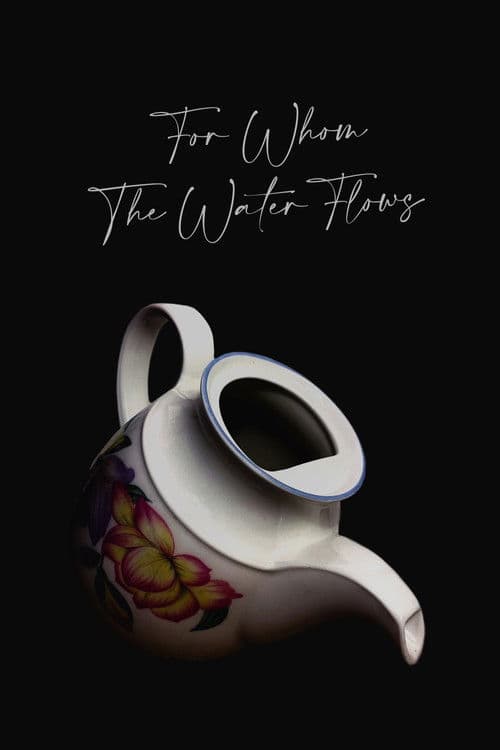
In a world where water has become a scarce commodity, a young scavenger finds a source to satisfy her thirst.
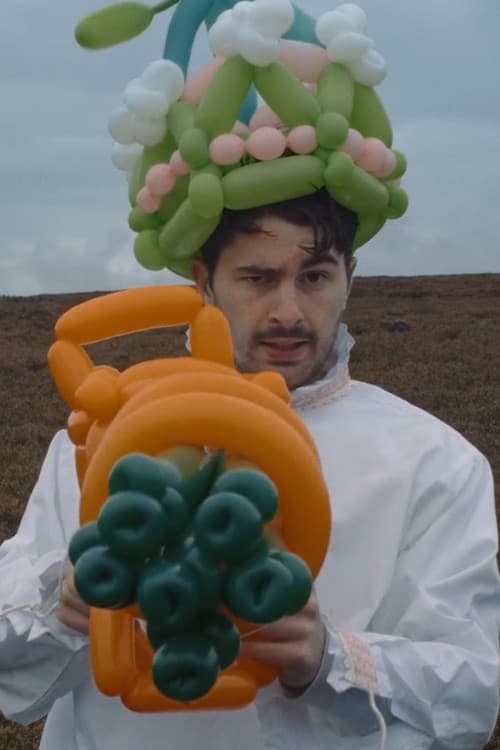
Two figures wander the desolate Yorkshire Moors building colourful worlds around themselves. Absurdity ensues when their paths cross.
0
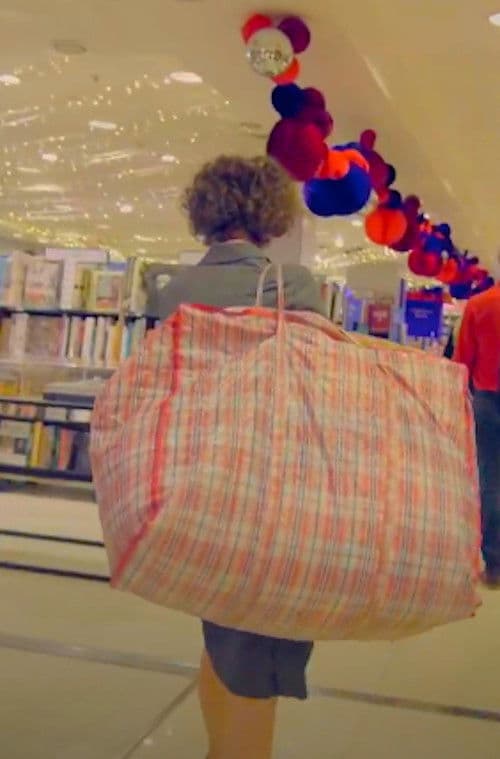
Miranda July looks back at her Artangel project, an interfaith charity shop that opened up unannounced inside one of the world's most famous department stores in August 2017. Situated on the third floor of Selfridges, London, surrounded by designer boutiques, this shop was run and staffed jointly by four religious charities invited by July: Islamic Relief, Jewish charity Norwood, London Buddhist Centre and Spitalfields Crypt Trust.
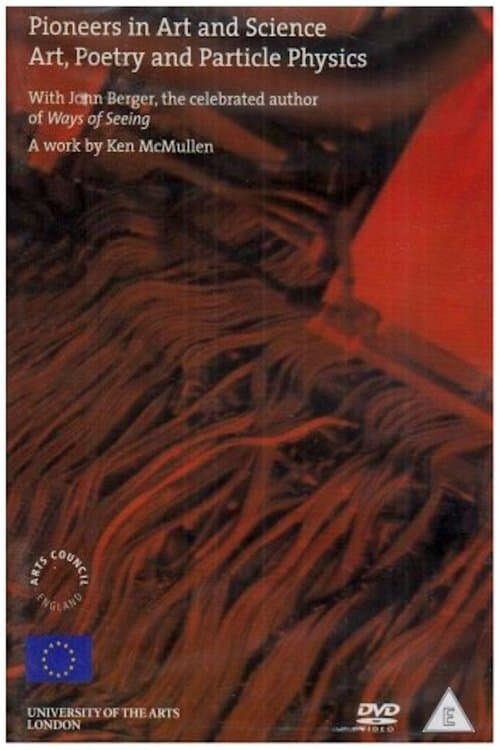
John Berger is one of our most celebrated and respected writers and broadcasters. A former winner of the Booker Prize, he also wrote one of the most influential books on art of our time, Ways of Seeing, which became a landmark documentary series on BBC Television. In Ken McMullen's engaging and accessible film, Art, Poetry and Particle Physics, he travels to the world's biggest particle physics laboratory at CERN in Geneva. The film charts an extraordinary and wide-ranging series of discussions and collaborations between Berger and the leading theoretical and experimental physicists John March Russell and Michael Doser.
Feb 2004
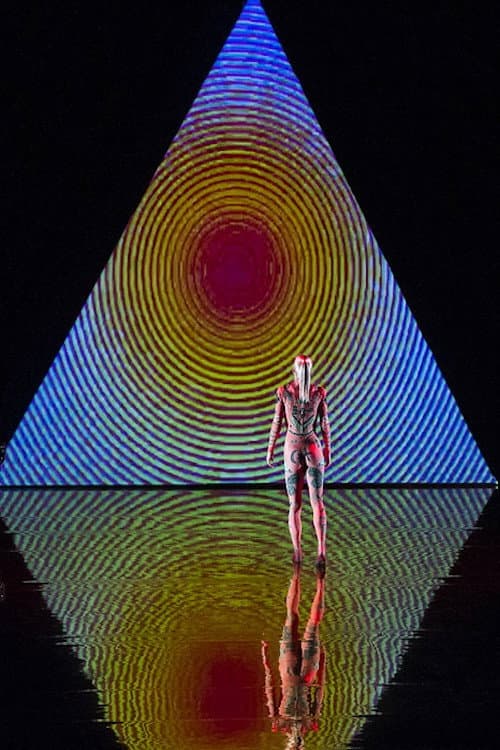
The Rosie Kay Dance Company present a piece about the strange history and pop-cultural aftermath of CIA mind control experiments during the Cold War, with documentary segments by Adam Curtis.
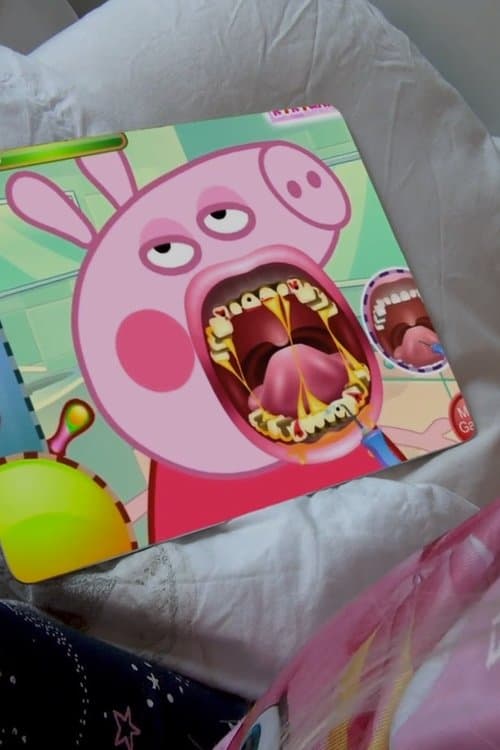
The director couldn’t have anticipated the coronavirus epidemic, but here is a near-future world in which a middle-class protagonist lives indoors, congratulating himself on the economic virtues of having ingested ‘animal condensed’ – an unexplained substance that seems to merge human and animal – and its benefits to his comfortably alienated life. “It optimises, it abstracts… it made us safe, here at home, with our accelerated portfolios”, he explains. Upstairs, his daughter virtually reconfigures Peppa Pig. Outside, meanwhile, hiding in the forest, is an unnamed, camouflaged fugitive, who explains her escape from a society that seems to have happily abolished the distinction between organic and technological life. An artist who has become a guerrilla fighter, the woman is busy preparing totem-like countermeasures to disrupt those who have become ‘animal expanded’.
Jun 2018
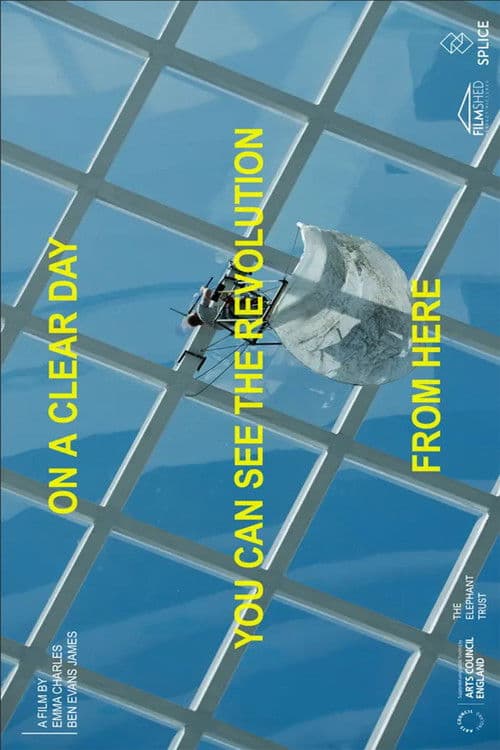
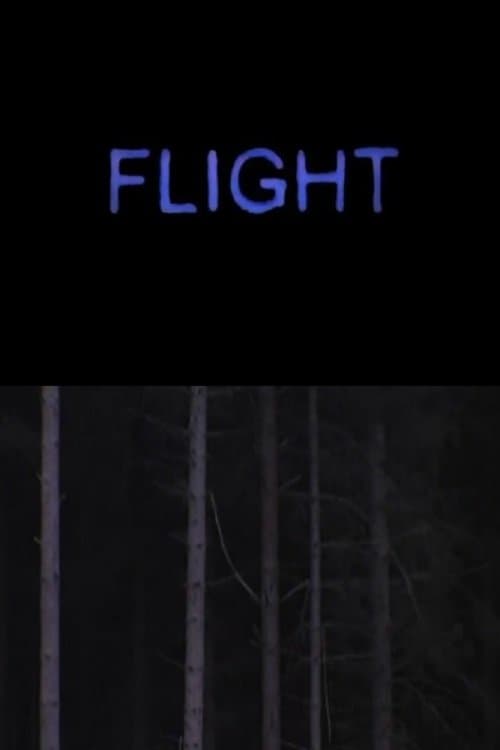
A fugitive escape path across five interlinked spaces - city, motorway, forest, coast and sea - using pen and ink drawn interventions into a live action journey.
Jan 1996
'London Market eXcess' is a term used in the Lloyds insurance industry to describe the practice of re-insuring a policy over and over again, increasing the risk at each turn in the 'spiral' until the whole financial edifice collapses under its own weight. With Thatcher as our narrator, this film takes us on a fast-forward ride through the high-rise 1980s and the lottery-led 1990s. A conceptual pop promo about Britain’s transition from greed, speed and paisley patterns to risk, insecurity and financial meltdown.